
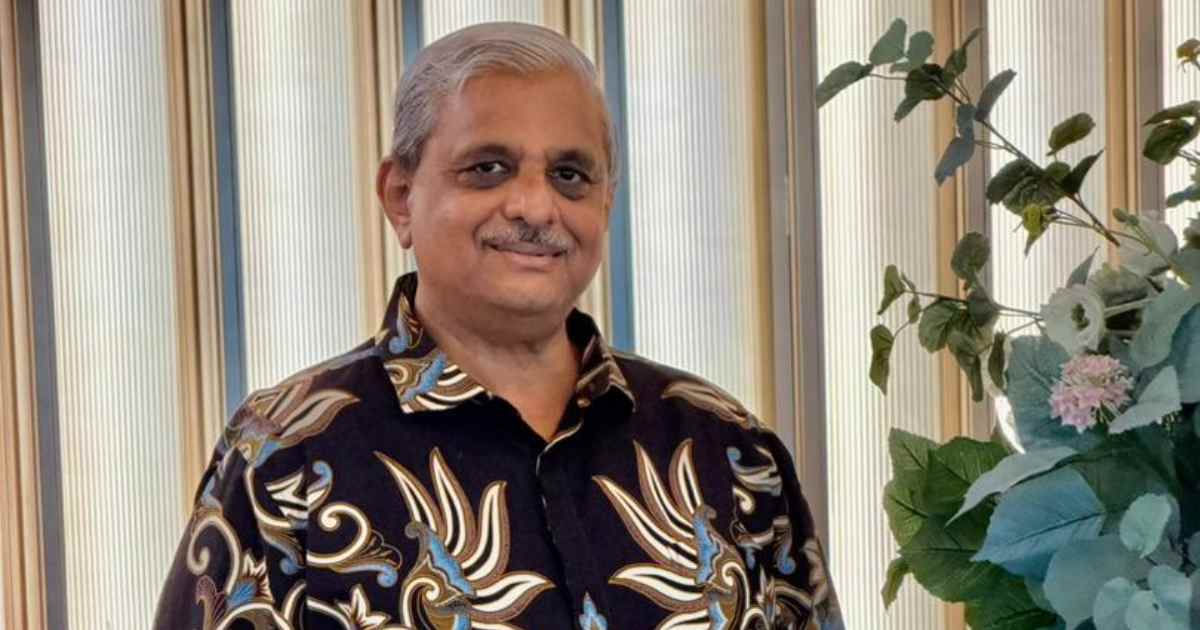
Some people collect titles, others collect moments. Bharat Avalani is the secretary general of the Asian Federation of Advertising Associations (AFAA) and has spent a lifetime collecting stories, not as anecdotes to impress, but as fragments of human truth to understand. Across boardrooms, classrooms, and conversations that stretch from one continent to another, he has quietly built a reputation not just as a marketer but as someone who listens deeply enough to remember and remembers well enough to connect. Long before storytelling became a buzzword, he saw it as a way of understanding the world. Interviewing him felt like moving through a journey itself, every answer shaped like a story coming to life.
Synergyzer: Storytelling is no longer just creative expression; it is now a business strategy. What changes when brands treat narrative as a long-term strategic practice rather than just campaign thinking?
Bharat Avalani: The key distinction is “creative” vs “strategic creative”. Creative storytelling alone can entertain, but strategic creative storytelling aligns narrative with:
- Business goals
- Audience psychology
- Brand positioning
- Market differentiation
- Long-term identity
The long-term payoff comes from consistency and strategic alignment, not isolated viral moments.
Synergyzer: In today’s performance-driven workplaces, how can storytelling bring back empathy and a more human way of communicating within organisations?
Bharat Avalani: It is an important leadership skill because it brings out authenticity in leaders and helps them connect with people on a human level. Through stories, leaders can communicate values, experiences, and vision in a way that feels genuine and relatable. It also allows leaders to influence with clarity rather than authority. Instead of simply giving instructions, storytelling helps people understand the purpose and meaning behind decisions, which builds trust, engagement, and alignment within teams. In addition, stories make messages more memorable, inspire action, and create emotional connection, all of which are essential for effective leadership.
Many workplaces today are becoming increasingly transactional, where performance is often placed ahead of people. Under the constant pressure to achieve targets, meet deadlines, and deliver results, human emotions and well-being can quietly get overlooked. People may continue to work, but internally, many feel stressed, disconnected, and emotionally tired. A workplace cannot truly thrive when individuals feel valued only for what they produce rather than for who they are as human beings.
Impactful, human-centric communication brings humanity back into the workplace. When leaders and teams communicate with empathy, respect, and genuine listening, people feel safe, valued, and connected. Simple moments of understanding, encouragement, and honest conversation reduce stress and build trust. A humane workplace isn’t created by policies alone, but by everyday communication that reminds people they are more than employees, they are human beings who matter.
Synergyzer: Leaders often ask for ROI on storytelling. How do you define its real value beyond short-term financial metrics?
Bharat Avalani: The ROI of storytelling is like leadership training: the investment compounds long-term, but the return shows up immediately in engagement. People may not remember your numbers, but they remember the story that made them care.
Synergyzer: As leaders increasingly use storytelling to influence rather than exercise authority, how do you ensure narratives stay authentic instead of becoming rehearsed corporate performances?
Bharat Avalani: People rarely remember product specifications for long, but they remember stories, emotions, and meaning. Consistent storytelling creates mental associations that make a brand easier to recall at buying moments. Examples: Nike connects achievement and resilience, not just shoes.
Apple reinforces creativity, individuality, and simplicity through narrative consistency.
Synergyzer: In today’s fragmented media environment, brands no longer fully control their story, audiences do. How should leaders think about narrative when control has become so fluid?
Bharat Avalani: Brands are no longer controlled solely by brand managers; they are now continuously validated or invalidated in public, in real time. Consumers are no longer passive audiences but active participants who can elevate or damage a brand through their shared experiences and voices. In this environment, brand managers do not control the narrative in the traditional sense, they participate in it by shaping the foundation through product quality, consistency, and meaningful experiences. Ultimately, what determines a brand’s strength is not just its messaging, but whether it delivers experiences that are enduring enough to earn trust, loyalty, and advocacy.
Synergyzer: Across different regions and cultures, do audiences respond to different narratives, or to the same human emotions expressed in different ways?
Bharat Avalani: A global voice and culture unite us through shared human experience: We all need safety, food, shelter, and belonging. We all want meaning, connection, and growth. Everyone hopes for a better future and fear loss, harm, and uncertainty. People are busy living their lives. Brands, products, and services should exist to help people live better, making life simpler, safer, and more meaningful. Different cultures express this differently, but the core is the same: we are united by the same human needs, wants, hopes and fears.
Synergyzer: During your time leading integrated communications at Unilever, was there a campaign or market experience that changed how you understood storytelling at scale?
Bharat Avalani: I have been thinking about how powerful this becomes when it stops trying to sell and starts trying to mean something. The shift from “dirt is bad” to “dirt is good” stayed with me because it wasn’t just a campaign, it was a reframing of life itself.
Through brands like OMO, Persil, and Surf Excel under Unilever, something ordinary became deeply human again: dirt as proof of play, learning and growth. It reminded me that the strongest ideas are often the simplest truths, told with conviction over time. And I see myself in that journey too.
I have experienced how purpose changes the way people connect, not just to a brand, but to a belief. When storytelling is rooted in something meaningful, it stops being a message and becomes momentum. It shifts work from transactions to impact, and ambition from numbers to contribution. That’s the kind of business I want to be part of, one that doesn’t just grow, but grows in a way that matters.
Synergyzer: You have travelled to over 70 countries collecting stories. Which place surprised you the most, not visually, but emotionally?
Bharat Avalani: What surprised me most is how deeply Africa connects marketing to real human life in a way that feels natural and powerful. It’s not just a market; it is inseparable from people, culture, and community.
It’s a young, fast-growing population with varied lifestyles, but influence is mostly social rather than individual. Faith, identity, music, and culture actively shape behaviour and brand perception. What shifts your thinking as a marketer is how trust works. It is built through people, not platforms; word of mouth and community voices often outweigh paid media.
Celebrations also play a huge role. Festivals, weddings, religious holidays, and national moments become intense marketing ecosystems of attention and emotion. Sports, especially football, act as a shared language that unites mass audiences instantly. Overall, it is not just that Africa “has it all,” but that these forces work together so strongly that marketing becomes participation in real life, not interruption.
Synergyzer: You describe your photographs as storytelling. Do you instinctively capture grand moments, or the quieter, easily missed ones?
Bharat Avalani: I am drawn to photographing people in everyday life unposed, unplanned, and real. Moments that don’t wait for permission: women laughing while doing chores in shared spaces, tea-time conversations where time slows, children abandoning football when an ice cream jingle passes. I am not after perfection, but life as it is: small interruptions, shared habits, and the quiet choreography of community. The gestures people do not notice, the expressions that appear only when no one is performing.
Synergyzer: If you had to describe your own life as a story, not a career, what would its title be?
Bharat Avalani: Turning stories into leadership that moves people and shapes change — Bharat Avalani