

There is something different about MADsemble. It isn’t just another industry conference where people politely nod through PowerPoint slides and collect tote bags. It is where Pakistan’s marketing community comes together to think, question, reimagine what is next and how we can make now better.
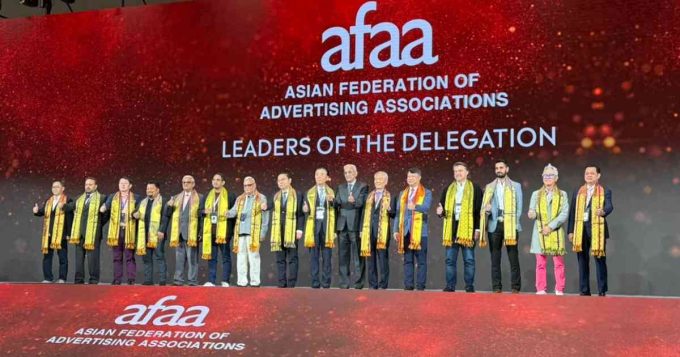
Held on the 1st and 2nd of October of this year, the two-day summit aligned some of the most influential names from Pakistan’s and the international marketing, advertising landscape. Organised by the Pakistan Advertisers Society (PAS), MADsemble felt less like a formal gathering and more like an awakening. For two days, the venue became more than just a stage for discussions. It became a hub of ideas, energy, and exchange.
Industry leaders, innovators, and young creatives came together not just to talk about the future of marketing, but the past and present. Every session sparked new ways of thinking, every conversation challenged convention, and every connection built momentum for what comes next.
There were keynote speeches, breakout discussions, and the kind of tea breaks that were insightful and intriguing. Although the entirety of the event was brilliant, some speakers, in particular, left a lasting impression on me, whether it was the topic they spoke on or the hard truths they told; these speeches had me pondering even after the event.
These weren’t traditional lectures. They were immersive, three-dimensional sessions, the kind of classroom you wish you had in university. The kind where growth doesn’t come from being told what to do. But from seeing things differently, those moments when a single idea shifts your entire perspective. That is what MADsemble does best. At first glance, it may look like a typical speaker-audience setup, but once you are in it… You realise it’s a space that challenges you to think deeper, ask harder questions, and, most importantly, rethink how you create.
FARHEEN SALMAN

Farheen Salman Amir began her journey with Unilever in 1999, steering some of its most loved brands across personal care, food, and beverages. Today, as CEO of the food division at Ismail Industries and Chairperson of the Pakistan Advertisers Society. She continues to shape Pakistan’s marketing landscape with her forward thinking.
At MADsemble 2025, her session on advertising’s regulatory framework was brief yet deeply impactful. She spoke about the delicate balance between creativity and compliance — how imagination should push boundaries, but not blur ethical lines.
Through real examples, she illustrated how misleading claims or exaggerated messaging can erode public trust. Urging brands to hold themselves accountable for the narratives they create. Then, with quiet conviction, she posed a question that lingered long after the session ended/ “Where does creativity end and exaggeration begin?” This question is a reminder that responsible storytelling is as vital as brave imagination.
KHALID ALVI
Few people can command a room quite like Khalid Alvi. With over three decades of experience leading transformation across Asia and the Middle East. His voice carried both gravitas and urgency. Currently serving as General Manager at Savola Foods UAE and the force behind Khalid Alvi Marketing Next (KAMN). He continues to push marketers and thinkers to reconnect with what truly matters: people.
At MADsemble 2025, his session on The Rise, Decline, and Future of the Global Middle Class was a wake-up call wrapped in insight. He traced the arc of industrialisation, from its early promise of prosperity to the slow erosion of the middle class as technology, automation, and capital reshape the global economy.
With striking clarity, he warned that by 2070, the middle class, once the backbone of economic growth, could shrink by as much as 41%. Nations that fail to adapt, he cautioned, even economic powerhouses like the United States, risk being left behind in a new order that no longer prioritises the middle-income segment.
Khalid painted a vivid image of a future ruled by automation, where robots replace routine jobs and traditional professions like engineers and accountants become relics of another era. His message was stark but necessary as the world moves towards an increasingly oligarchic system; survival will depend not on stability, but on the ability to evolve.

AMMAR HASSAN
Ammar Hassan, CEO of BuyPass.ai, brought a refreshing mix of wit, realism, and unapologetic honesty to the stage. Having led marketing for Daraz and OLX, he knows Pakistan’s digital economy inside out. And he wasn’t afraid to call it as he sees it.
His session, The Real Economics of Influencer Marketing, was equal parts sharp, hilarious, and brutally candid. With the precision of someone who has seen it all, Ammar broke down the messy truth behind the influencer bubble. From skyrocketing rates and unreliable metrics to how brands really decide what an influencer is worth. He dissected engagement versus reach, questioned the obsession with vanity numbers. And explored how collaborations in TVCs are blurring the lines between entertainment and advertising.
But what truly resonated was his story of a small-town creator from Sukkur whose raw, honest videos outperformed big-name influencers. His point was simple yet powerful: authenticity wins. Ammar reminded everyone that real influence does not come from followers; it comes from connection. The future, he said, belongs to those who understand both people and data.

THOMAS KOLSTER
Thomas Kolster is the kind of speaker who doesn’t just make you listen. He makes you question everything you thought you knew about marketing. A global authority on purpose-driven branding and the author of Goodvertising and The Hero Trap. Kolster’s session, Win with Value, was not just a talk; it was a reckoning.
With his signature mix of candour and conviction, he urged marketers to stop chasing hero narratives and start enabling change. “Children now spend less time outdoors than prisoners,” he told the audience, a haunting reminder of how disconnected modern life has become. To him, sustainability is not a checklist; it’s “emotional dynamite,” capable of sparking genuine human transformation.
Kolster’s now-famous provocation, “kill the marketing team” isn’t rebellion for rebellion’s sake. It was a call to dismantle silos, to replace hollow purpose statements with real, lived values. Drawing from examples like Vitality, which empowers people to live healthier lives, and the downfall of once-iconic brands like The Body Shop. He exposed the danger of resting on moral laurels.
By the end of the session, the room was silent, not out of confusion, but reflection. Kolster’s message lingered: true leadership isn’t about being the hero; it is about empowering others to be.

JUNAID IQBAL
When Junaid Iqbal took the stage, the energy in the room shifted. A seasoned business leader, investor, and entrepreneur, best known for leading Careem Pakistan as its Managing Director. He spoke not in abstractions but from lived experience. It was a brave choice, considering Careem’s recent shutdown in Pakistan, yet he addressed it with disarming honesty. Junaid unpacked the company’s improbable rise.
Junaid, whose career spans finance, media, and technology, revisited the early days when the idea of a ride-hailing service in Pakistan seemed almost absurd! How that impossibility turned into a masterclass in courage, conviction, and connection.
He spoke about how Careem wasn’t just a ride-hailing app; a movement that generated over 10,000 jobs across the country. It redefined trust, mobility, and employment in a market where none of it came easy.
He recalled the scepticism they faced in the early days; investors were hesitant, consumers were doubtful, and the regulators were confused, yet each barrier became a lesson. The company’s success, he emphasised, was not luck. It was the result of relentless problem-solving and an unwavering belief in people.
Junaid’s most compelling moment came when he described the captains, men and women who found dignity and financial independence through the platform. “We didn’t create drivers,” he said. “We created livelihoods.”
For him, Careem’s legacy wasn’t about valuation or market share. But about the ripple effect of empowerment, families supported, dreams funded, and a new digital economy sparked. The legacy still continues in the form of other ride-hailing apps.
He mentioned while concluding, “Pakistan doesn’t need more ideas; it needs belief. Belief that innovation can come from within, that one company can rewrite an industry, and that even in the toughest markets. Purpose-driven business can change lives, one ride, one job, and one story at a time.”

SHAHZAIN MUNIR
When Shahzain Munir walked on stage with Jay-Z playing in the background, it was immediately clear, this was not going to be your typical corporate talk. As Executive Director at EBM, he is at the helm of one of Pakistan’s most loved brands. His session, Rebirth of an Icon, captured that spirit perfectly. He began with a simple but powerful observation: “Today’s kids don’t follow, they choose.” That line set the tone for a session that blended nostalgia, innovation, and a healthy dose of creative rebellion.
He took the audience behind the scenes of the Pied Piper revival, a campaign that reimagined a childhood symbol through the lens of AI. The brand’s short film, Piper Ki Duniya, used artificial intelligence to bring the iconic character back to life, merging decades of brand love with cutting-edge technology.
But for Shahzain, it was not about the tech itself; it was about keeping the heart intact. “You can’t automate authenticity,” he said, explaining how the team used AI not as a gimmick but as a storytelling enhancer. Ensuring the Pied Piper remained as human and hopeful as ever.
The session was a reminder that heritage brands do not survive by staying static; they evolve. With 38.1 million of Pakistan’s 38.5 million households enjoying Peak Freans, Shahzain’s message was clear: to stay timeless, you have to stay true. And as he closed, the beat of Jay-Z faded back in, fit for a man who proves every day that a good brand, much like a good track, never goes out of style.

FAISAL SHEIKH
When Faisal Sheikh, Co-Founder and CEO of Jack of Digital, took the stage for his session “From Haveli to Hashtag – Trading the ‘Chaudhary’ Playbook for a Digital-First Future,” it was less a talk and more a mirror held up to the modern marketing world. Blending thoughtful commentary with cultural awareness. He traced how influence, once rooted in hierarchy, control, and power, has shifted to relatability, authenticity, and community.
Sheikh explained how social media has democratised influence, giving every individual the tools to build their own stage. Authority now belongs not to the loudest voice, but the most genuine one. He illustrated this shift with Gillette’s TikTok campaign, a masterclass in platform-native storytelling that spoke directly to Gen Z, not as consumers, but as collaborators.
He challenged marketers to let go of the traditional “chaudhary” mindset of dominance and instead embrace collaboration, agility, and empathy. “In the digital world,” he said, “you don’t earn influence by demanding it, you build it by deserving it.” His message captured the spirit of MADsemble perfectly: a call for evolution, not ego.
NAILA FATTOUH

The essence of modern creativity, as powerfully as “The Anti-Hero Lives,” was delivered by Naila Fattouh, CEO of Impact BBDO Cairo. In an era obsessed with perfection and polish, Naila reminded the audience that the brands that stand out today are the ones that dare to be real.
She explored how audiences are no longer drawn to flawless heroes or glossy narratives. Instead, they crave authenticity, vulnerability, and imperfection.
Using the cult classic The Big Lebowski as a metaphor. She unpacked how the Coen Brothers created the first “cult movie of the internet era”, one that resonated not because it was perfect, but because it was human.
To drive the point home, Naila showcased a low-budget FIFA commercial that relied on creativity and boldness rather than production gloss. Proving that great ideas don’t need massive budgets; they just need heart.
Her message was as liberating as it was provocative: “In a world where everyone’s trying to be the hero, maybe it is time to be the anti-hero, the one who is real, raw, and relatable because, sometimes, the anti-hero, flawed and vulnerable, moves people more than the hero ever could.”
ADIL HUSSAIN
Adil Hussain, General Manager Beauty & Wellbeing Pakistan at Unilever, delivered one of the most resonant sessions of MADsemble 2025 with “Brand Tattoos: Assets That Live Rent-Free in Consumers’ Minds.”Equal parts analytical and emotional, his session dissected the psychology behind brand memory and why some campaigns become timeless while others fade overnight.
Hussain explained how certain brand assets – a sound, a slogan, a colour – evolve into powerful emotional triggers when they are simple, consistent, and rooted in meaning. Drawing on global examples like McDonald’s “I’m Lovin’ It” and Nokia’s “Connecting People” He illustrated how these phrases are no longer just taglines; they are part of cultural memory.
He urged marketers to think of brand assets as long-term investments, not creative afterthoughts. “The focus,” he said, “should be on creating symbols of trust, the kind that people recognise instinctively, even without the logo.” Through stories, data, and a touch of nostalgia, Hussain left the audience reflecting on what truly makes a brand unforgettable. Because in the end, the best branding does not just capture attention, it carves itself into memory.
SIMORGH AWARDS
One of the most anticipated segments of MADsemble 2025, the Simorgh Awards celebrated the rising stars shaping the future of Pakistan’s marketing and advertising landscape. Designed to honour professionals aged 30 and under. The award recognises individuals who embody innovation, creativity, accountability, and a commitment to industry-wide growth. It highlights those who not only excel in their roles but also challenge conventions and push the boundaries of what marketing can achieve.
This year, Fatima Naeem Rathore, Assistant Brand Manager at ZIL Limited, was honoured in the Marketer Category, while Mohsin Tariq, Creative Copywriter at Spectrum Communications Ltd., received the accolade in the Agency Category. Their recognition stands as a testament to the new generation of agile, passionate disruptors redefining the standards of excellence and effectiveness in Pakistan’s creative industries.

The AfterMAD
By the end of the two days, MADsemble didn’t feel like an event anymore; it felt like a shift. The kind that reminds you why marketing is still, at its heart, a human story: one built on curiosity, creativity, and connection.
It was not remarkable just because of who stood on stage. It was remarkable because of how it made you feel, inspired, unsettled, and re-energised about what comes next. MADsemble 2025 did not just gather the industry’s brightest minds; it made everyone in that room think a little differently about the present and the future we are all busy creating.