
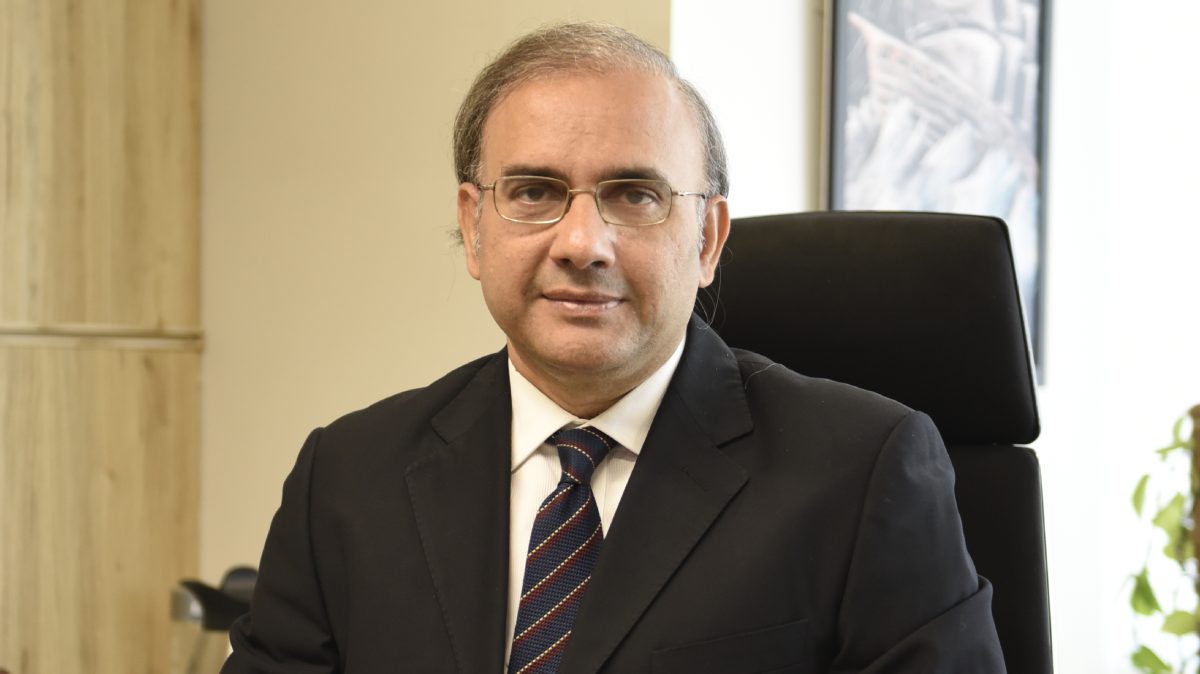
When data becomes medicine and algorithms begin to heal, Ijlal Jafri stands at the forefront of change. As Group CIO of Martin Dow Group, he bridges technology and humanity, where code meets compassion. With over two decades in global pharma, he is redefining how AI, cybersecurity, and innovation drive better healthcare. Recognised among the Top 200 Global CIOs, Jafri represents Pakistan on the world stage. Proving that the future of medicine will be written not only in labs, but also in lines of code.
Synergyzer: As one of the Top 200 Global CIOs, do you think Pakistan’s innovation is still under-recognised, and how will you use this honour to advance tech and healthcare?
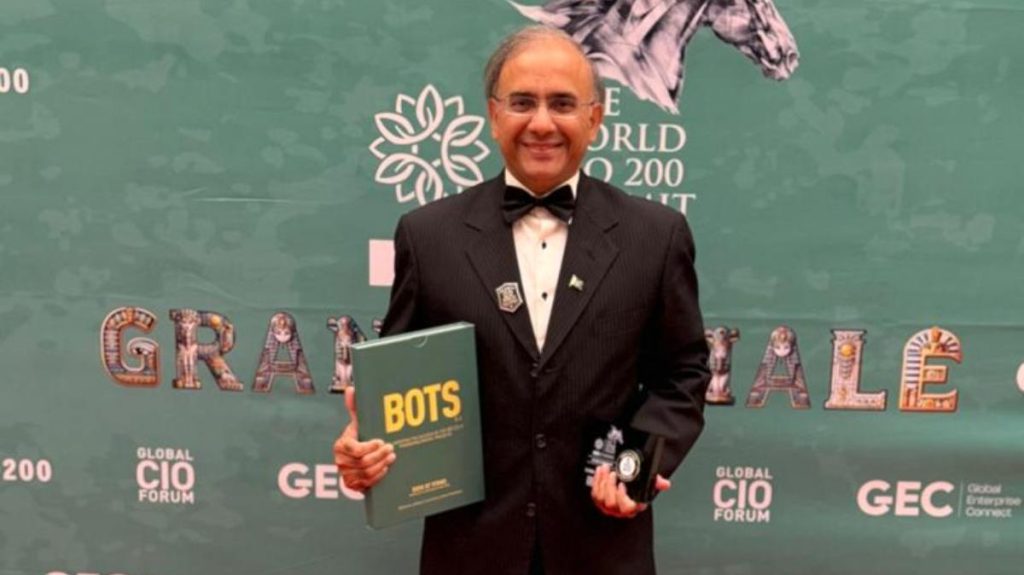
Ijlal Jafri: I am incredibly honoured to be recognised among the Top 200 Global CIOs, especially for the second time, first in 2022 and now in 2025. Representing Pakistan on such a platform, among technology leaders from 51 countries, was both humbling and energising. The experience went far beyond awards. It involved several days of presentations, workshops, and discussions that brought together some of the brightest minds shaping the future of technology.
But yes! I do feel Pakistan’s innovation narrative remains under-recognised globally. We have extraordinary talent here: world-class developers, engineers, and creative thinkers. What we often lack, however, is structure, strong project management, a clear vision, and the ability to turn great technical work into globally recognised products. Too often, innovation here happens in silos. So, while the talent is undeniable, what’s missing is the ecosystem that connects creativity to commercialisation.
Synergyzer: Pharmaceuticals are often seen as slow to adopt new technologies. How has Martin Dow changed this perception through digital transformation and AI?
Ijlal Jafri: Pharmaceuticals have traditionally been slow to adopt emerging technologies. The industry is cautious by design, governed by regulations, compliance, and a deep responsibility for patient safety. But that does not mean innovation has to wait.
At Martin Dow, we have spent the last five years proving that transformation and compliance can coexist. We have re-engineered every aspect of our operations, from manufacturing and supply chain to finance, HR, and commercial functions, around a single digital backbone. That system, which we call Genesis, is our in-house platform designed to make Martin Dow a fully data-driven organisation.
Genesis provides real-time visibility across the business, from sales analytics and product development to plant performance and financial health. It is built on one principle: ‘Data before AI’. We have invested heavily in building a unified data warehouse, a single source of truth for the entire company.
Now, with that foundation in place, we layer AI into our systems to drive insights, efficiency, and smarter decision-making. What began as a digital transformation is now evolving into a truly AI-powered enterprise. One that challenges the perception that pharma must move slowly.
Synergyzer: How do you see AI transforming Pakistan’s healthcare and pharma sectors in the next decade? And what ethical challenges might arise?
Ijlal Jafri: AI is reshaping the global healthcare and pharmaceutical landscape, from accelerating drug discovery to optimising operations. But the way it impacts each region depends on the industry’s maturity.
In Pakistan, most pharmaceutical companies operate in formulation, not full-scale R&D, so our cases are different from those in global research hubs. While AI abroad is cutting drug development timelines from a decade to just a few years. Here the opportunity lies in smart manufacturing, predictive maintenance, and data-driven demand forecasting. These are the foundations of what’s often called Industry 4.0, and they are already taking root.
At Martin Dow, we are layering AI into our existing digital ecosystem, especially within our Genesis platform, to make operations more intelligent and interactive. For example, with conversational AI, our teams can now extract business insights simply by asking the system questions in plain language. It is transforming productivity and decision-making across departments.
But, with every new technology comes responsibility. AI is only as unbiased as the data it is trained on, and that raises serious ethical concerns. The real question is not whether we use AI, but how responsibly we use it. Globally, countries are building frameworks for ethical AI, and that discipline must extend to healthcare as well. Fortunately, pharmaceuticals already operate within strict ethical and regulatory structures, which gives us a head start. As long as we apply the same rigour to AI that we do to medicine. We can harness its full potential without compromising integrity.
Synergyzer: As automation, RPA, and AI reshape operational models. How do you ensure that the “human touch” is not lost within this rapid technological evolution?
Ijlal Jafri: I have always believed that AI should augment people, not replace them. It is a tool to enhance productivity and efficiency, not to eliminate the human element that drives creativity, empathy, and intuition. What we must focus on is readiness. The question is not whether AI will take over jobs; it’s whether our people are equipped to work alongside it. Right now, there is still confusion about which skills to build and which direction to take. But once AI becomes part of everyday workflows, this anxiety will fade, much like how email or Excel once felt unfamiliar.
We already see this shift. Many professionals, myself included, use tools like ChatGPT for everyday tasks such as writing, ideation, or data organisation. There is no shame in it; it is about using technology intelligently. The key is understanding how to use it, mastering prompt engineering, verifying facts, and applying critical judgement. AI can assist, but it still needs human oversight to ensure accuracy, context, and ethical integrity.
This is why I often tell my teams: embrace the tools, but stay in control. Let AI handle the repetitive, time-consuming parts so that people can focus on what truly matters – communication, clarity, and connection. Technology can refine language, but only humans can give it meaning. In the end, effective communication, whether human or AI-assisted, is about understanding and being understood. And when we talk about tools – yes, they definitely augment and support.
Synergyzer: What does leadership look like when decisions are increasingly driven by data, algorithms and predictive analytics?
Ijlal Jafri: Whether we like it or not, this is the way forward. AI is becoming the new operating system for business; the age of gut-feel decision-making is behind us. Today, leadership means being guided by data, evidence, and intelligent insights rather than intuition alone.
But it is critical to understand that AI is not a plug-and-play solution. You cannot decide today that you will “do AI” tomorrow. It is a journey and that journey starts with data. AI without quality data is meaningless.
That is why the focus now must be on data governance, ensuring the quality, accuracy, consistency, and security of the information that drives our organisations. At Martin Dow, we are investing heavily in this foundation. Every AI initiative we take forward begins with clean, well-structured data and a governance model that defines ownership, accountability, and compliance.
Synergyzer: As AI and data reshape healthcare. How is Martin Dow promoting a cyber-aware culture that balances innovation with patient data security and privacy?
Ijlal Jafri: As a pharmaceutical company, we do not maintain patient data, that is a strict compliance matter. No ethical pharma company can, or should. Regulations such as the GDPR and other international data privacy laws make this very clear. That said, we do manage other forms of organisational data, and that is where our governance model comes in. It focuses on two key objectives: data quality and data security. From access controls to data leakage prevention, every aspect is built around ensuring data integrity and compliance.
We also follow global best practices, including the DAMA-DMBOK framework, and have a dedicated data governance team in place to ensure our systems remain secure, ethical, and aligned with international standards.
Synergyzer: Are Pakistan’s universities producing AI-ready tech talent, and how can companies like Martin Dow help bridge the gap?
Ijlal Jafri: This is a topic very close to my heart. I have been deeply engaged with academia, serving on Boards of Studies at UMT, University of the Punjab, and other leading business schools to help bridge the gap between what industry needs and what universities teach. I also sit on the OICCI Subcommittee for AI and Digital Transformation, where we are driving initiatives towards a more digitally empowered Pakistan.
At Martin Dow, we have taken a hands-on approach to this collaboration. Earlier this year, we hosted our first Tech Day, an industry–academia event focused entirely on AI awareness and readiness. We brought together global leaders such as SAP, Microsoft, Google, Salesforce, and PwC, alongside top CIOs and deans from IBA, NUST, FAST, and Habib University.
The idea was simple: build understanding, share real use cases, and demonstrate how AI can enhance operations, customer engagement, and productivity. We presented Martin Dow’s four-pillar AI strategy, built on the belief that we do not need to reinvent the wheel but rather leverage the best tools already available, focusing on Operational Efficiency, Productivity, Customer Engagement, and Using AI Securely and Ethically.
Our collaboration with academia extends beyond dialogue. Through our Martinship programme, we bring in graduates from top universities, giving them exposure to real-world digital transformation projects. It’s about nurturing a new generation of tech talent, one that’s ready to lead Pakistan’s AI-driven future.
Synergyzer: Many still view AI as a technical enabler rather than a strategic collaborator. From a CIO’s perspective, what does it take to make AI a genuine co-creator in business strategy rather than just a backend tool?
Ijlal Jafri: For AI to become a genuine co-creator in business strategy, it has to be driven by the business, not just by IT. The ownership must lie with those who truly understand the organisation’s goals and challenges. Only then can AI be aligned with real business value, rather than remain a technical experiment.
At Martin Dow, we launched an initiative called BizTalk, which focuses on business process optimisation and automation. The idea was simple: we invited every business unit to bring its challenges to the table, and together, we worked to automate and optimise those processes that were not already managed through SAP or other applications. It wasn’t just about solving problems; it was about capturing the right data and preparing the organisation for AI readiness.
That is how AI becomes part of the strategic conversation, when it is not a backend tool, but an enabler embedded in how business decisions are made every day.
Synergyzer: How do you view Pakistan’s current R&D landscape in life sciences and technology, and what key changes are needed to make it globally competitive?
Ijlal Jafri: It is a dream, and unfortunately we are still largely in the formulation business. Having worked with major multinationals deeply involved in R&D, developing their own molecules, manufacturing, and commercialising them. I have seen what a true innovation ecosystem looks like.
In Pakistan, that setup does not yet exist, but AI offers a tremendous opportunity to bridge the gap. Through global collaborations and public–private partnerships, we can start building research centres that combine local capability with international expertise.
At the same time, policy support from the government remains a crucial enabler, and it is encouraging to see the strong willingness and commitment already demonstrated in this area. While we continue to import most of our active pharmaceutical ingredients (APIs), developing them locally would mark a transformative leap forward for the industry. With sustained collaboration, the right incentives, and continued policy momentum, we can evolve from a formulation-based sector to one driven by true innovation, building R&D capacity that is globally competitive and future-ready.
Synergyzer: What makes an organisation future-ready, and how can Pakistan empower young innovators to drive digital growth?
Ijlal Jafri: A future-ready organisation, whether in pharma or any other industry, is one where people lead through innovation, leveraging technology and AI to drive growth. It is not just about systems; it’s about structure, skills and culture. You need people who are adaptable, curious, and ready to learn.
For me, the key lies in creating an environment where innovation is encouraged, not feared – where people can experiment, fail fast, and still be supported. The new generation, Gen Z, will be at the centre of this shift. They bring energy, creativity, and new ways of thinking; it is our job to give them a framework where they can thrive.
What excites me most about the digital future is the possibility of building a truly connected ecosystem, one that links startups, enterprises, academia, and government. Pakistan has incredible talent, but too much of it works in isolation. We need policies that promote collaboration, make quality education affordable, and build global competitiveness from the ground up.
Every time I visit events like GITEX or meet young Pakistani founders, I see ideas with the potential to transform our economic landscape if given the right support. IT and digital innovation can spark a rapid financial revival for Pakistan, but it requires a unified effort: better infrastructure, smarter policy, and the collective will to turn possibility into progress.