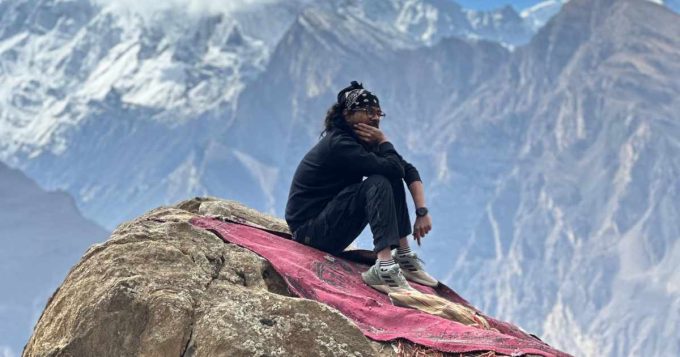


When Taurees Habib unboxed his Grammy earlier this year, it marked a historic first for Pakistan. As the sound engineer behind Hans Zimmer’s Dune: Part Two, he became the country’s first Grammy-winning engineer, a milestone in a career spanning Interstellar, Blade Runner 2049, and Top Gun: Maverick. In this conversation, Taurees reflects on his journey from Karachi to Hollywood, the art of sound, and where AI fits into a world built on human instinct.
Synergyzer: How did a boy from Karachi end up in Hollywood soundtracks and if that journey were one sound, what would it be when you finally held the Grammy in your hand?
Taurees Habib: Music’s been part of me for as long as I can remember. I have been playing, recording, messing with sound since I was fifteen, just a kid in Karachi with a guitar and a cheap mic. That was also when I stumbled into audio engineering. It was not enough to play; I wanted to shape sound. That is how I landed at Berklee College of Music. After graduating, I packed up my things and moved to Los Angeles. My first job was at Interscope Records as an entry-level studio assistant. It sounds small, but that is how you earn trust.
After a few months, I realised I wanted to grow, and through a wild chain of coincidences, I got an interview at Hans Zimmer’s studio. I joined his virtual instruments department in 2012… and now, I run it. Every film with Hans is an adventure. Our team builds the “colour palette” of sounds he composes with, so every film gets its own sonic identity. It’s like creating a whole new language for each story.
As for the Grammy, it sat unopened in my living room for a day before I could even look at it. When I finally did, it did not feel like an ending; it felt like a question: what’s next? It is not a full stop, more like a comma. I’ve always done things a little backwards; maybe that is just my rhythm.
Synergyzer: You have worked on blockbusters like Interstellar, Blade Runner 2049, Top Gun: Maverick, and now Dune: Part Two. Is there a project that challenged you the most as an audio engineer, and why?
Taurees Habib: They have all tested me in their own way; every film has its own universe and set of sonic laws. But if I had to pick one, Dune was the real beast. We built more virtual instruments for Dune than for any other project by far. The scale was huge. Fortunately, our team had years of chemistry behind us, and that bond really counts when deadlines start breathing down your neck.
The toughest part is not usually what to do, but how fast to do it. Hans will have an idea, and suddenly it’s, “We need this sound now.” There is no time to overthink; you just create. Every film pushes us to find new ways to make sound feel alive, but Dune was on another level: exhausting and completely exhilarating.
Synergyzer: Sound engineering often feels invisible compared to acting or directing, yet it defines the movie experience. What do you wish people understood better about this art, and can you break down the process step-by-step for someone unfamiliar?
Taurees Habib: People do not see sound, so they forget how deeply they feel it. We are visual creatures; you can close your eyes, but not your ears. The ears are always on, and most of us learn to tune out the noise. To work in sound, you have to unlearn that and really start listening.
At its core, sound is air moving in patterns. We capture those vibrations with microphones, turn them into electrical signals, then sculpt, clean, shape, enhance, and arrange them so the listener hears and feels exactly what’s intended. Between performer and listener sits a world of technology, but the real craft lies in using it without losing the humanity of the performance.
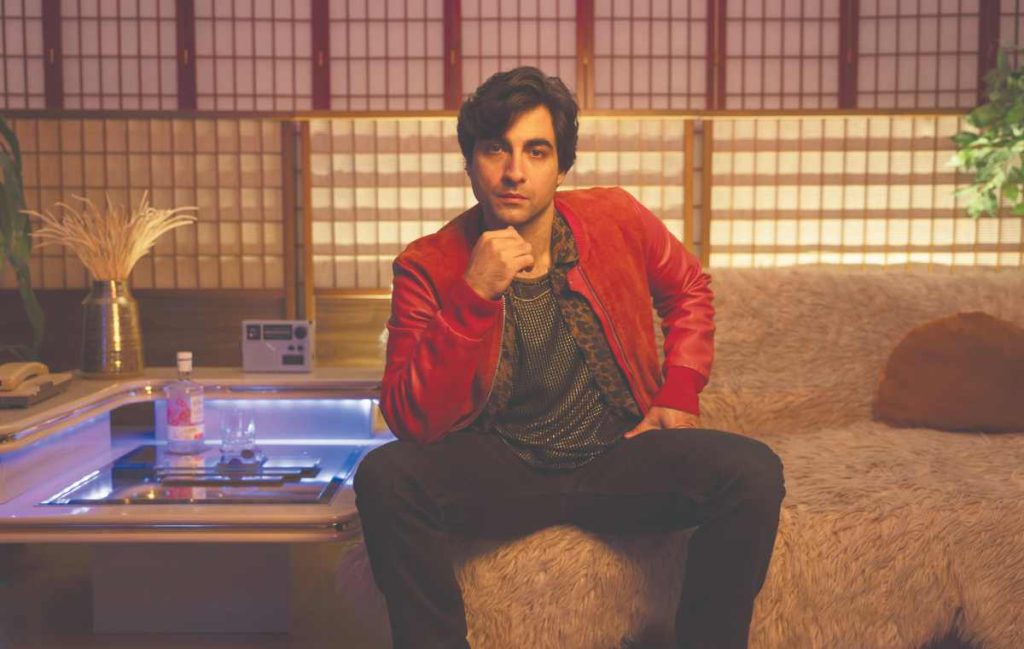
Synergyzer: You have collaborated with global legends like Hans Zimmer. What have those collaborations taught you, not just about sound, but about discipline, teamwork, and creativity?
Taurees Habib: Working with Hans has been one of the biggest learning experiences of my life not just in music, but in how to approach work and people. You realise there is no secret formula to greatness. Everyone writes the same way: you try something, and if it works, you build on it; if it does not, you start again.
The real craft is patience, repetition, and the courage to begin over and over until something connects. The difference between a beginner and a master is not fewer failures; it is learning to move through them faster. At that level, collaboration is not just about creativity; it is about resilience. You show up, do the work, and keep experimenting until it feels right.
Synergyzer: How does your Pakistani identity shape your sound, and do you see Pakistan’s music and film industry reaching Grammy or Oscar-level recognition?
Taurees Habib: Even though I make dark, moody, alternative rock, the only real vocal training I have ever had was from a Qawwali singer, who taught me discipline, emotion, and a sense of connection to something bigger than yourself. I do not sing Qawwali, but its spirit is always there, somewhere in the sound.
As for Pakistan, absolutely, it can reach that global stage. The talent is there; what is missing is infrastructure, mentorship, and access. Once we build that, the recognition will follow naturally.
Synergyzer: With AI-generated voices and music now influencing audiences, do you think people care whether a voice is human or does the impact matter more than the source?
Taurees Habib: It depends on what you are listening to. If it is an ad reading side effects, AI can do that. But when it comes to emotion, art and connection, that is human territory.
Technology is incredible when it amplifies our humanity. AI can make something sound good, but it cannot make you feel something real. Every project that has moved people had fingerprints, imperfections, emotion and intent. The heart can tell the difference, even when the ears cannot.
Synergyzer: One day, do you imagine the phrase “Grammy-winning AI” becoming a reality? If yes, how would you feel about competing with a machine for the same award?
Taurees Habib: Honestly, the phrase “Grammy-winning AI” makes me uneasy. If that ever happens, I hope it has its own category, because what makes those moments special is the humanity. People do not watch the Grammys just to see who won; they watch to see someone walk up there – shaking, crying, laughing – being real. AI cannot do that. It might make a perfect song, but it cannot feel the weight of that moment.
So yes, maybe one day an AI wins something. But it won’t be the same, because art, at its core, is still a human story.
Synergyzer: Before we wrap up, is there anything you would like to share with our readers, something personal or current that you are excited about?
Taurees Habib: Yeah, I really want people to know about my own music. It is something I have put a lot of heart into. It is not film score stuff, but it has that same cinematic energy — layered, moody, and textured.
I have just released a new single called Cannibal Cathedral under my name; you can find it anywhere you stream music. Another one’s dropping soon, and more after that.
It is dark and a bit weird, but it is also catchy. When I finished it, I remember thinking, I do not know who is going to like this, but I know it’s good. So yeah, I would love for people to listen and see if they are that person.

Synergyzer: For young Pakistanis hoping to break into global music or film, what is your advice on skill and mindset?
Taurees Habib: Don’t chase Hollywood, chase mastery. Get really good where you are. Geography does not define success anymore; your craft does. Once you have built skill, find your own voice; that is something no one can teach. Being from Pakistan is already an advantage. You carry stories, rhythms, and a sound the world hasn’t heard before. Use that. But be honest, this road is tough. No shortcuts, no guarantees. You just have to keep showing up.