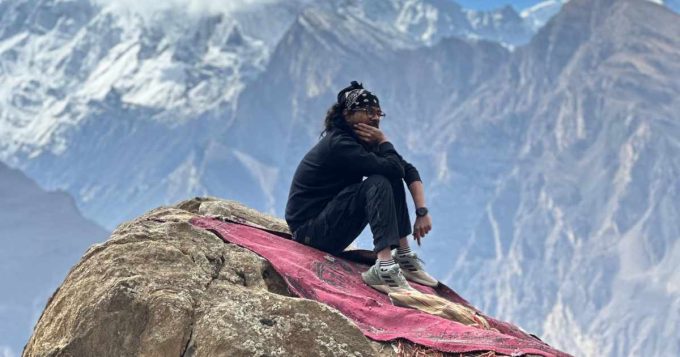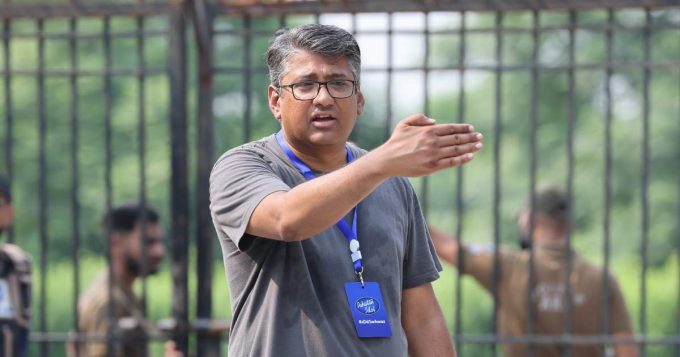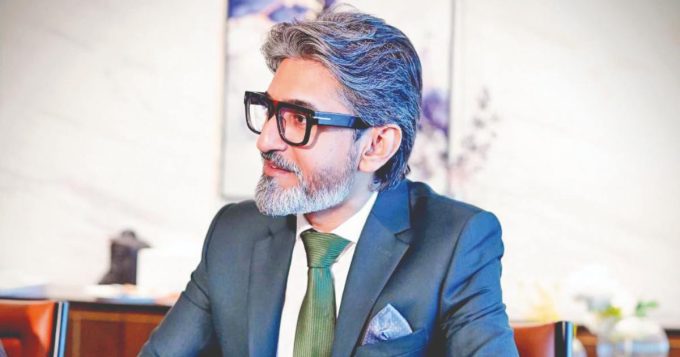


He is a director, cinematographer, and founder of Cinebotic Labs, Pakistan’s first AI-driven filmmaking studio. With roots in computer science and a deep passion for visual storytelling, he bridges creativity and technology. His work spans commercials, independent films, and innovation-led projects that are redefining the future of cinema in Pakistan.
Synergyzer: As a director and cinematographer, what is your philosophy on capturing a scene, and how has AI reshaped your relationship with
the camera?
Asghar Ali Ghanchi: For me, light is emotion. Every time I step behind the camera, I try to listen to what the light is saying. It is not just about exposure or texture; it is about the feeling a frame can hold. I still remember the early days when I would spend hours waiting for the right light to fall across a face or a wall. That patience shaped how I see stories and how I connect with every scene.
When AI entered my creative world, it prompted me to view the camera in a completely new way. It no longer just captures what is in front of it, but has become a bridge between imagination and reality. It challenges me to express emotions not only through lenses and lighting but also through algorithms and ideas. AI has deepened my connection with the camera instead of replacing it.
Synergyzer: How do you stay creative when AI can imitate almost anything?
Asghar Ali Ghanchi: Creativity is about truth. AI can learn patterns, but cannot feel when something moves you. My journey as a cinematographer taught me the value of instinct, how light, movement, and silence speak together. When I began exploring AI, I wanted to extend that instinct, not lose it. It is a creative partner that helps me imagine faster and explore deeper, trained by my sense of rhythm and storytelling. It doesn’t replace my art; it reflects it in new ways. Technology empowers creators, but as creation becomes easier, we must ensure innovation enhances storytelling without losing its human soul.
Synergyzer: What challenges and opportunities have shaped your vision differently from global filmmakers?
Asghar Ali Ghanchi: Filmmaking in Pakistan demands instinct, adaptability, and resourcefulness. Each project comes with challenges, limited budgets, small teams, and shifting infrastructures, but these constraints sharpen creativity. They teach filmmakers to trust emotion over scale, focusing on the heart of a story.
This environment breeds storytellers with raw, human voices. While others have stronger technical support, Pakistan’s strength lies in sincerity and depth. Driven by experimentation and hope, filmmakers here create authentic stories, unafraid of limitations yet ambitious enough to balance cultural roots with a global vision.
Synergyzer: From award-winning films to leading teams at Utopia, which role has challenged you the most and why?
Asghar Ali Ghanchi: My journey began with commercials and ad films, where I learned to tell stories within seconds. Over the years, I have directed and shot hundreds of ads, and each one has taught me precision and emotional clarity.
At the Gandhara Independent Film Festival, served as a producer, helping independent voices share their stories. That experience shaped my belief that cinema is for everyone and that new perspectives keep it alive.
At Utopia Industries, I led a large creative system and oversaw the production of over a thousand videos for leading Amazon brands. Managing such a vast team was both the biggest challenge and the greatest lesson; it taught me to bring structure to creativity and maintain artistic integrity amid high-volume work. Now, while exploring AI-driven filmmaking, those experiences continue to guide me, reminding me that even as creativity scales, its essence must remain personal.
Synergyzer: When you work with actors, it’s about emotional depth. Do you think AI-generated scripts or prompts, or production, can reach that level of humanity?
Asghar Ali Ghanchi: Not yet, but it is getting closer every day. Technology is moving quickly, and after meeting international tech professionals and companies, I have seen how far AI has already come. It will soon reach a point where it can support large-scale film production and reshape how we create visual stories. But emotion is something else. When an actor laughs, cries, or simply pauses that moment comes from a real place. AI can simulate it, but it cannot feel it. Humanity will always bring the magic that machines cannot.
Synergyzer: What does being a film technologist mean in practice, and how does it shape your approach to cinema in Pakistan?
Asghar Ali Ghanchi: Being a film technologist is more than a title; it is who I am. I began in computer sciences, surrounded by logic and code, but was always drawn to art and storytelling. Filmmaking felt like a leap, yet I never wanted to lose my link with technology. Artificial intelligence finally united those worlds, allowing me to merge logic with imagination and emotion with precision. In Pakistan, the idea of a film technologist is still new, but I see technology as a language that enhances creativity. My goal is to make innovation feel natural, where stories are told with both emotional depth and technical vision.
Synergyzer: What inspired you to start Cinebotic Labs, and how does it fill a gap for filmmakers in Pakistan?
Asghar Ali Ghanchi: Cinebotic comes from “cinematic”, symbolising the fusion of cinema with robotics and AI. I founded this to create a space for AI-driven filmmaking and creative experimentation, something our industry lacked. Filmmakers here often don’t have access to modern tools or learning opportunities. Cinebotic Labs brings artists and technologists together to explore new workflows and push creative boundaries. The aim is simple: to give filmmakers the freedom to innovate without constraints.
Synergyzer: As AI becomes mainstream, how do you see your role evolving, and what does this mean for Pakistan’s film and animation industry?
Asghar Ali Ghanchi: I believe the director’s role will shift from command to guidance. As technology takes on more of the technical work, directors will focus on emotion, storytelling, and meaning, creating worlds that are not just watched but deeply felt. That human touch will always be irreplaceable. The next five years are crucial; Pakistan’s creative scene is alive with young artists who are experimenting, learning fast, and reaching global audiences. With proper structure, mentorship, and access to opportunities, Pakistan can establish itself as a regional leader in film and animation. The talent is already here; the future just needs direction.

Synergyzer: If tomorrow AI could replace 90% of what post-production professionals do, what is the one human element you believe it could never replicate?
Asghar Ali Ghanchi: AI can never replicate intuition. When an editor feels the rhythm of a scene, senses the right pause, or decides to hold on a moment of silence, that is a deeply human act. Post-production is not just about timing or technical perfection. It is about emotion, instinct, and the invisible pulse that makes a story come alive. AI can follow patterns, but it cannot understand the subtle heartbeat that connects the storyteller to the audience. That heartbeat is what keeps cinema alive.