
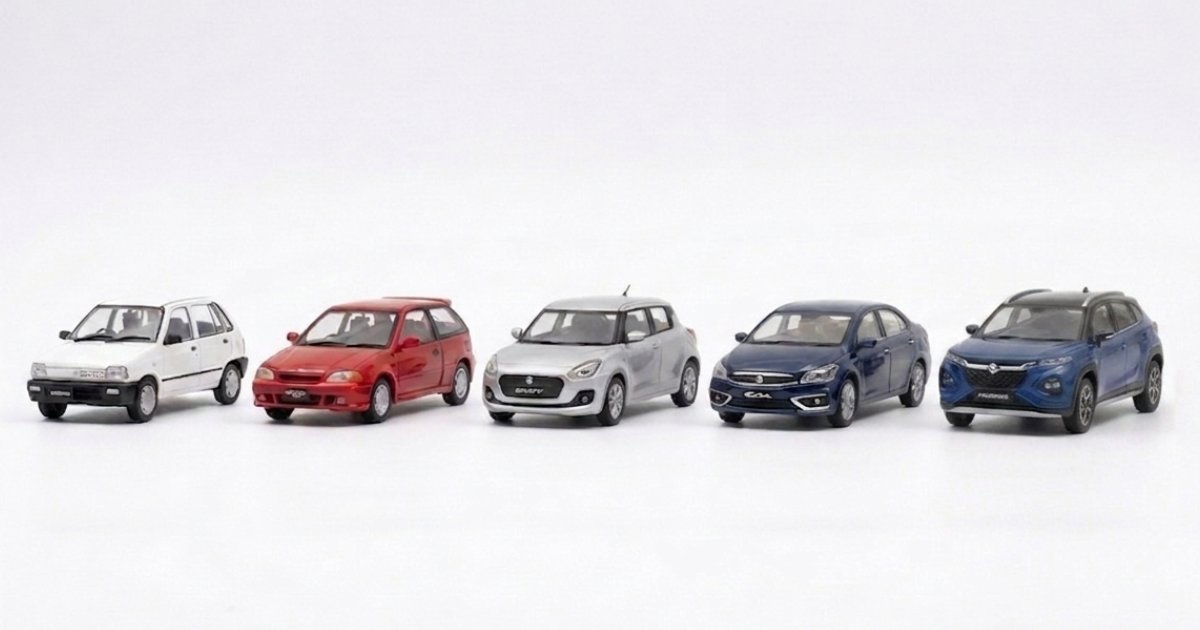
Some brands advertise, and then there are brands that become a country’s collective memory.
For decades, Pak Suzuki has occupied a place in Pakistan: on its roads, screens, and in its collective consciousness. It has deeply embedded itself in the everyday lives of millions. This is not merely a sweeping statement; Suzuki has been part of both the small and significant moments of life in Pakistan, and not accidentally so.
Most Pakistanis have a Suzuki memory somewhere in their timeline. A first driving lesson in a Mehran: old, rusty, with a non-functioning speedometer. An overcrowded family trip in a Bolan to Dreamworld. Or any time someone needed to transport anything from a biryani deg to a mattress, or even an entire home, a “Suzuki” would inevitably be called. An Alto that survived every imaginable economic crisis and countless Careem and Uber rides. From being picked up from school in some form of Suzuki vehicle to owning your first car, chances are that many beginnings in Pakistan begin with a Suzuki. And this kind of connection and reliability is not created by products alone; it comes from telling stories that stay with people.
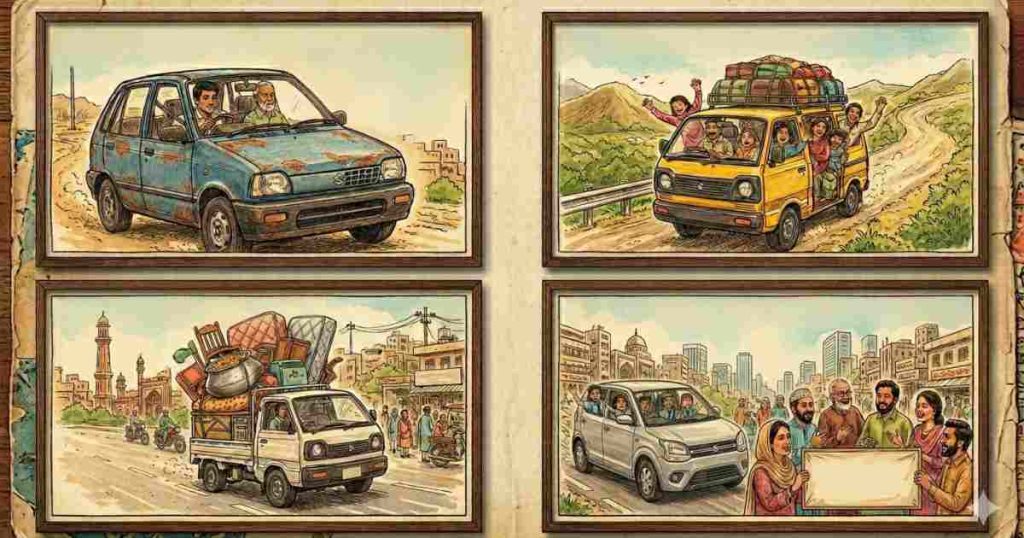
While competitors often focused on prestige, horsepower, imported aesthetics, or luxury aspiration, Suzuki consistently understood something far more powerful about the Pakistani market: people remember emotions before they remember specifications. That principle applies not only to its products, but also to its campaigns.
Over the years, Suzuki has developed some of the most meaningful and impactful campaigns in Pakistan’s automotive industry.
From emotionally driven Ramadan narratives to nostalgia-powered user-generated storytelling, and finally to aspirational repositioning through the Fronx launch, Suzuki’s communication evolution tells a much larger story about branding in Pakistan itself. It is the story of a company learning how to move from practicality to emotional permanence.
The Ramadan Campaign: Humanity Over Horsepower
Long before “purpose-driven marketing” became a buzzword, Suzuki released a Ramadan campaign that did something unusual for an automobile brand in Pakistan.
It barely focused on the car. Instead, the campaign centred around a painfully familiar urban reality: road rage, impatience, and emotional detachment within city traffic. Rather than relying on dramatic driving shots or polished cinematic glamour, the ad showed children helping an elderly man cross the road while adults inside vehicles remained consumed by their own frustrations.
At first glance, it appeared simple. Strategically, however, it was one of the most astute automotive campaigns to emerge from Pakistan at the time.
Car advertising traditionally relies on a predictable formula:
• speed
• masculinity
• status
• luxury
• freedom
• performance
Suzuki abandoned all of that. Instead, the campaign proposed something deeply human: perhaps the problem is not the road. Perhaps it is us.
That is what made the ad memorable.
It reframed mobility not as empowerment, but as emotional disconnection. Cars, the campaign suggested, can sometimes isolate people from empathy. Individuals become impatient behind glass windows, disconnected from the people around them. Then, the children, the only emotionally unaffected people in the ad, restore humanity.
For a Pakistani Ramadan campaign, this was particularly intelligent. Most Ramadan advertisements in the country follow an almost industrialised emotional template: slow piano music, family reunions, mothers preparing food, charity symbolism, and emotional manipulation packaged as spirituality. Suzuki instead chose civic behaviour as its emotional insight.
More importantly, the campaign showed that Suzuki understood its audience beyond the level of transactions. It recognised the emotional exhaustion of urban Pakistani life: the traffic, the frustration, the social impatience.
The brand was no longer merely saying, “Buy our cars.” It was saying, “Be kinder inside them.” That subtle shift elevated Suzuki’s communication above conventional automotive advertising.
Even the media strategy reflected an understanding of local behaviour. The campaign leaned heavily into digital and Facebook-first distribution during Ramadan, recognising where Pakistani audiences were emotionally engaging with content.
The outcome extended beyond a seasonal campaign, which still continues as part of Suzuki’s Ramadan series. It indicated an early shift in Suzuki’s positioning from a purely functional manufacturer towards a more culturally aware brand.
My Suzuki My Story: Turning an Entire Nation into Storytellers
If the Ramadan campaign demonstrated Suzuki’s emotional intelligence, “My Suzuki My Story” proved the company understood something even more valuable: nostalgia and relatability are among the strongest forms of brand equity.
This campaign was not about launching a new model. It was not about specifications or even convincing people that Suzuki cars were superior. Instead, Suzuki asked Pakistanis to share memories.
Photos, videos, poetry, essays, road trip stories, family moments, milestones tied to their Suzuki vehicles. It might sound simple, even predictable, but in reality, it was brilliant.
Because Suzuki possesses something most automotive brands in Pakistan do not: generational memory. Toyota may represent prestige, Honda may represent aspiration, and newer entrants may represent novelty. Suzuki, however, represents familiarity and dependability.
Suzuki vehicles have existed not as luxury possessions, but as everyday companions. They were accessible enough to become part of ordinary life. The campaign transformed consumers into archivists of their own lives. Instead of the brand telling people what Suzuki stood for, it allowed people to define it themselves.
That strategy is incredibly powerful because user-generated storytelling feels more authentic than corporate advertising. When real families share memories connected to a vehicle, the cars stop feeling like products and begin to feel like familial possessions.
“My Suzuki My Story” moved the conversation away from technical criticism and towards emotional attachment. Instead of asking, “Is Suzuki the most advanced car?” the campaign asked, “Was Suzuki present during your most important moments?” Memories are far harder to compete against than features.
The campaign also democratised participation in a way many Pakistani brands still fail to understand. Stories could be submitted in multiple formats and regional languages. That inclusivity expanded the campaign beyond elite urban consumers and transformed it into a national memory archive. People from different cities, classes, and backgrounds could participate equally.
The long-term nature of the campaign made it even more effective. Season after season, the rewards grew larger, participation increased, and the campaign became culturally recognisable.
Collaborations with creators like Irfan Junejo and Zenith Irfan added another strategic layer. Instead of borrowing celebrity glamour, Suzuki borrowed authenticity. That distinction matters immensely in modern marketing.
Traditional celebrity endorsements often feel artificial. However, creators associated with storytelling, travel, exploration, and lived experience helped reinforce Suzuki’s emotional positioning naturally.
Suzuki Fronx: Reinventing Aspiration
Then came the Fronx. And with it came perhaps Suzuki’s boldest branding shift yet.
Unlike “My Suzuki My Story,” which leaned into nostalgia, relatability, and emotional familiarity, the Fronx campaign focused on reinvention.
For years, Suzuki’s greatest weakness in Pakistan was not sales, but aspiration. People bought Suzuki because it was practical, reliable, affordable, and easy to maintain. But aspiration usually belonged elsewhere. Toyota represented status, Honda represented upward mobility, and SUVs represented arrival, while Suzuki often represented necessity.
The Fronx campaign attempted to change that perception.
The messaging surrounding the launch was not centred on engineering details alone. Instead, it focused heavily on lifestyle language:
• evolution
• identity
• ambition
• upgrade
• modernity
• urban aspiration
The introduction of “XUV” branding played a key role in this repositioning. Even though crossover utility concepts already existed globally, the local framing was strategic. Suzuki was not merely launching another vehicle. It was attempting to create psychological distance from its old identity.
And the most important part of the Fronx strategy was this: Suzuki wanted consumers to feel they could socially upgrade without leaving the brand, that Suzuki could also represent premium quality, sophistication, and aspiration.
This was a major shift. Historically, the customer journey in Pakistan often looked like this: start with Suzuki, then eventually “graduate” to another brand.
The Fronx campaign challenged that narrative. Perhaps for the first time, Suzuki attempted to position itself as aspirational rather than purely utilitarian. Importantly, it did so without abandoning its core identity.
The campaign did not suddenly pretend that Suzuki was a luxury European manufacturer. Instead, it carefully balanced practicality with desirability. That balance is what made the communication effective. The Fronx was presented not as unreachable luxury, but as an accessible aspiration: stylish enough to desire, yet familiar enough to trust.
That is precisely the kind of positioning that resonates with Pakistan’s growing urban middle class.
The campaign also reflected how much more sophisticated Suzuki’s branding had become over time. The earlier Ramadan campaign focused on social empathy. “My Suzuki My Story” focused on emotional legacy. The Fronx campaign focused on identity evolution. Together, they form an unexpectedly coherent long-term narrative.
Why Suzuki’s Campaigns Work Better Than Most
Suzuki’s campaigns differ less in budget and more in continuity of messaging. In contrast to many local brands that execute standalone seasonal activations, Suzuki’s communication demonstrates a degree of thematic consistency across campaigns. Each major campaign contributes incrementally to a broader repositioning effort.
Different campaigns have served distinct strategic functions. Ramadan-focused communication emphasised relatability, “My Suzuki My Story” drew on historical association, and newer launches focused on modernisation and product relevance. Collectively, these efforts reflect an attempt to align brand messaging with changing consumer contexts in Pakistan.
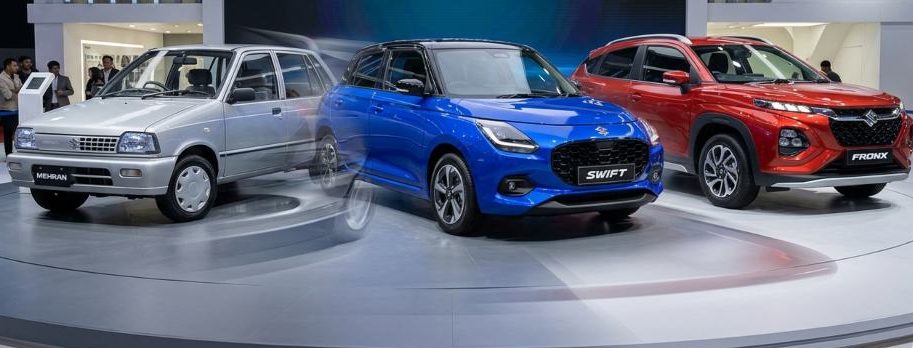
The company understands that in Pakistan, cars are never just vehicles. They are symbols of survival, progression, sacrifice, adulthood, family, and achievement.
And the strongest brands are the ones that understand the emotional meaning behind ownership.
More Than Cars
Taken individually, these campaigns are impressive. Together, however, they reveal something much larger.
Suzuki has spent years transforming itself from a functional automobile manufacturer into an emotional and cultural brand. It represents humanity, legacy, and reinvention.
Suzuki has been present during some of the most ordinary and important moments in Pakistani life. And the brands that survive the longest are usually not the ones with the loudest advertisements. They are the ones that become part of people’s stories.