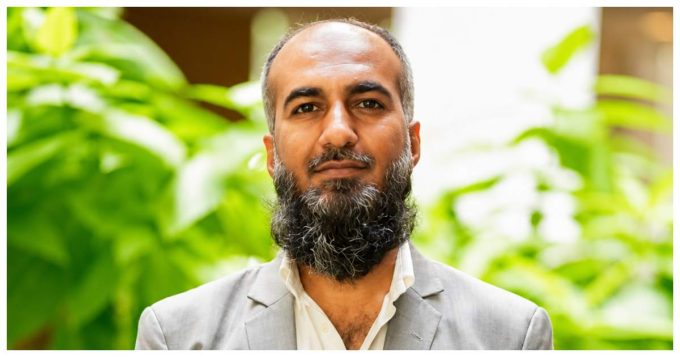

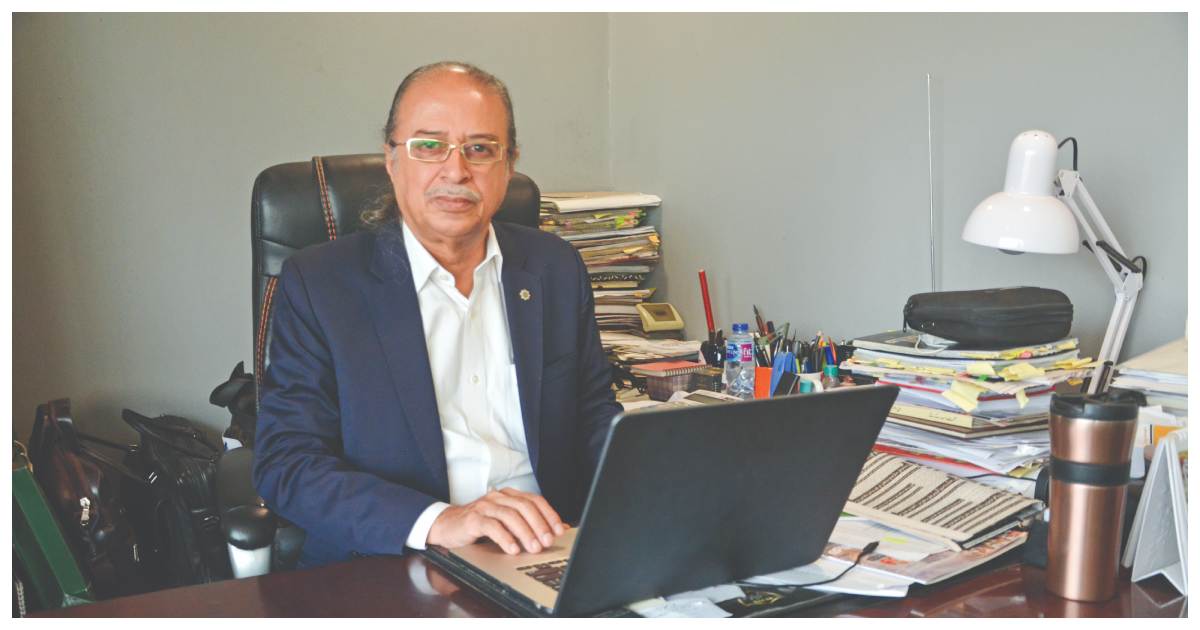
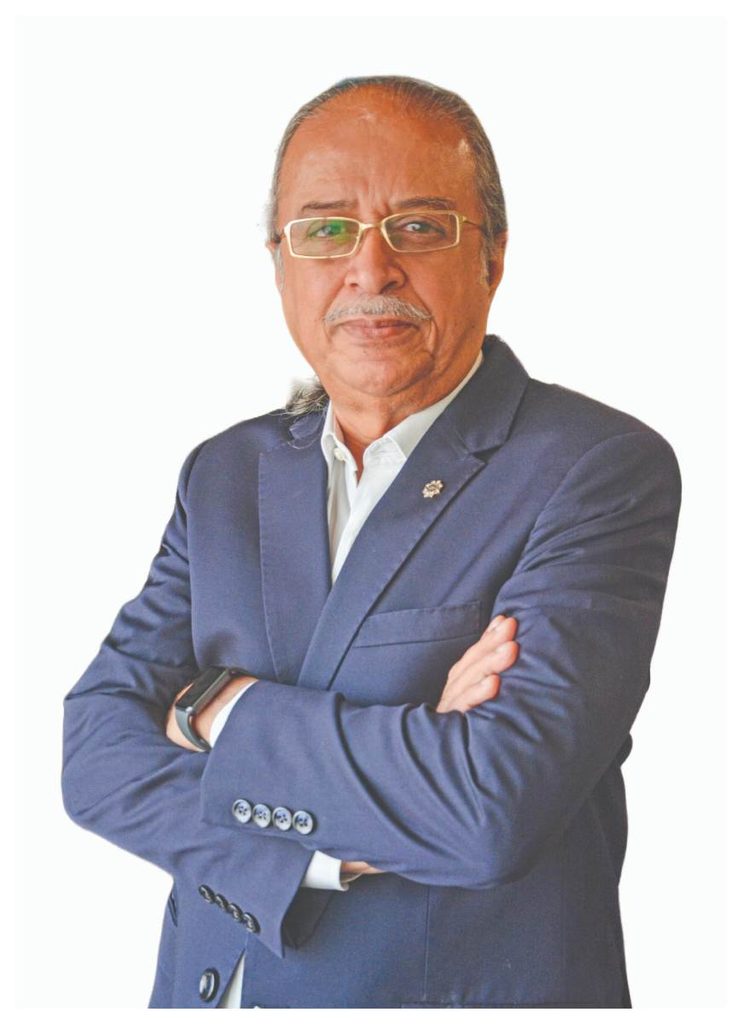
At the intersection of airwaves, art, and public life, Syed Zulfiqar Ali Shah has spent decades working with one enduring instrument: the power of voice. As the force behind HOT FM 105 and a cultural figure rooted in Sindh, he sees storytelling not as a slogan, but as connection. We met at the radio station, where the hum of broadcasts offered a glimpse into the work behind the microphone. Over a cup of coffee, we spoke in depth about culture, public service, and the difference between noise and narratives that last.
Synergyzer: You have lived as a broadcaster, painter, and cultural custodian, three very different selves. Which of them feels most true when no one is watching?
Zulfiqar Ali: Broadcasting, definitely. Painting gives me peace, but broadcasting gives me purpose. Radio is a very intimate medium. People may not know what you look like or what you are wearing, but they remember your words, your tone, and the emotion. If what you say comes from the heart and carries honesty, people register it. They carry it with them.
I always believe broadcasting should add value to people’s lives. Sometimes even a small message can make a difference. I often give the example of people following ambulances in traffic just to clear their own way.
I felt someone had to remind them that the ambulance’s destination is not theirs. Broadcasting can create that kind of awareness, quietly and patiently.
Radio also becomes companionship for many people, including those who are lonely, visually impaired, bedridden, or simply searching for a human voice. That responsibility means a lot to me.
Painting taught me patience and discipline. My teachers at Karachi School of Art taught me how to observe, how to build a line carefully. Broadcasting requires the same patience. You cannot simply speak for the sake of speaking.
Your words should carry feeling, authenticity, and some sense of responsibility. And then there is music, which to me is also a free language. Music travels beyond borders, beyond restrictions, like air or rain.
So yes, even when no one is watching, I think I remain closest to being a broadcaster, because somewhere, someone is always listening.
Synergyzer: What has growing up in Karachi taught you about people, resilience, and storytelling?
Zulfiqar Ali: Karachi is deeply woven into my emotional memory. I was born here, studied here, and dreamed here. I have seen this city in all its moods, through rains, storms, curfews, blackouts, moments of celebration, and moments of grief. In many ways, I grew up alongside Karachi itself.
What makes the city special is its energy and diversity. So many languages, cultures, and people come together here. It is a coastal city, but emotionally it is also an open one. People arrive from everywhere and somehow become part of it. Karachi teaches resilience. No matter what happens, the city finds a way to return to life. After every difficulty, it moves forward again. That spirit stays with you.
Even today, whenever I post something about it on social media, I end it with, “I love Karachi.” Because despite its chaos, construction, and growing pains, this city still carries warmth, memory, and possibility for me.
Synergyzer: In an age obsessed with visuals and scrolling, what does radio still understand about storytelling that newer media often forget?
Zulfiqar Ali: Radio understands companionship. More than a hundred years have passed, technologies have come and gone, yet radio is still alive. There must be a reason for that. Even the most modern car still carries a radio because radio travels with people. It speaks to them when they are alone, driving, working, resting, or worrying.
What makes radio special is that it relies entirely on voice, emotion, and imagination. People cannot see you, so your words must carry honesty and meaning. If the content is authentic, people connect with it deeply.
I also believe radio respects depth. Many platforms today are obsessed with speed and visuals, but radio can still pause and explain the meaning behind things. During Eid-ul-Adha, for example, people talk about food, shopping, and celebration, but very few discuss Bibi Hajra, her struggle, her strength, or the spirit behind the ritual itself. I often encourage our RJs to bring those human and historical dimensions into their programmes. Entertainment is important, but meaning matters too.
That is why radio remains powerful. It does not just inform people; it accompanies them, comforts them, and sometimes quietly makes them think. In a world shaped by artificial intelligence, authentic human communication still carries a unique emotional value.
Synergyzer: You have spoken about radio as a public service platform, not just entertainment. Do you see broadcasting in Pakistan as an underused civic infrastructure?
Zulfiqar Ali: Absolutely. Broadcasting is not only about entertainment. It is also about awareness, responsibility, and public service.
Radio has the ability to influence everyday behaviour. Sometimes a simple reminder about traffic rules, health, or social responsibility can make a real difference. But for that to happen, people must trust you. Listeners stay with a station only when they believe the information is honest and unbiased.
I always say the real owner of a radio station is the listener. One of the most meaningful parts of broadcasting for me has been health awareness. We regularly invite doctors to discuss conditions such as diabetes, prevention, lifestyle, and mental well-being in language people can easily understand.
I have also tried to raise awareness about organ donation. I often mention senior journalist Zubeida Mustafa, whose donated corneas restored sight to two people after her passing. Stories like these remind us that media can inspire humanity, not just attention. In a world increasingly obsessed with appearances, radio still values substance. People cannot see you, so what you say matters more than how you look.
That is why I believe broadcasting remains a serious civic responsibility. Radio is not just about talking. It is about talking sense.
Synergyzer: In a world overflowing with content, opinions, and constant distraction, what separates a meaningful narrative from empty noise, and what still makes people truly listen?
Zulfiqar Ali: Society today is like a huge canvas filled with too many colours and too many voices. The problem is not that people are speaking; it is that everyone wants to speak on everything. Real communication requires depth, discipline, and responsibility.
People also follow trends very quickly. There is a herd mentality. But real communication needs courage and originality. I remember my art teacher talking about the painter Mashkoor Raza, who painted horses in purple and orange. Students questioned it because horses are not those colours. But that was his identity, his courage. Real creativity comes when you dare to communicate differently.
In this age of artificial intelligence and endless content, authenticity matters more than ever. Noise begins when opinions are forced on people instead of shared with respect. We have forgotten how to disagree gracefully.
That is where radio remains special. I remember that SIUT urgently needed a rare Bombay blood group donor for a young girl’s operation. We stopped regular programming and announced it live on air. Within hours, a donor was found. No other medium could have responded with that speed and immediacy. That day reminded me how deeply radio can connect human beings.
You do not need visuals to touch people. Words, voice, poetry, and emotion travel straight to the heart. A few honest words can create an image stronger than any screen. A meaningful narrative comes from honesty, experience, and the heart. Say things clearly, respectfully, and truthfully. If you want people to listen, speak with sincerity and something meaningful to say. That is what people still trust.
Synergyzer: For a generation growing up on screens and instant content, what would you say about the power of voice, reading, and radio?
Zulfiqar Ali: I want to tell the younger generation something very simple: your identity is not only your face, your clothes, or the phone in your hand. Your voice is also your identity. The way you speak, the words you choose, and the thoughts you carry tell people who you are.
But to speak well, you first have to read. Books are your best friends. Read biographies, stories, and accounts of people’s lives and struggles. Reading helps you understand human beings better, and that understanding reflects in your speech. Your character is revealed through your words long before people truly know you.
Radio gives young people a rare opportunity to learn communication and responsibility. The moment you sit behind a microphone, you are responsible for people listening to you. You may not see your audience, but your voice travels into homes, cars, hospitals, and countless lives. That connection is powerful.
I would encourage young people to experience radio, even part-time. It teaches confidence, discipline, patience, and the art of meaningful conversation. In today’s world, we focus too much on visuals and glamour, but hearts are still reached through sincerity and voice. At the same time, radio in Pakistan needs support.
It is a public service medium that has served this country for decades. Policies should help it survive and grow, not suffocate it. Even today, if you want to reach the masses with honesty and depth, radio remains one of the most powerful media we have.