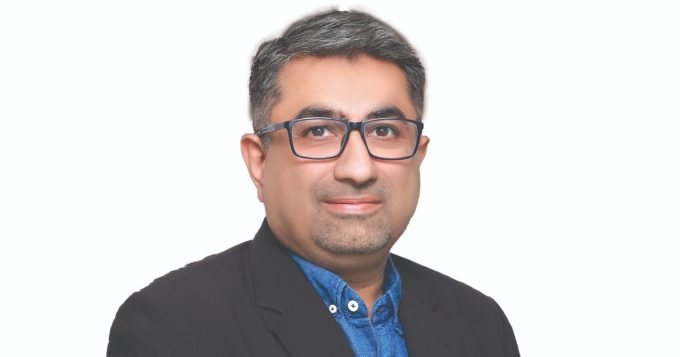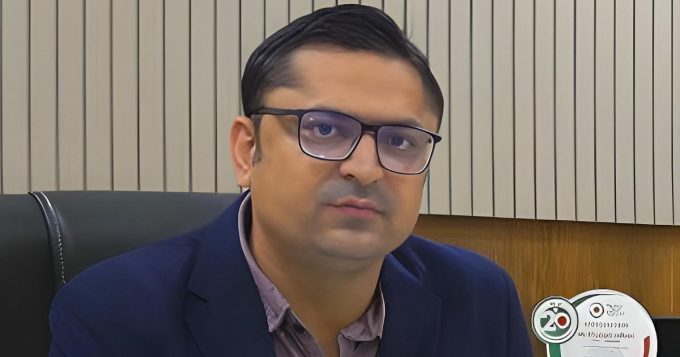

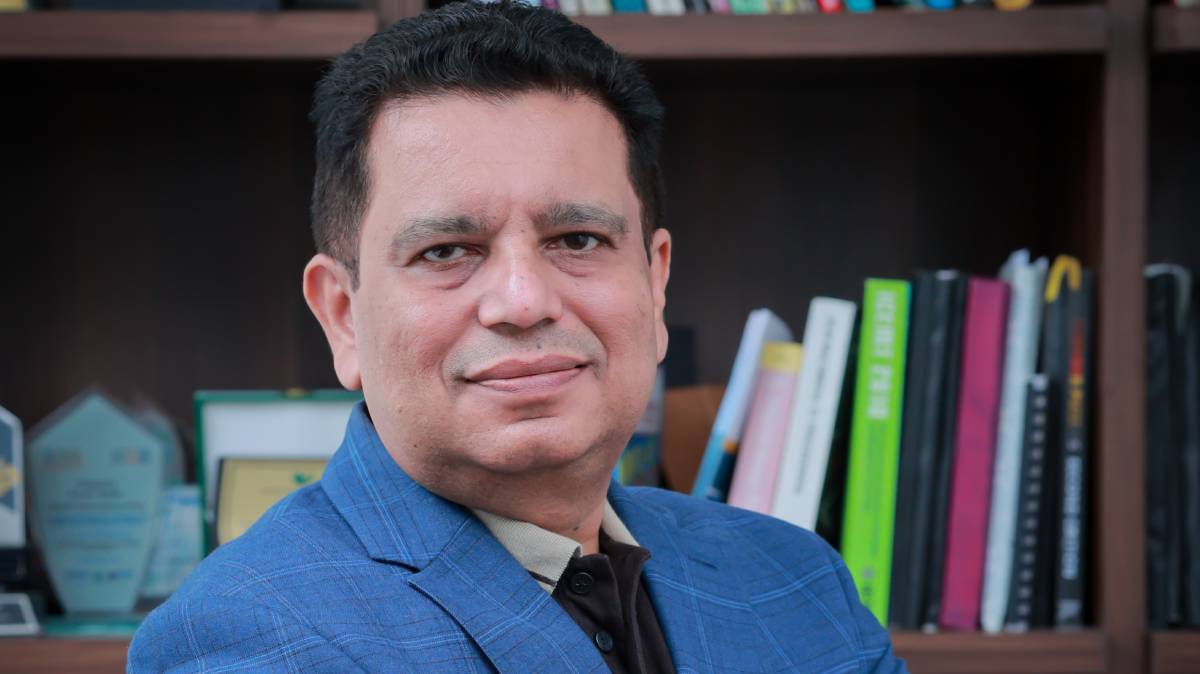
Dr Shakeel A. Khoja, Dean of the School of Mathematics & Computer Science at IBA Karachi, has spent over two decades at the intersection of technology, education, and innovation, shaping Pakistan’s digital future one learner at a time. A pioneer in eLearning technologies and semantic web research, his work has consistently pushed boundaries to make education more intelligent, accessible, and learner-centric. In this conversation, he unpacks how IBA is redefining academia through AI integration. Dr Khoja’s vision is clear: Pakistan must stop chasing trends and start leading them.
Synergyzer: What sets IBA apart in preparing Pakistan’s next generation of innovators, and how has AI been integrated into this vision?
Dr Shakeel Khoja: IBA stands out for its holistic approach, combining technology with business, economics, and social sciences. Our three schools, Mathematics and Computer Science, Business, Economics and Social Sciences, actively collaborate to bridge disciplines. For example, our Economics programme is evolving into Economics and Data Science, while initiatives like Ecomath have produced globally competitive graduates with strong quantitative and analytical skills.
We have also embraced AI across teaching and learning. Faculty members are trained to use tools like ChatGPT and Claude in classrooms, and many assignments, projects, and exams are now AI-based. Students use large language models as learning partners through gamified assessments and leaderboards that encourage creativity and innovation.
Similar to Khan Academy’s Khanmigo, our goal is to help teachers and students use AI to enhance learning and stay ahead in an evolving digital world.
Synergyzer: You recently signed an MoU with RCCI to bridge academia and industry. What will it take to turn such partnerships into real drivers of industrial innovation?
Dr Shakeel Khoja: At IBA, this kind of collaboration has been part of our DNA for decades. For over 70 years, we have been training professionals who go on to strengthen the industries they work in.
By equipping them with new technologies, ideas, and business concepts, we help enhance their efficiency and performance.
Our partnership with the Rawalpindi Chamber of Commerce and Industry (RCCI) reflects the same vision to extend IBA’s expertise to the Rawalpindi–Islamabad region and strengthen professional capacity in an area with immense but underutilised industrial potential. Through this MoU, we aim to bridge the gap between academia and industry by offering practical, hands-on education that drives innovation, skill development, and continuous learning across Pakistan’s industrial landscape.
Synergyzer: As AI reshapes creativity and innovation, will Pakistan lead the change or be left catching up?
Dr Shakeel Khoja: AI will replace repetitive, mechanical work that lacks imagination, but in the realms of innovation, problem-solving, and creativity, it becomes a collaborator rather than a competitor. We have seen this before, when computers arrived, many feared job losses, yet they created far more opportunities. The same applies to AI today: those who adapt will thrive; those who resist will fall behind.
To lead this transformation, Pakistan must adopt a forward-thinking mindset where innovation and education drive progress. Institutions like IBA are already working towards this, integrating technologies like generative AI and cybersecurity into their curricula to address local challenges. But real progress demands a stronger ecosystem, one where the government, academia, and industry collaborate, invest in research, and encourage entrepreneurship.
If Pakistan wants to stay ahead, we must move from dependency to self-reliance. Progress comes when we stop waiting for others to lead and begin creating our own solutions. With creativity, commitment, and the right support, we can ensure our graduates don’t just survive the AI revolution — they lead it.
Synergyzer: With the YOTTABYTE partnership, you have spotlighted cybersecurity. What does true cyber resilience look like for Pakistan, and how close are we to it?
Dr Shakeel Khoja: YOTTABYTE exemplifies the kind of collaboration Pakistan needs. Operating globally with offices in Canada, the UK, Islamabad, and Karachi, the company brings top-tier cybersecurity expertise that complements IBA’s academic strength. Together, we are co-developing academic programmes, sharing knowledge, and building practical cybersecurity capacity.
Our first major initiative, a conference on digital threats and organisational vulnerabilities, was a step toward raising awareness and driving action. This partnership represents more than dialogue; it’s about creating real solutions. Cyber resilience in Pakistan will stem from such academic–industry collaborations, ensuring that cybersecurity becomes a core pillar of our digital future, not an afterthought.
Synergyzer: Will Pakistan’s banking sector see AI as real innovation or just another buzzword?
Dr Shakeel Khoja: I believe the banking sector in Pakistan is taking generative AI very seriously. From the State Bank to leading commercial banks, there is a clear understanding of its potential and a growing commitment to explore it meaningfully. Banks are looking at AI not just as a trend, but as a tool to transform operations, whether it is improving customer service, optimising investment strategies, or developing smarter policies.
What is encouraging is their willingness to collaborate with academic institutions like IBA to co-create solutions tailored to the industry. Their aim is twofold: to modernise banking in a way that resonates with younger, tech-savvy generations, and to expand their customer base through more efficient, intelligent systems. In short, they’re not chasing the buzz; they are working to harness AI as a genuine driver of innovation.
Synergyzer: Do you believe universities beyond the top tier are moving in the right direction? If not, who needs to lead the reset: policymakers, industry, or academia itself?
Dr Shakeel Khoja: Many universities remain trapped in outdated systems due to limited industry engagement and rigid policies. I believe the responsibility begins with the universities themselves; they must expand their vision. Students today won’t thrive in restrictive, obsolete environments.
Technology is evolving fast, and institutions that fail to modernise will fall behind. A reset is needed, but it requires shared responsibility. Policymakers must create forward-looking standards, while the government should provide direction, not solutions. The National AI Policy is a good start, setting the stage for adoption and awareness. Now universities must act by seeking research funding, updating pedagogies, and integrating technology. The problem isn’t access to tools; it is our inertia.
Synergyzer: As AI transforms key sectors, how urgent is it for Pakistan to build ethical and governance frameworks, and can it also help bridge the digital divide?
Dr Shakeel Khoja: It is very urgent. Pakistan’s first AI policy is a step forward but still incomplete. AI is already reshaping finance, healthcare, and education, yet without strong safeguards, risks like data misuse, bias, and privacy breaches remain high. We have seen this before with social media, where data was shared without a clear understanding of its repercussions. Recent reports of NADRA and credit card data leaks underline the need for stricter privacy laws and greater public awareness.
At the same time, Pakistan’s digital divide is widening. Urban areas enjoy reliable internet, while many rural regions struggle with poor connectivity and unstable electricity. Generative AI has disrupted higher education, pushing learning towards more individualised models — a shift that can work if educators adapt and the government strengthens infrastructure.
Only about 13–14% of Pakistan’s population has access to tertiary education, compared to 40% in developed countries. We cannot rely solely on traditional campuses. Expanding digital and distance learning, alongside the development of ethical AI frameworks, is vital to ensure that technology empowers rather than divides society.
Synergyzer: What keeps you excited as a researcher in Pakistan?
Dr Shakeel Khoja: My research in web sciences includes the Semantic Web and machine comprehension. What excites me most is solving local challenges like developing Urdu language models so systems such as ChatGPT can process Urdu as effectively as English.
What frustrates me is the lack of infrastructure and research culture. We have limited research centres, collaboration, and institutional support. Real innovation needs an ecosystem that inspires and connects researchers, and that is what we lack.
Synergyzer: As AI transforms the way we learn and work, what skills must today’s graduates develop, and how is it reshaping education and research in Pakistan?
Dr Shakeel Khoja: Graduates must focus on human-centred skills, the ones AI cannot replace. Critical thinking, problem-solving, creativity, and ethical decision-making will be essential, along with the ability to interpret data responsibly and question assumptions. Adaptability and empathy are equally vital, as the future workforce will operate in diverse, global teams where understanding and respecting differing perspectives is key.
At the same time, AI is forcing a complete rethink of how we teach and assess learning. Traditional methods, such as asking students to write long essays are becoming obsolete, as chatbots can generate the same content in seconds. The solution isn’t to ban AI, but to embrace it. Educators must find creative ways to integrate it into classrooms, using it to enhance rather than replace learning. When used thoughtfully, AI can make education more inclusive, creative, and deeply relevant to the world we inhabit.
The 4th Generation Revolution with Dr Shakeel Khoja
Dr Shakeel A. Khoja on how AI is reshaping education and why Pakistan must move from following trends to leading them.Use Customizer SettingPost Layout 1Post Layout 2Post Layout 3Post Layout 4Post Layout 5Post Layout 6Post Layout 7Post Layout 8Post Layout 9Post Layout 10Post Layout 11Post Layout 12Post Layout 13Post Layout 14Default Sidebarsidebar7395nullUse Customizer SettingSingle post with sidebarSingle post full widthUse Customizer SettingLeft SidebarRight SidebarUse Customizer SettingEnableDisableDefault LayoutFooterGeneral sidebarHeaderHeader overlayMobile menu sidebarDefault LayoutFooterGeneral sidebarHeaderHeader overlayMobile menu sidebarDefault MenuCustom linkfootermain-menu2025top menuDefault LayoutFooterGeneral sidebarHeaderHeader overlayMobile menu sidebar