

The schoolyard has a new runway. Uniforms are not just uniforms, lunchboxes are not just lunchboxes, and even pens double as status symbols. Advertising and social media have rebranded the very idea of ‘back to school.’ But when did classrooms turn into catwalks, and who is it really benefiting from this?
Uniforms: Functional or Fun?
Schools are already open, and with the start of new sessions comes new excitement and renewed energy. However, in the past few years, this excitement has not only been about teachers and books, but has also gone beyond that.
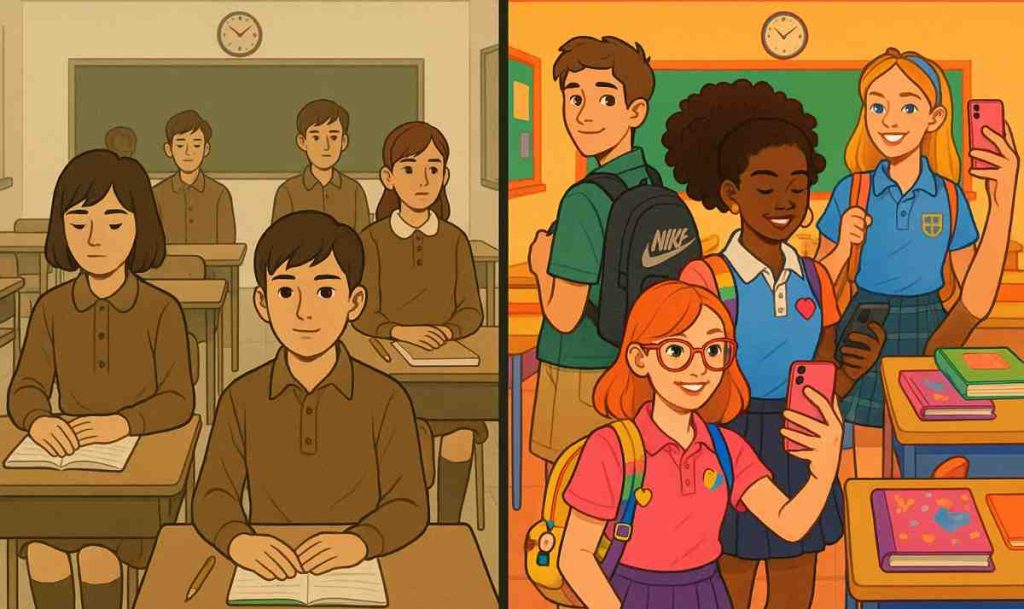
Gone are the days when school uniforms and supplies were seen merely as functional necessities. Uniforms used to be a means of equality, a way to erase class divides. Today, they have become a money-making scheme.
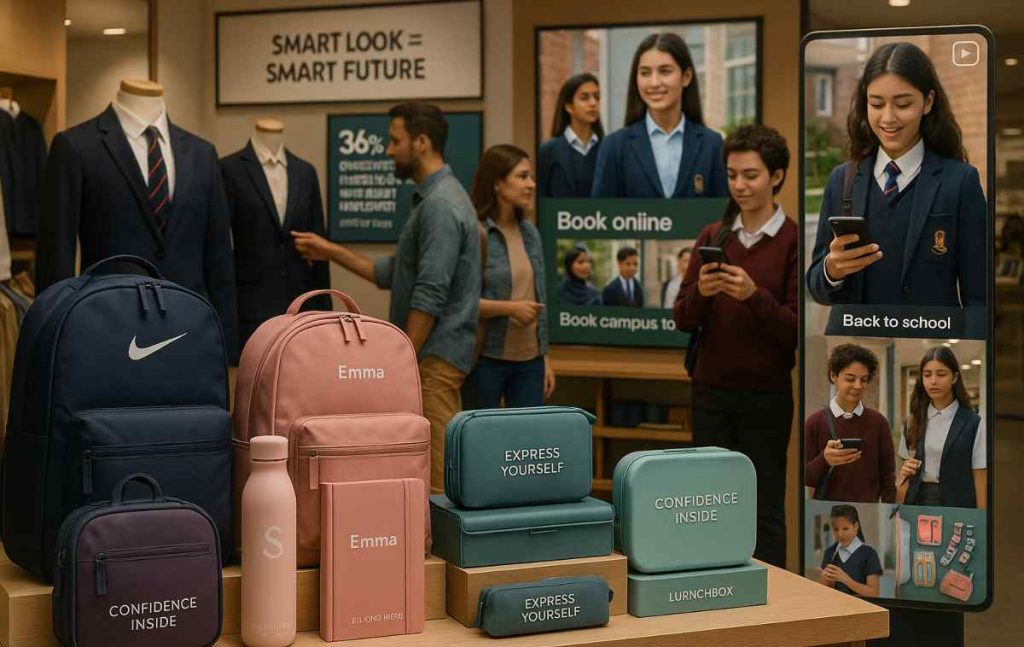
They are vibrant expressions of personality, showcases of personal prestige, and style statements. To stand out amongst their peers, heavily influenced by branding, advertising, and social media. Which have entered and carved the school space, making uniforms and supplies a style statement.
Traditionally, uniforms were a source of frustration for students, seen as restrictive and dull. But now uniform companies have redefined the image. By introducing customisable options and trendy designs, uniform manufacturers have turned the narrative on its head.
Students can choose styles that resonate with their unique tastes. They have become more of a canvas for personal expression. Education has become entangled with consumer culture as well, where schools market themselves not only on academic merit but also as an “aesthetic experience” they offer.
Practicality vs Aesthetics
In recent years, many educational institutions have embraced more modern and fashionable uniform designs. Moving away from traditional styles that often prioritised practicality and modesty over aesthetics.
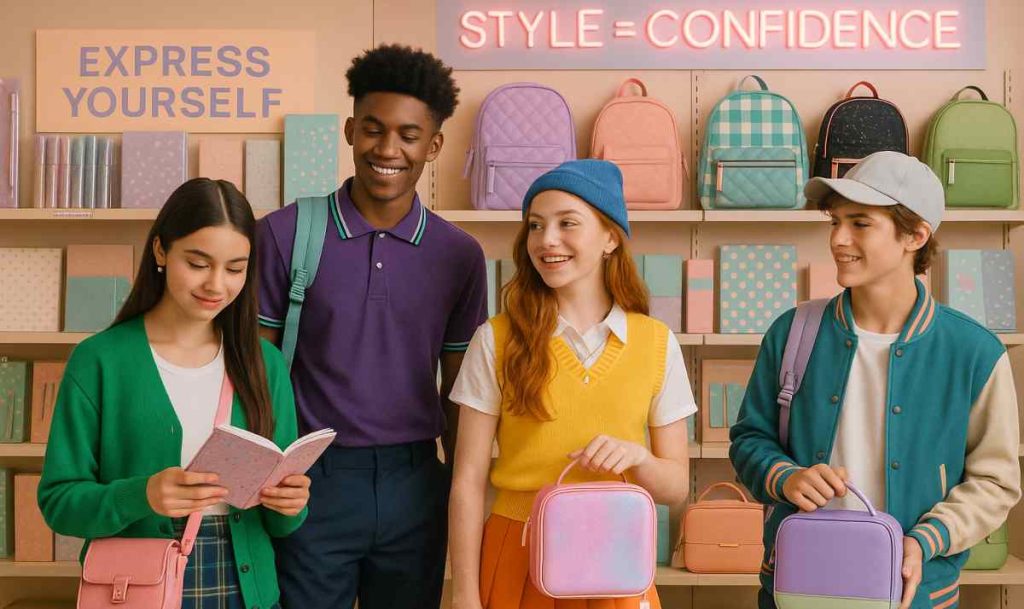
Similarly, stationery items and other school supplies have become more than just tools. Brands have been putting in effort to introduce products that are not only functional but also visually appealing. From glittery pens to beautifully designed notebooks, the options are endless.
For many, stationery has become a source of inspiration. Brands have been focusing on eye-catching designs, bright colours, trendy patterns, and unique textures that make stationery a fashion statement. The lunchbox, once a simple container for sandwiches, has now transformed into a stylish accessory.
Students are leaning towards boxes that can be customised and offer trendy options. Wrapped in the language of creativity and self-expression. These items are often marketed as tools of empowerment, “let them express themselves!” or “personal style is confidence!”, subtly reinforcing the idea that confidence and individuality can be bought.
This co-opting of empowerment rhetoric makes it increasingly difficult to question the trend; after all, who wouldn’t want to empower their child?
Students and Social Media
Where does this all stem from? How did this all begin? Here are some possible responses. In today’s digital age, social media and advertising have reshaped nearly every aspect of our lives, including how students view and engage with fashion, especially when it comes to school uniforms and supplies.
Gone are the days of sticking to traditional styles; branding and advertising have changed the narrative. Brands are now developing marketing strategies that emphasise individuality and provide students with options to showcase their personal style.
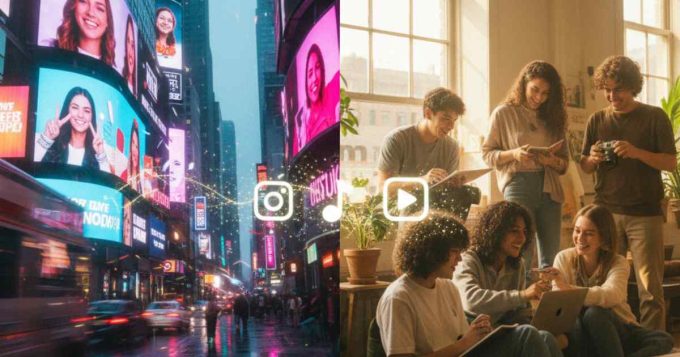
Their marketing strategies often target students through social media, influencer partnerships, and collaborations with popular figures. This creates a sense of aspiration, making students want to wear these brands to feel included and trendy.
But this shift has made class divides impossible to miss. Outdated public school uniforms now sit in stark contrast to the polished, branded looks of private schools. It is subtle classism, woven into socks, lunchboxes, and stationery, shaping how students see themselves and each other.
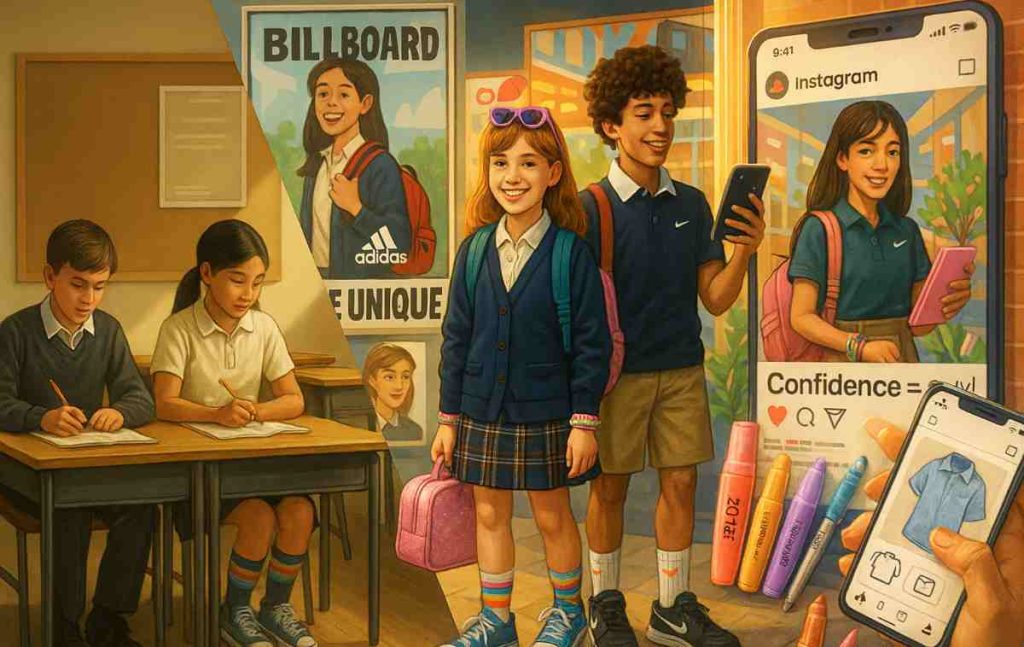
Over the past few decades, fashion has not been seen as a personal choice anymore; it has surfaced as a social necessity. Wearing the “right” brand can enhance a student’s status amongst peers. Brands like Nike and Adidas have long ago become synonymous with student culture, and hence their marketing strategies often target their audience accordingly through social media.
Students are now sharing their personal styles when it comes to school uniforms, creatively mixing and matching different pieces to express who they are. Social media has opened up the world of fashion for students, giving them the chance to discover stylish options from a variety of brands.
They are no longer restricted to what is available in nearby stores; instead, they can browse countless styles online. This newfound accessibility empowers students to build their wardrobes and select school supplies that truly reflect their personal tastes.
Brands sell Promise
Brands do not just sell school supplies anymore; they sell the promise of confidence, belonging, and self-expression. The message is clear: if your child does not have the right bag, bottle, or customised notebook, they will fall behind socially.
Uniforms have become more than just dress codes; they are a marketing tool. A 2022 UK study found that 36% of parents were more likely to enrol their child in a school with a smart-looking uniform. In Pakistan, this has translated into sleek, modern designs featured in brochures, Instagram reels, and campus tours.
All projecting discipline, modernity, and upward mobility. Influencer culture has added fuel to the fire, with curated “back-to-school” content showcasing everything from coordinated water bottles to personalised pencil cases.
As students scroll through social media, they are not just absorbing trends; they are crafting identities. On the upside, this shift has also turned school prep into something exciting. With a wider range of options available online, students can now use uniforms and supplies to express personal style within a shared environment. It is not just about fitting in; it is about standing out.