
The writer looks at how AI is stepping into the creative space, transforming everything from filmmaking to advertising while working alongside human imagination.
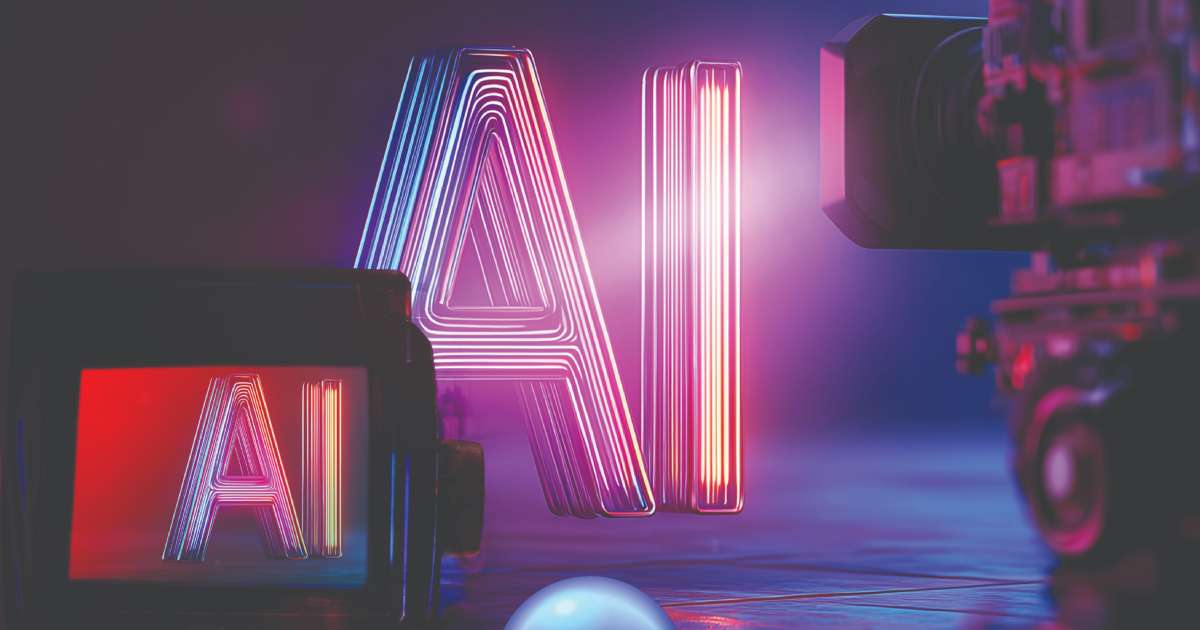
AI is changing how campaigns are created, making the process less dependent on people. Film, advertising, and television are all entering a new phase. Today, AI helps with everything from brainstorming to editing, boosting creativity, speeding up production, and opening up new ways to tell stories. This shift is more than just about working faster; it is changing how stories come to life from start to finish.
The Potential of Pre-Production
Traditionally, the creative journey has been slow and painstaking, but AI now serves as a powerful catalyst from the very beginning of an idea before prior to the first scene is filmed, AI is influencing the narrative in the background.
Have you ever contemplated whether a script will achieve box-office success? Major studios such as Warner Bros. have started using AI tools like Coanalytic to evaluate scripts and forecast their commercial viability. These platforms can analyse the genre, themes and emotional arcs of a screenplay, comparing them with historical data from successful films to predict potential earnings and target audiences. This does not eliminate the screenwriter’s creative essence; rather, it provides studios with a data-informed guide to navigate the uncertain terrain of film financing. Additionally, AI can function as a co-writer.
Let’s Talk About the Script
Technologies like ScriptBook can assist writers by proposing dialogue, enhancing plot elements, and even forecasting audience reactions to specific scenes, transforming a solitary endeavour into a collaborative process with an AI partner.
Digital Scouting and Storyboarding
Finding the right locations has always been a time-intensive and costly segment of filmmaking. AI is revolutionising this aspect. Current platforms can dissect a script’s descriptions from “a crowded street in New York” to “a deserted, post-apocalyptic landscape” to generate lifelike 3D environments. This advancement, paired with virtual sets, enables directors to visualise and refine shots without venturing outside the studio, saving considerable time and reducing logistical challenges. Consider the fluid, ever-evolving backdrops in a production like Disney’s The Mandalorian, which uses a large LED panel known as “The Volume” to project dynamic virtual settings in real-time.
Transforming Production and Post-Production
As the cameras roll, or even before that process begins, AI maintains its influence, blurring the boundaries between the tangible and the virtual.
AI-Created Worlds and Characters
The combination of AI with CGI has simplified the process of building imaginative worlds. For the Marvel hit, Avengers: Infinity War, an advanced machine learning system aided in the creation of the supervillain Thanos, fine-tuning his digital expressions to align with actor Josh Brolin’s performance. Likewise, the ability to digitally “de-age” actors, a technique honed in films like The Irishman for Robert De Niro and Al Pacino, is becoming a smoother process due to AI’s capability to analyse and manipulate facial features with remarkable accuracy.
Editing and Visual Effects
AI technology is now taking over some of the most monotonous tasks associated with post-production. For instance, IBM’s AI programme, Watson, produced the trailer for the horror film Morgan. The AI examined numerous horror movie trailers to determine what elements create suspense or fear. It then autonomously chose the most “exciting” moments from the film’s material to craft a trailer that was both captivating and entirely AI-generated. Regarding visual effects, artists no longer need to manually rotoscope or track every object in a shot. Programmes like Runway ML employ AI to streamline tasks such as removing objects or individuals from footage, allowing artists to concentrate on more intricate and creative endeavours.
The Emergence of Generative Video
One of the most astonishing advancements is the capacity to produce entire video sequences from a simple text description. OpenAI’s Sora serves as a key example. Although it is not publicly accessible yet, the showcased videos reveal its ability to generate hyper-realistic, minute-long scenes with incredible detail and smooth camera movements. Picture a director inputting “A stunning view of a Parisian café with raindrops on the window” and receiving a cinematic, AI-crafted clip in return. This technology has the potential to transform everything from independent filmmaking to pre-visualisation for major productions, allowing creators to quickly prototype their concepts.
CGI and AI in the Advertising Sphere
Fake Out of Home – (FOOH) Advertising
This new style of advertising has emerged from the use of CGI and AI. Brands are using these technologies to produce hyper-realistic outdoor ads that do not actually exist in reality.
A well-known example is Jacquemus’s campaign for the “Le Bambino” bag, featuring a viral video showing oversized versions of their handbags “transported” through Paris on what looked like buses. The entire campaign was CGI-generated, yet it seemed so real that it amazed and engaged millions, showing that companies can gain significant visibility without the logistical issues and environmental costs of real-world installations.
Similarly, Maybelline’s ad for “Lash Sensational Sky High” mascara featured a CGI mascara wand “decorating” a London tube train, creating a worldwide sensation. These campaigns generate instant buzz and encourage social media engagement, giving brands an unfiltered connection with their audience.
Customised and Scalable Campaigns
AI-driven platforms do more than speed up campaigns, they make them feel personal. Brands can instantly create thousands of ad variations that speak to different interests and backgrounds, making each campaign more relevant and engaging. This tailored approach helps brands connect with customers in meaningful ways, building stronger relationships at a scale and pace that were once impossible.
The Future is Collaborative, Not Competitive
In conclusion, the evolution of AI is not a threat to human creativity but a catalyst that expands its horizons. By embracing AI as a creative collaborator, artists and storytellers can push boundaries, overcome technical barriers, and realise visions with unprecedented impact.
From Pakistani agencies using AI for infographics to major Hollywood productions, the message is clear: the future of creative industries depends not only on AI but also on humans.
As technology and human ingenuity continue to intertwine, the creative industries stand to benefit from richer, more diverse narratives and innovative forms of expression. The true promise lies in this partnership, one where creativity is amplified, not replaced, and where the impossible becomes possible.