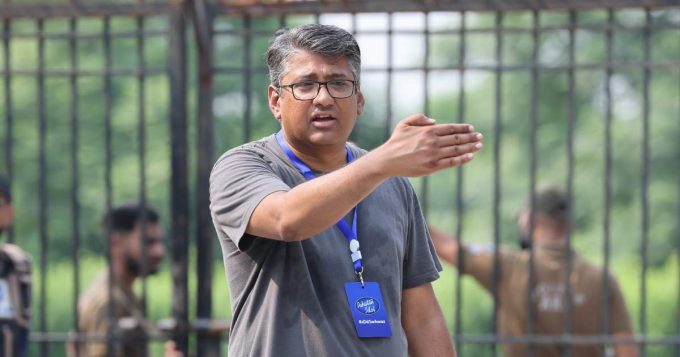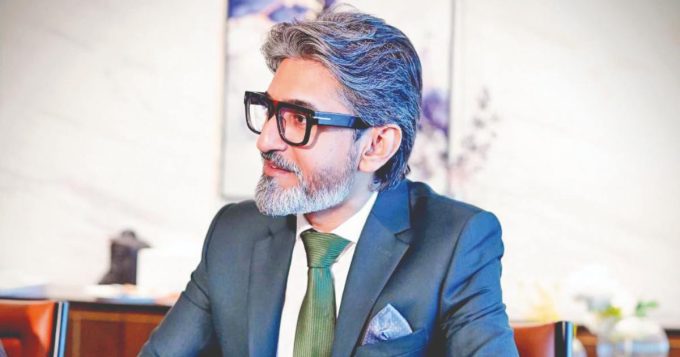


Jawad Bashir has worn more creative hats than most of us can name, from redefining absurdist humour with Dr. Aur Billa to shaping the visual language of an entire generation through VJ culture, acting, singing, and directing. He has spent three decades shaping how Pakistan hears, sees, and feels its pop culture. As music and marketing grow more intertwined, his vantage point offers a rare, lived understanding of how technology, taste, and creativity continue to collide.
Synergyzer: You have given three decades of your talent to the industry. What sets apart today’s music industry apart from the 90s or the 2000s?
Jawad Bashir: I do not believe in categorising eras in history as good or bad; each period has its own unique traits. My generation, which I consider the peak of our time, was different in terms that technology today plays a massive role in influencing how we think, perceive, and react. This is something we did not experience during our time.
Although AI has existed for decades, its recent revolution has significantly diminished human value and undermined the meaning behind our actions and creativity. For instance, there’s an app called Suno that, with a simple press of a button, creates music for you.
The worth of a human, and especially true art and skill, is on a steep downward slope. And I believe this is dangerous. There is no such thing as ‘handmade’ anymore. If someone has been in the industry for 20 years and spends four nights finding the right words or tune. We are now doing it in seconds. How can we compare these or consider one a replacement for the other?
Synergyzer: Do you think the music industry primarily responds to audience demand? Or is the industry shaping and dictating what the audience consumes?
Jawad Bashir: There is a general saying that goes, “log yeh pasand kar rahe hein tho hum bana rahe hein”. But we have a responsibility because whatever you give to the people, they will like it and become used to it. As an industry, we develop the taste of our audience; it is not the other way around. This is where we are obligated to give them good quality material, because they will get used to that.
We have apps, websites and social media that show us what we want to see. We seek entertainment, which is why we turn to certain media to keep up with what is ‘in’. Attention spans now last only seconds, making it increasingly difficult to hold an audience long enough to explain anything in depth.
I am from more primitive times, and honestly, not comfortable with how things are moving forward. This is how people are getting trained now for the world. I feel that as human beings, we are not really progressing but are becoming dumber. We used to learn skills with mehnat, but now, with the press of a single button, we are getting what people have taken decades to learn and produce. The brain is not developing at the same pace as it did before.
We need to train our audience to consume better content. You cannot build anything substantial or develop a story because people have grown impatient with how they consume content. The value of human art is diminishing, as current technology pulls from historical and present data to produce work that is not truly progressive. It feels like we are living in a disinformation era, where truth is almost impossible to distinguish from falsehood. In lowering our standards, we are compromising our own creativity.
Synergyzer: What key elements do you focus on during music selection to ensure connection and understanding with the audience?
Jawad Bashir: When I begin creating content or music, I do not focus on what the audience demands but what the concept, story or the theme itself is demanding. When I create music, it is based on what I have in mind, and if the sound and theme really justify the story I have created in my head.
If it starts to feel like it is finally coming to life, then it is around this point that I add what the audience wants. Of course, we create everything for them, so we have to keep them in mind, but the stage at which I ask these questions also matters. Do I want them to be entertained? Should they dance? Do I want the music to make them feel happy, or make them sit with a bit of sadness?
Synergyzer: The correlation between marketing and music is deep-rooted. In your opinion, do you think the marketing industry is doing justice in using the right sounds to convey the message they are conveying?
Jawad Bashir: Yes, the marketing industry is keeping music alive in terms of capturing their core listeners. However, I feel this industry has experts, and they are great at what they do, but creativity is really bogged down. They are suppressed, stifled and very regulated.
A creative person’s liberty is restricted by multiple factors, and when too many cooks get involved in making a dish, it is inevitably spoiled. Everyone starts dictating how the creative should be directed. For example, when you go on set for a 30–40 second shoot, the agency is there, the client is there, the producers are there, but how much space does the creative really get to perform without constant intervention from stakeholders?
Everyone wants to take a creative lead on projects. A creative person becomes dependent on the organisation or agency financing the work. Some creatives push back, and then they end up like me. Every expert should be allowed to use their talent to its full potential.
Synergyzer: What are some effective uses of music that the experts need to keep in mind at all times when trying to capture their audiences through it?
Jawad Bashir: Music is crucial in brand building and for brand image. From artists like Young Stunners to Hasan Raheem, brands should be bringing these musicians on board to develop distinctive musical IDs.
When working on music, instead of asking a concept writer, maybe try a lyricist to see what they can write for your brand. It is unique and obviously risky, which not many would dive into. We rarely create musicals in films or campaigns; at most, we make jingles. I
love jingles and their effectiveness, but it’s time to go beyond. A musical ID doesn’t need a full line; even a single note can make the audience associate it with your brand.
Synergyzer: Dr. Aur Billa set a creative benchmark in its time. What holds you back from reinventing that kind of boundary-pushing work today?
Jawad Bashir: Dr. Aur Billa came in when we were in NCA. We were young and bold, but always respectful and polite. We knew our limits, and within those boundaries we created Dr. Aur Billa.
Even then, people considered us to be too bold. We have seen the peak of our careers, and I am content with what I have achieved. Today, however, we are considered irrelevant, and the dynamics have drastically changed.
People are not as respectful as they once were, and not because it is a generational issue; as a society, we have stopped valuing what truly matters: respect, politeness, and patience. Dr. Aur Billa cannot be revived; people’s tastes have simply changed, and they now appreciate content with an insolent edge.
Some will root for it, others may be against it, but that is generally what entertains audiences today. I did try creating content similar to Dr. Aur Billa, and the consumption rate has been disappointing.
Everyone is a star these days thanks to social media platforms and handheld devices. Simply appearing on these platforms and doing the most bizarre things can make someone popular overnight.
Synergyzer: With clients cutting budgets and AI changing roles, how can the industry balance using AI efficiently without settling for mediocrity?
Jawad Bashir: Clients are cutting budgets, and a campaign that would have cost a crore is now being developed for just a few lacs. Roles are shifting because of AI, and what we need now is clear regulation on how far and how much we should use it.
Accepting mediocrity is another issue the industry needs to address. Using AI isn’t the problem; the problem is using it just to deliver work with substandard results. The goal should be to create work that truly reflects the hard work and creativity people put in.