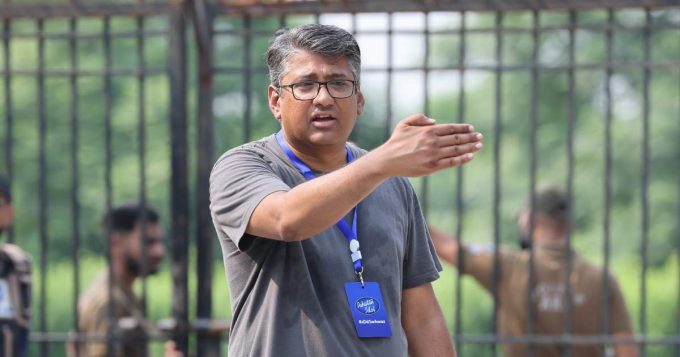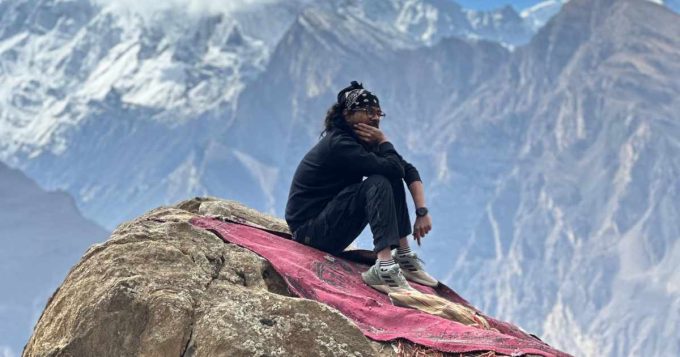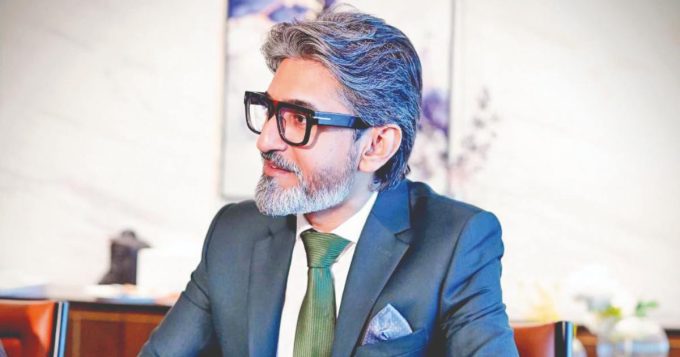

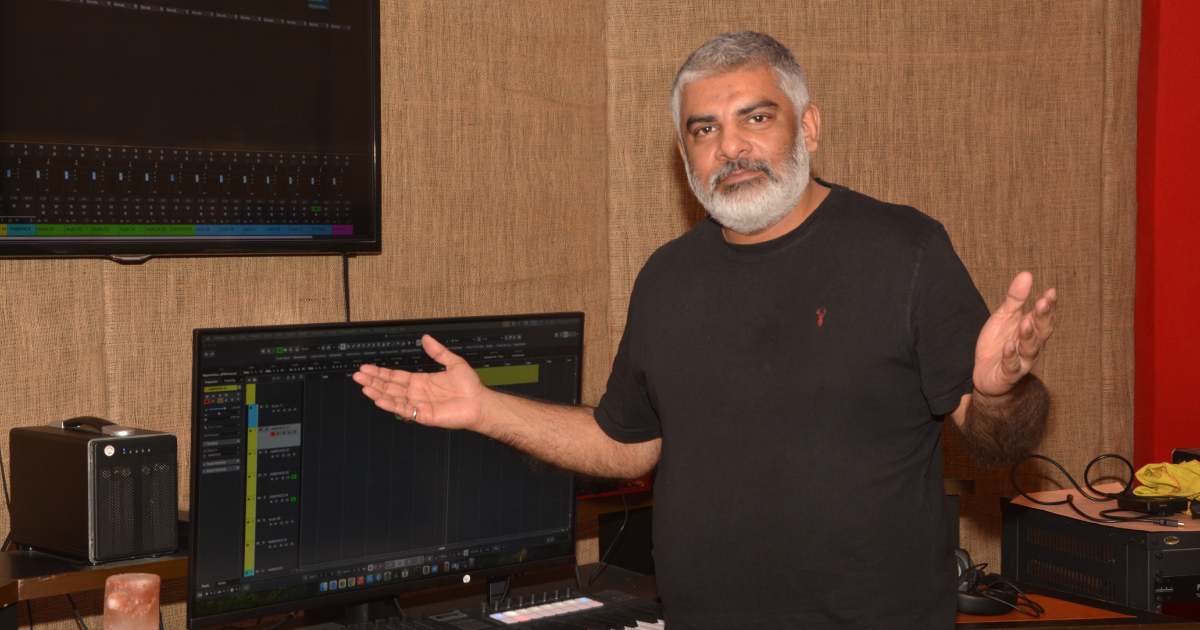
Born into melody and moulded by legacy, Mohsin Allah Ditta carries the rhythm of generations in his soul. Son of the acclaimed music director Javed Allah Ditta, Mohsin grew up where sound met storytelling, in the heart of Pakistan Television’s golden era. From his early hits Pyar Mein Dil Ko Satana and Hogi Apni Pehchan, to forming Aasaar and later Gurus Trilogy.
His journey reads like a score, and his music has moved effortlessly between eras and emotions. As founder of Kalyan Productions, he now composes the soundtracks that give modern drama its emotional heartbeat. Award-winning, instinct-driven, and endlessly curious, Mohsin proves that while technology can remix sound. Only the human spirit can create music that lasts.
Synergyzer: You come from a deeply musical lineage; your father, Javed Allah Ditta, was one of Pakistan’s most respected music directors. How has growing up in that environment shaped your approach to music and sound design?
Mohsin Allah Ditta: I am the third generation of musicians in my family, beginning with my grandfather, Ustad Allah Ditta Khan, the renowned Tabla Maestro, followed by my father, Javed Allah Ditta, and now me.
I have always felt naturally drawn to music and have long admired my father’s work. His approach was remarkably futuristic and experimental for his time. Being trained under his guidance, as well as learning from the veteran directors of PTV’s Golden Era, their deep understanding of the various aspects of drama-making has definitely given me an edge.
Musically, I have been influenced and inspired by so much over the years, and now, with the world open to us through online platforms, I finally have a benchmark to measure myself against the highest standards.
Synergyzer: You have carried your father’s legacy forward but also carved your own identity with Gurus Trilogy and Kalyan Productions. How do you balance tradition with reinvention?
Mohsin Allah Ditta: Well, the Gurus Trilogy was really a tribute to all our gurus, both actual and spiritual. It was a reinvention of tradition, where we tried to fuse ghazal, classical, and filmy styles into our own sound. I must mention my band members, Glenn John and Sayyam Rana, as it was always a true team effort.
At Kalyan Productions, I focused primarily on background scores, a field that gradually captured my interest. I like to think I was able, to some extent, to change the dynamics of background music in Pakistani dramas. And now I see many young musicians drawing inspiration from my style.
Synergyzer: As you have worked across formats, solo songs, band performances, and now background scoring for film and TV. Which of these creative spaces feels most like “home” to you and why?
Mohsin Allah Ditta: I feel that creating and producing a score is like being at home, even though it can be very tiring and mentally draining. There is something magical about shaping emotions through music to enhance a scene.
At times, a particular scene or an actor’s emotion, combined with the music, has even made me cry or feel genuinely scared. I think this happens because, in every story, I try to place myself in the situation or step into the character’s shoes.
Synergyzer: How do you see Pakistan’s shift from analogue and studio-based music to digital platforms, streaming, and AI shaping artists’ creation, discovery, and legacy? And what excites or concerns you most about it?
Mohsin Allah Ditta: Well, like everywhere in the world, there had to be a major shift from analogue tapes to digital formats because of production costs. Analogue recording was always an expensive proposition, but in Pakistan, audio quality unfortunately suffered because of budget constraints.
We moved from analogue to Super VHS and Hi-8, each with its own pros and cons. Now, it’s eventually computers and then AI. The pace of transformation is so fast that, in some ways, I feel creativity has taken a hit.
Artists are not as well-trained as they once were. And the shelf life has shrunk with the sheer volume of work being produced every day. But at the same time, we can now create music that simply wouldn’t have been possible before. Thanks to the range of virtual sounds available today.
Synergyzer: Having worked on projects like Mere Paas Tum Ho, you understand the emotional power of background scores. How do you approach creating music that doesn’t just accompany a scene but deepens its impact?
Mohsin Allah Ditta: Over the years, I have tried to become part of each play I work on. I place myself inside the story as a character, thinking like them, feeling their emotions, their body language and their movements.
Sometimes I even create my own backstory for the character so I can dive deeper into their mindset. I think that’s why I end up connecting emotionally, and that connection comes through in the music.
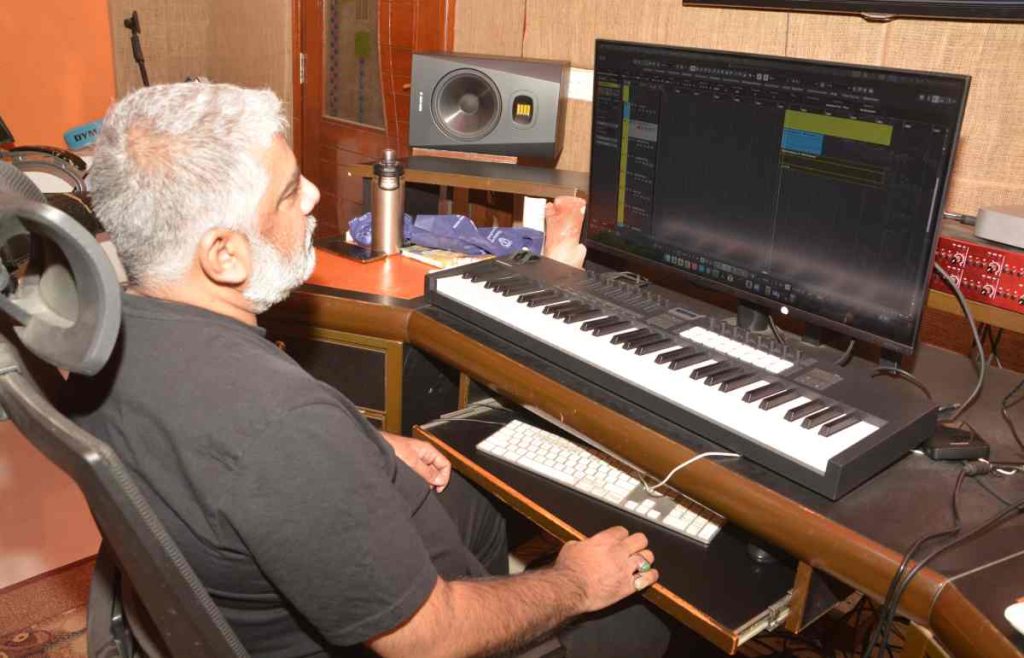
Synergyzer: The Gurus Trilogy brought a very distinct sound, soulful yet modern. What was the original vision behind forming the band, and how has that evolved with time and technology?
Mohsin Allah Ditta: Gurus Trilogy was a passion project. My friends and I grew up on the music of the ’90s and 2000s, whether it was from the West or from our side of the world. It was never something we planned.
In fact, Guru’s Trilogy carried all our influences and inspirations from the years we had spent in music. But the band has been dysfunctional for many years now, so there hasn’t been any evolution since then.
Synergyzer: The theme of this issue is “Perfect Pitch: Marketing Meets Music.” In today’s world, do you feel music is becoming a form of branding, not just for companies, but for artists themselves?
Mohsin Allah Ditta: Music has always been one of the most powerful modes of branding, whether for a corporate entity or an artist. From the likes of Elvis Presley and Michael Jackson to legendary bands like Bon Jovi and the Scorpions, and from our own icons such as Alamgir Haq, Nazia Hassan and Zohaib Hassan, Vital Signs and Junoon, music has shaped identities across generations.
Synergyzer: Many brands now use signature sounds and jingles to connect with audiences, something you and your father mastered long ago. How do you see “sonic identity” evolving in Pakistan?
Mohsin Allah Ditta: To be honest, the sonic identity you are referring to no longer really exists in Pakistan. How many original jingles do we even hear now? The trend has already declined, and the few that are still produced are either built on old hit melodies or are barely remembered at all.
Synergyzer: If you compare Pakistan’s music ecosystem today to the early 2000s. What has improved, and what, in your opinion, has been lost along the way?
Mohsin Allah Ditta: Obviously, music creation and production have become much more accessible and approachable with the tools available today. Back in the day, it was a real challenge to book a studio, hire musicians, and then release your work. On the flip side, the level of effort that many individuals used to put into a project is rare nowadays.
Synergyzer: Many young musicians have talent but lack mentorship. What advice would you give emerging artists trying to find their sound in today’s crowded digital world?
Mohsin Allah Ditta: The world has become so fast, with young musicians or not even musicians, just operators. No one has the time, patience, or even the financial means to train under the guidance of a mentor.
This is why we haven’t seen any major talent emerge in Pakistan for decades. Nowadays, most music we hear is sample and loop-based, with very little that feels truly organic.
Synergyzer: Do you think Pakistan is doing enough to preserve and promote its musical heritage in the global soundscape, or are we at risk of losing our originality to global trends?
Mohsin Allah Ditta: To my knowledge, there is no organisation involved in preserving our musical heritage, and if it is not preserved, how can it be promoted? The time is approaching when future generations will know nothing of our musical legends. I fear that Pakistan is no longer a place that truly supports the performing arts.
Synergyzer: Finally, what keeps you inspired, after decades in music? what still gives you that same thrill you must’ve felt when you composed your first song?
Mohsin Allah Ditta: Well, there are the monetary benefits, but yes, I am very fond of world cinema, and I have now found my area of interest, not songs but scores, definitely. I enjoy good stories and seeing how they are translated into compelling visuals.