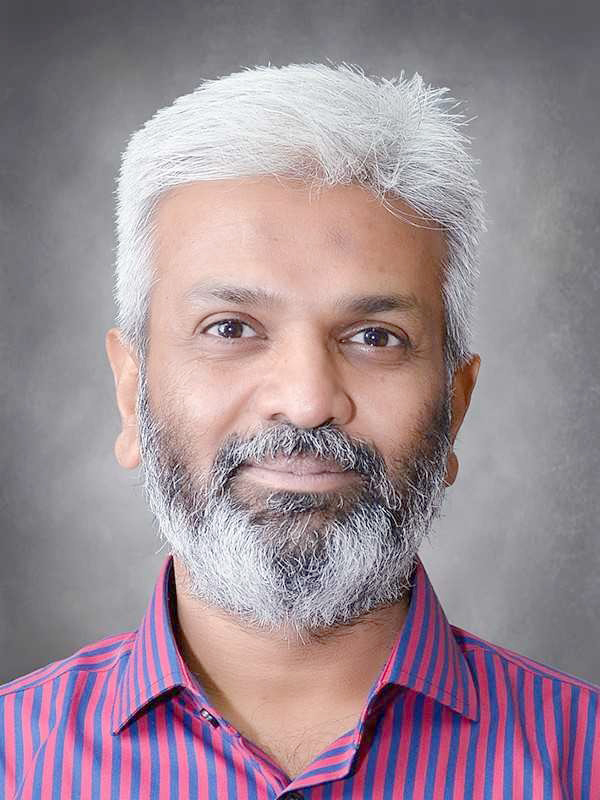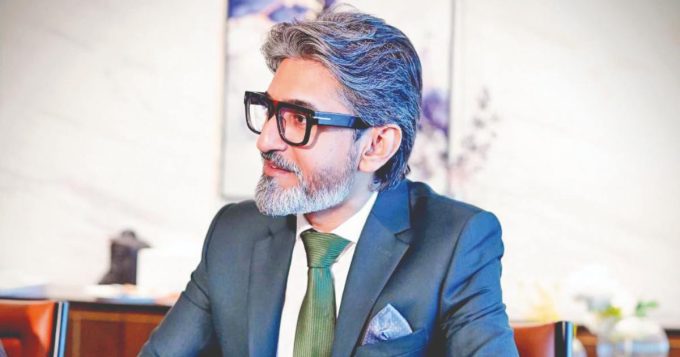

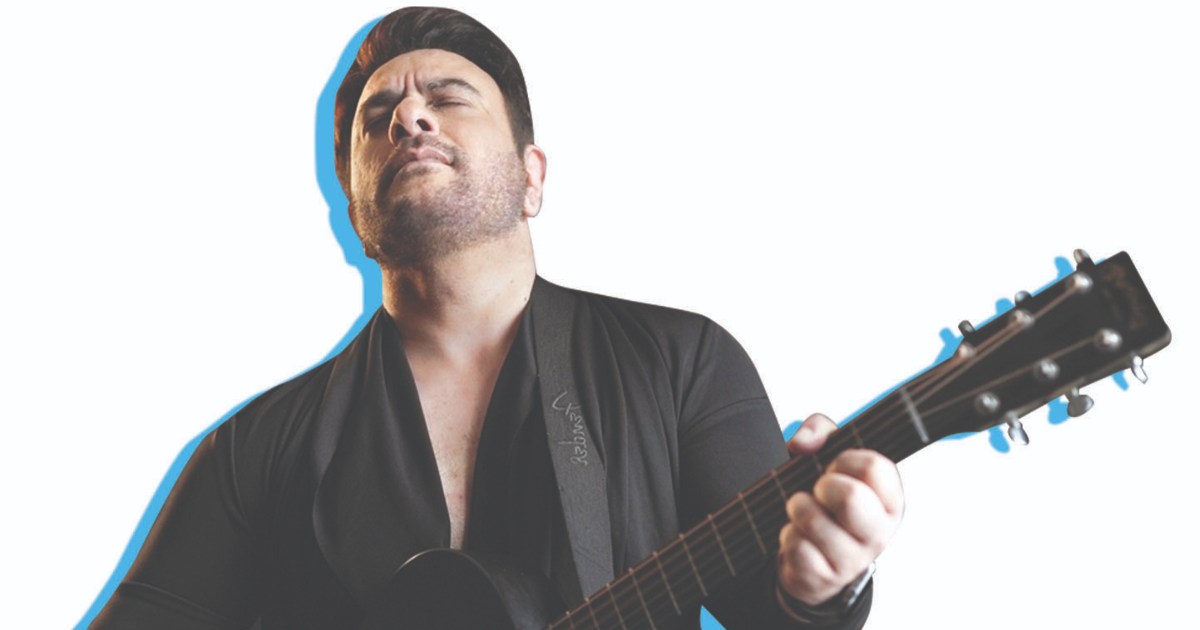
Shiraz Uppal’s name is synonymous with contemporary South Asian music: a singer with a distinct voice, a composer with an instinct for melody, and a producer with an ear for innovation. He built SU Studios in Lahore, where he crafts and produces some of the region’s most memorable songs that resonate in Pakistan, India, and beyond. From his solo chart busters to iconic Coke Studio performances. Today, he continues to push boundaries by fusing music with artificial intelligence, creating hybrid sonic identities that reflect both cultural heritage and technological possibility.
Synergyzer: You recently made headlines by unveiling Neha Gupta, the AI-generated female singer. What inspired you to leap into this experimental fusion of music and AI? What is the future of music?
Shiraz Uppal: The inspiration behind Neha Gupta was the lack of female voices in Pakistan. The texture and sound I was looking for, I couldn’t find for the song with Hadi, my son. When there is AI, why not try to create my own voice? I wanted something raspy, something unique, this raw voice.
There was lots of trial and error, mixing and erasing until I finally locked the voice of Neha Gupta. The name was chosen to be borderless, one from Pakistan, Neha and one from India, Gupta.
That was just the beginning; since then, many advancements have taken place. For example, a platform called Suno, users add a prompt to the application, and it gives you the entire song, with lyrics, melody and a really good beat, completely produced.
The graph of evolution for technology is steep, music producers, mixing engineers, and instrumentalists might just become obsolete at least for some time.
I am incorporating AI in my projects as well. If I need the sound of Sarod or Sitar and I can’t find a player immediately, then this is a great tool for me. I give the prompt through a demo through my own voice and watch the magic that occurs. It’s so perfect. But I am sure, people will be tired of this perfection, they will crave that human element, and will want the raw sound, originality.
Synergyzer: What are some ethical or artistic dilemmas that arise when a real human singer’s voice is replaced, even partially, with AI?
Shiraz Uppal: Globally, this is a reality. Recently, I was in the US and I saw that human servers had been replaced with robots, so that job is now of the past. Yes, AI will be taking away a lot of jobs but at the same time more will be created because of AI. Because behind it is a human, giving prompts, creating and fixing this artificial intelligence.
We should use it as a tool; instead of inegating, we should be able to move with technology as it comes. There is always room for innovation, humans will create something else after this. Right now it’s the transition period, this is why people are still getting used to it and coming to terms with it. From cassettes, to CDs to USBs and now cloud, people eventually learn to evolve, with some resistance of course.
Synergyzer: Over the years, you have juggled multiple roles, singer, composer, music producer, and studio owner, which of these hats do you find most creatively fulfilling?
Shiraz Uppal: Creatively fulfilling will always be music production because I have been working on many films for the past 12-13 years. I have composed music for nearly 80% of the films in the Pakistani film industry.
They give me a situation, I imagine myself into the same situation and create something, relatable for the role or the situation, whatever seems perfect at the time. This is what I enjoy the most, I love doing this so much.
Synergyzer: How do you decide on visual branding for your projects and what elements do you consider essential for audiences?
Shiraz Uppal: I am not the visual type; my team decides what to do visually. I love colour grading but that is about as far as it goes. I do not think about how I will brand a song or my music, because I have been working for so long that I have created almost every type of song under the sun, every genre, so whatever inspires me, that is what I want to portray to people. There’s no particular fixed thing.
Synergyzer: When a brand approaches you for a musical campaign, and the brief arrives, what is your creative process for balancing their message with your own musical and artistic integrity?
Shiraz Uppal: Whenever I do a brand’s campaign, I focus on the brand, their image, and their market first, and then go from there, what kind of audience they have, what language they use, and what the brand stands for. When Jazz/Mobilink came to me, and I created their mnemonic, they came specifically for my creativity; they wanted my take, my touch.
So, when I receive work like this, I look at who their customers are, what the brand is, what its identity is, what the duration should be, and whether it should be in a minor or major scale.
I decide on the music only after looking into all of these factors. And honestly, if I were to listen to the brief too rigidly first, my authentic idea would probably die down.
Synergyzer: You have produced one of Coke’s Studios’ biggest and most iconic hits, Tajdar-e-Haram and Tu Kuja Man Kuja. What was the creative and emotional process behind shaping tracks of that scale? Did you anticipate it becoming such a huge cultural phenomenon?
Shiraz Uppal: Not at all. I never anticipated or even expected it to become a global hit. I always try to be true to my craft. It comes straight from my heart. I love the original version, but I wanted to do something different to it.
My songs hardly have any songs with 3-4 chords, usually its between 15-20 chords. This pattern was similar in Tajdar-e-Haram. I added jazz chords, so many different things. This song to me is like a journey its starts with a single guitar, and then it builds up to this grand, beautiful thing.
I did not think it would ever be this big. My goal is always to create the best piece of music possible. The composition tells me what it wants, and I just follow the lead.
Synergyzer: You have lived through the full marketing evolution of Pakistani music from CDs to reels. What is the one structural weakness in our promotional ecosystem and music ecosystem that still frustrates you?
Shiraz Uppal: Many things have changed, but an artist had charisma back in the day. There used to be two channels, an artist was not accessible. Back then, musicians were portrayed as larger than life; people looked up to them. But now, through social media, everyone knows everything.
That charisma that was once there doesn’t exist anymore. In my opinion, there is no Pakistani music industry infrastructure; it used to exist. Until 2008, we had a proper music industry, and it was booming.
Now everyone has to do it on their own, make their own space, beg for work or just get on social media and work on it themselves; there isn’t any help. This ‘industry’ has scattered; everyone’s trying to make it on their own, and it’s not really a community.
This is a cultural problem, since music is taboo and it’s not as respected as in other places. I have also noticed that aesthetics are given a lot of value, instead of just the talent. If someone is of average looks, chances are they aren’t going to be as successful.
Synergyzer: What is one belief you held as a young musician that you no longer recognise in yourself?
Shiraz Uppal: I believe that when you work harder, it doesn’t matter how long you work hard for, but you will always receive the result.
Synergyzer: What is the hardest part of carrying someone else’s artistic vision?
Shiraz Uppal: I don’t resonate with this. When I produce music or write something for other people, whether it’s for Atif Aslam or A.R. Rahman, I do not consider anyone else’s vision other than mine. They approach me for my vision, and my vision is what they get, of course we sit down and brainstorm and decide, but I do not change my vision for anyone.
Synergyzer: Your son, Hadi Uppal, has now stepped into music as a singer, and he often collaborates with you on compositions and productions as a father and a mentor. How do you feel watching him follow in your footsteps and build his own musical identity?
Shiraz Uppal: I am so proud of him because I didn’t have a single moment to teach him. Whatever he does, he does it on his own. He practised by himself, however whenever he is in front of the mic, I guide and mentor him. Just like I always do, even for other singers.
Word pronunciation is one thing that he struggled with, but also the enunciation, when something is being sung out of sadness or pain versus when it is out of love and happiness. This is something that I still help him with. Otherwise, the rest comes naturaly to him.