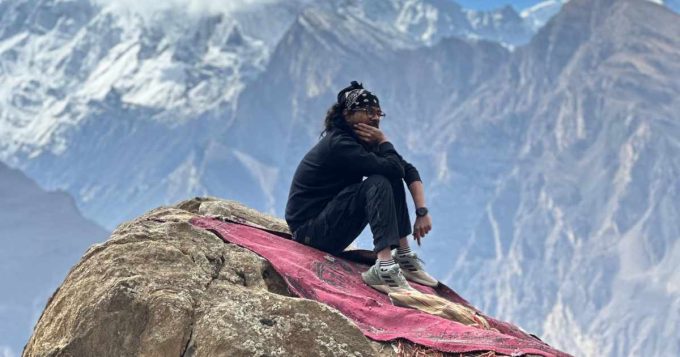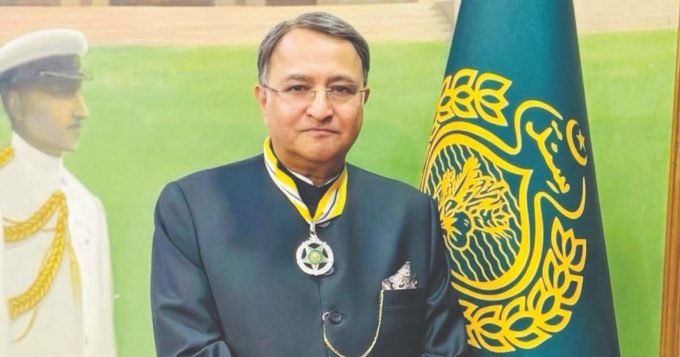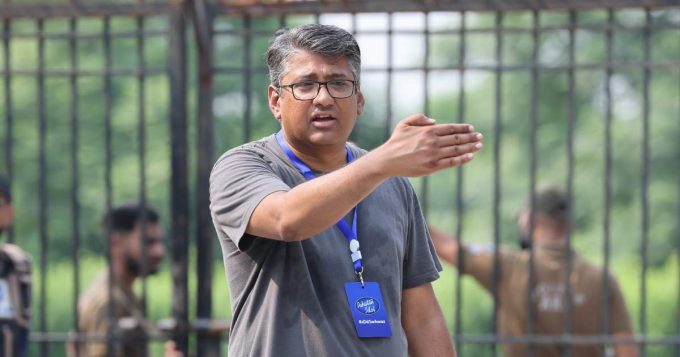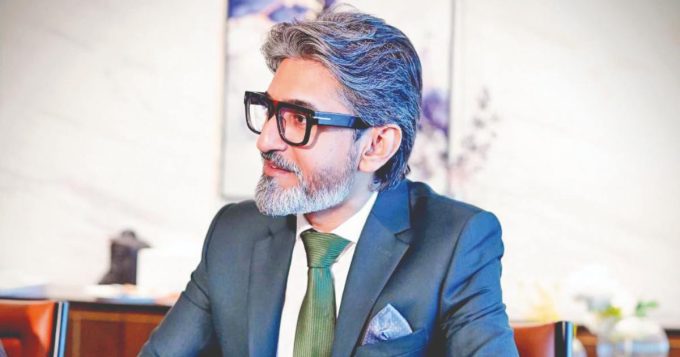


Bayaan, the alternative rock band behind Pakistan’s most-streamed album of 2025, whose songs ‘Maand’ and ‘Nahin Milta’ have become subcontinental anthems, sat down for an exclusive interview with Synergyzer.
Synergyzer: How consciously do you think about Bayaan’s brand identity when you make creative decisions? Given that in today’s world, everything is a brand.
Haider Abbas: Bayaan’s creative decisions are mostly collectively made based on how we feel about any opportunity or creation. Even after creating a couple of albums and a bunch of well-received tracks, we always deep-dive into what works for us, rather than how we would be perceived.
For commercial endeavours, we usually weigh what resonates with us and how something pushes us as artists. Even in the case of collaborations, we try to strike a balance between our own and the artists’ sound and strengths.
Synergyzer: Do you think the Pakistani music ecosystem suffers from an over-reliance on nostalgia as a marketing device?
Haider Abbas: Music, like any other art form, holds the quality of being timeless. As a tool of human expression and emotion, it seeps through generations who relate to that specific emotion. Pakistan has a repertoire of artists who created music that still resonates after decades.
While there was an unfortunate gap in the creation of new music during the early 2010s, I am glad this has changed now. We see breakthrough artists and tracks every year, while newer and younger listeners are now seeking new music.
Synergyzer: Do you feel the brand exposure from Pepsi Battle of the Bands accelerated your journey, or would Bayaan have found its footing just as strongly without that initial spotlight?
Haider Abbas: One of our primary motives for appearing in Pepsi Battle of the Bands was to create and expose new original music to a bigger audience. In that way, the show definitely accelerated our journey, as one of its follow-ups was the release of our debut album, Suno. However, we would still be making and releasing new music if it weren’t for the show.
Synergyzer: What advice would you give to someone who wants to be a part of the Pakistani Music industry in today’s digital age?
Muqeet Shahzad: Five thoughts from the last 10 years of being a part of the music scene in Pakistan. First of all, build your foundation around creating original new music that becomes your sound and voice; be honest and vulnerable in your expression without the fear of it not working out.
Second, let yourself be led by the positive intent of creating music for the sake of creating music rather than being trapped in a regressive mindspace of gaining more hits, fame or attention. Thirdly, to make music, focus on improving your skill, which could be from practising rudimentary core to doing covers of songs you enjoy. From a practical lens, Pakistan’s music talent is next to the best on a global stage.
Pakistan’s music industry infrastructure is not there yet; in the early days, maintain other sources of income outside of music. Lastly, never be afraid to reach out to people in the industry for support or collaboration – no matter how crazy it might seem initially.
Synergyzer: Every band evolves and reinvents itself. From a branding lens, how do you manage that evolution without alienating listeners who fell in love with an earlier version of you?
Asfar Hussain: Honestly, every songwriting process is different, and it’s almost always tricky. When I begin a new project, somewhere in the process, I inevitably do consider my audience, specifically, how they will react if they have already branded me. Or view me through a specific, pre-established lens.
While everything they have heard before is genuinely a part of me, reflecting a portion of my influences and emotional range, it does not represent my entirety. Moving beyond that established mould is sometimes frightening because it risks showing other parts of myself that I relate to, but the audience has not yet seen, perhaps.
This is especially true when experimenting, changing the feel, the melody, or trying out different genres. Over the years, I have personally started shifting from complex musical arrangements to simpler, more easily consumable melodies and musical parts. That is not a conscious effort, but it has happened naturally.
Ultimately, the core of any song lies in its melody and lyrics. As long as the melodies I create and the lyrics I write resonate deeply and honestly with me, the music will inherently feel unique, signature, and truly from me. I strongly believe music must be evolutionary; just as I evolve as a human, my music naturally must evolve alongside me. However, as long as it originates from the heart and holds meaning for me, I believe that recognisable factor will always remain for my listeners.
Synergyzer: If there is one campaign or jingle that you guys could redo with the Bayaan touch, which one would it be?
Asfar Hussain: If there is any campaign’s jingle I remember, it is because it was already iconic. Why would I want to change something that is already great? I don’t have any specific jingle in mind that I would want to redo. As I think about it, the first jingles that come to mind are from my childhood, most memorably, an iconic baby product jingle sung by the incredible Mahnaz Begum, later reinterpreted beautifully by Hadiqa Kiani.
The melody and lyrics were unforgettable, something along the lines of, “hoga duniya mein tu bemisaal, mere bachay mere naunehal.” I think in this day and age, shifting away from rigid gender roles and reaffirming the necessity for shared parental responsibilities, exploring a version of this jingle from a male or ‘father-figure’ viewpoint would offer a compelling and timely perspective.
Synergyzer: How does music influence culture, economy and the market, according to you?
Shahrukh Aslam: Music has such immense transformative power on both personal and public levels. Personal anthems of loss or hope on one side and songs being the literal backdrops to revolutions on the other.
In my opinion, there can be no culture without music. I don’t know music’s relationship with the market or the economy. Human beings have already seemingly converted all beautiful things into commodities; nothing is sacred anymore.
Synergyzer: Touring internationally exposes you to vastly different cultures. What lessons have you learned about music and business that you did not anticipate?
Mansoor Lashari: One of the biggest lessons I have learned is that music is truly universal, but the way people connect with it changes from culture to culture. Performing abroad showed me how audiences in different places respond to emotion, energy, and storytelling in their own unique ways.
On the business side, I learned that professionalism and trust travel farther than talent. Every country has its own work ethic, communication style, and expectations. If you stay flexible, respectful, and curious, doors open much faster. I have also come to appreciate the importance of purpose-built venues, which Pakistan unfortunately lacks.
Synergyzer: How much of your artistic direction is determined by your own creative impulses versus the data you receive from streaming analytics?
Mansoor Lashari: One can’t deny the reality around them. I personally dislike the overarching control that algorithms and platforms have. But we have to live and thrive in this situation. We find ourselves trying to balance authenticity with curation now more than ever, and we see it as a very enjoyable challenge.
We have access to more data on the impact of our creativity, and that helps us understand what people want to listen to. But we will never compromise on our own authenticity. Limitations and challenges breed creativity, like Maand is a product of our striving for balance in this way.
Synergyzer: How would you sell Bayaan’s brand?
Shahrukh Aslam: We are alive on this planet for not much longer than the blink of an eye. During that blink, we’re making music and trying to find meaning. If anyone wants to buy, they are welcome to. We’re grateful for the support.
Synergyzer: Going global isn’t just about playing shows; it’s about narrative. What is the story of Bayaan that you want non-Pakistani audiences to understand?
Shahrukh Aslam: The story of Bayaan is as old as any other story. We are another weave in the tapestry of a musical tradition that has transcended borders. I want international audiences to see us as proud Pakistanis who also thumb our noses at the notion that borders, colour and creed have any value beyond the arbitrary meaning people give them; and that hatred with these differences at its heart is stupid.