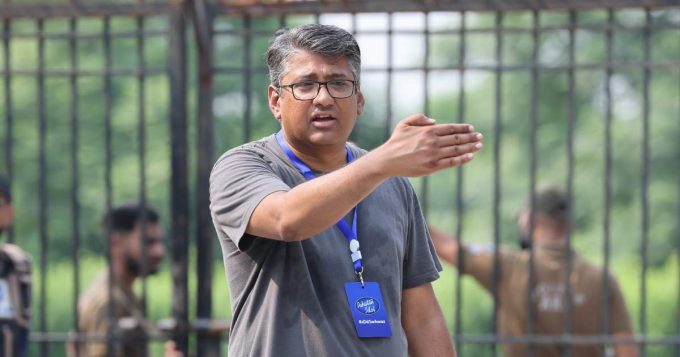

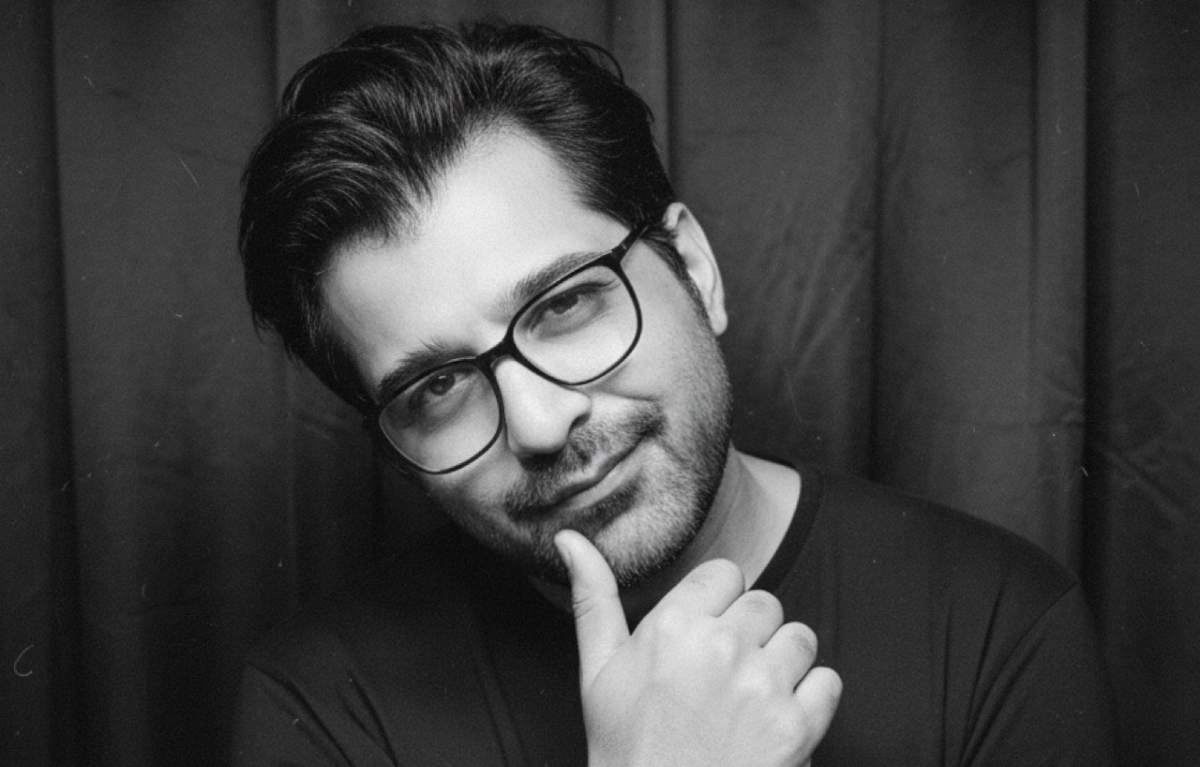
Shuja Haider is one of Pakistan’s most versatile music producers, composers, and songwriters, whose work spans Coke Studio, chart-topping singles, OSTs, and acclaimed film soundtracks. Shuja has not only shaped how Pakistan listens to music but has also helped define its sound on a global stage. A collaborator at heart, he is celebrated for his innovative arrangements, emotive songwriting, and insistence on human expression in every note. In this interview with Synergyzer, he reflects on the evolving music industry of Pakistan.
Synergyzer: You have mentioned that you feel most at home in composition and production rather than the spotlight. In an industry that celebrates visibility, how have you managed to build such a strong and enduring career through the behind-the-scenes work of music creation?
Shuja Haider: I have always wanted to create music, but never consciously chose to stay behind the scenes. Composition and lyrics are something that I have been drawn to; The limelight never really attracted me, in fact, I never thought about being in the front or the back.
My focus is always on the songs. In Pakistan, the composers and the lyricists are not often known. So, when your songs work, people slowly start recognising you through that. My presence in Coke Studio also gave a new shape to my musical career. It brought more visibility to the process and to the people behind the music. And that is how I came into the limelight. I stayed focused on making songs, and over time, the work created its own space and recognition.
Synergyzer: Coke Studio has become a national branding platform as much as a music show. Were you conscious of that responsibility while composing for it?
Shuja Haider: Honestly, with Coke Studio, I was not conscious of it at all in that sense. I was just excited for the collaboration and teamwork, and the environment gave me exactly that. I was just focused on creating music and enjoying the process.
Synergyzer: You have worked across singles, OSTs, films, and jingles. Does your creative mindset change from one format to another? And why do you think some commercial songs and jingles go viral?
Shuja Haider: As for formats, I do not really see them as separate boxes. I have never thought, “I am making an OST now” or “I am making a jingle now.” The music should feel right for what it is meant for. If it is for a film, it should feel like a film. If it is for a commercial, it should feel like a commercial. The intention is different, but the honesty has to be the same.
As for why older jingles went viral, Cocomo, Knorr, Commander Safeguard, and Donkey Raja; they became famous because people were watching television together. There were fewer channels, fewer distractions, and a shared media culture. Today, attention is fragmented. Things do not land in the same collective way anymore, even if they are good.
Synergyzer: What are some structural gaps that still prevent Pakistani music from becoming a global phenomenon?
Shuja Haider: I actually think Pakistan has always been very consistent musically. The problem is not talent; the problem is platforms and continuity. We have an industry, but the people running it keep changing, and every new group comes with a different mindset.
What we really have is brand-driven music rather than an industry-driven ecosystem. Coke Studio is a brand, Pakistan Idol is a brand, and Pepsi Battle of the Bands was a brand. When those platforms are active, things move. When they are not, everything slows down again. That is the weakest part, especially for pop, indie, folk, regional music, you name it. There is no permanent infrastructure carrying it forward.
If you look at India, music built that industry. Their biggest stars became stars because of music first. Rajesh Khanna would not act without Kishore Kumar. Shah Rukh Khan is not a global icon without his songs travelling first. Films were impossible without playback singers and strong music directors. Music is not an add-on; it is the engine.
That is why music has always shaped culture, not just reflected it. So Pakistani music does have global power. What it lacks is a continuous system that allows that power to travel, repeat, and grow.
Synergyzer: What have your experiences taught you, and how do you approach each new creative challenge?
Shuja Haider: The biggest thing I have learned is to keep learning. The moment you think you have learned enough, you freeze. The growing stops, therefore, every song, every project is still an educational experience for me.
At heart, I am a songwriter. That is how I see the world. A songwriter does not just make a tune; they connect something from their own life to the song. Something real has to go into it. Human experience has to go into it. Earlier, songs were born out of lived emotion. Now there is a lot of digital expression, but less human expression. So I try to protect that, to always bring something real into the music.
That is why I write my own lyrics. People tell me, “You can afford lyricists, why do you write yourself?” But what I want to write, I am going through myself. I can write it more honestly. That is how the song stays alive.
I also do not overthink formats or stories, or need the full script. For example, with Mann Mayal, I did not know the story; I only knew there was a girl, a teacher, a certain emotional space. So, I remembered a woman from my own neighbourhood who used to teach, and I wrote from that memory. If I go too deeply into the narrative, it leads me somewhere else, and I lose the song. Whether it is for a film, an OST, or an album, I focus on the emotion first. Everything else is secondary.
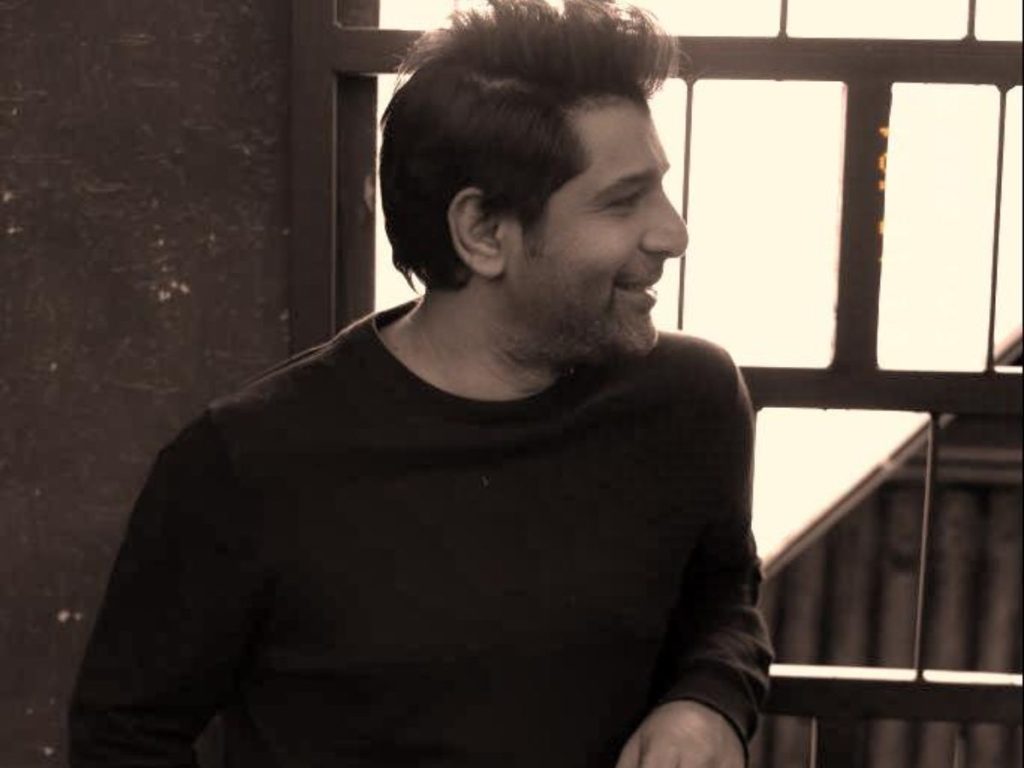
Synergyzer: In an industry where commercial pressures often shape sound and success. How do you protect creative autonomy, and what role do you think brands and investors should ideally play in building a sustainable music ecosystem beyond short-term sponsorships?
Shuja Haider: When a director approaches me, they already know I do not take dictation. I take creative liberty, and according to what I believe in. The problem is not the creation of music; I can make a song in two hours if I want to. The real problem is what happens after that.
Music needs money to travel. It needs money to be seen, heard, and remembered. Promotion is where we fall short. That is where brands and investors become crucial, not as occasional sponsors, but as long-term supporters of the ecosystem.
Even the biggest stars on the planet have to travel the world to promote a film. The industry is structured around distribution and visibility. We have the creative talent who are working and producing, but do not yet have the same promotional machinery. And that is exactly the gap brands can help fill, if they think beyond seasons and campaigns and start thinking in terms of infrastructure.
Synergyzer: Across decades of creating music, you have shaped how Pakistan listens. Was there a choice that seemed small at the time but ended up altering the musical landscape in ways you never anticipated?
Shuja Haider: It’s funny, when I first worked on Coke Studio, I thought it was impossible. I wasn’t making fun of anyone, just of myself: “What are you even doing here?” We usually create music in studios, carefully layering everything. Suddenly, I was faced with an eight-minute live performance. It was long, challenging, and completely different from anything I had done before. At first, I thought, “We can’t really pull this off.”
But the process was fascinating. It pushed me to see my own capabilities in a new light. I realised that live performance opens up possibilities that studio work simply cannot. It demands spontaneity, adaptability, and an intense focus on the moment. That was a turning point for me; it taught me that music isn’t just about notes and recording, it is about energy, presence, and connecting with people in real time.
Over time, I came to understand just how difficult it really is. Doing live music consistently is exhausting and time-consuming. When I worked with Strings during seasons 9, 10, and 11 under Rohail bhai, I was amazed at how he managed it. And now, as the mentor and official music producer for Pakistan Idol, we still push for live performance whenever possible. The preparation, coordination, and pressure; it drains you, but when it works, it is magical, no less than a miracle.
Synergyzer: Pakistan Idol has returned in a much bigger way this time. What surprised you most about it, and how do you see its impact on Pakistani music and artists?
Shuja Haider: Earlier, it was only on television. Now it lives on social media as well, and that changes everything. The reach is completely different. Everyone has a phone now, so the audience is much wider and more immediate.
People now genuinely believe in Pakistani talent. There is a global sense that Pakistani artists deserve more space and more opportunities. So, when a platform like this comes from Pakistan itself, it gives people hope that more music will come, that more new artists will emerge.
Synergyzer: What do you think will define the next breakthrough in Pakistani music?
Shuja Haider: Pakistan has already given so much, from ghazal to folk, classical to semi-classical, Sufi, pop, and rock. The next big step is to keep building on that legacy. Film is a key medium for this because it allows music to reach people naturally, just like how a good drama brings OSTs to life when audiences watch and listen.
I feel that is where we still have room to grow. What I hope for and expect from the industry moving forward.