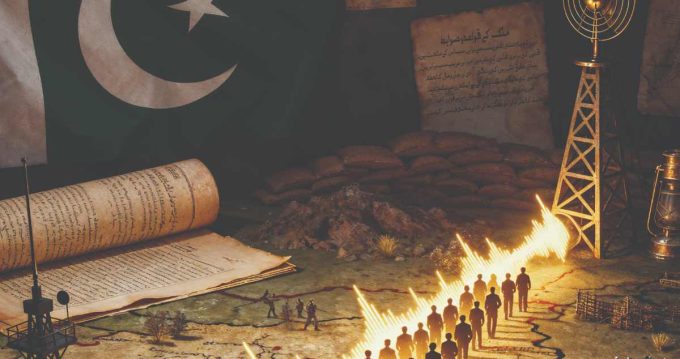

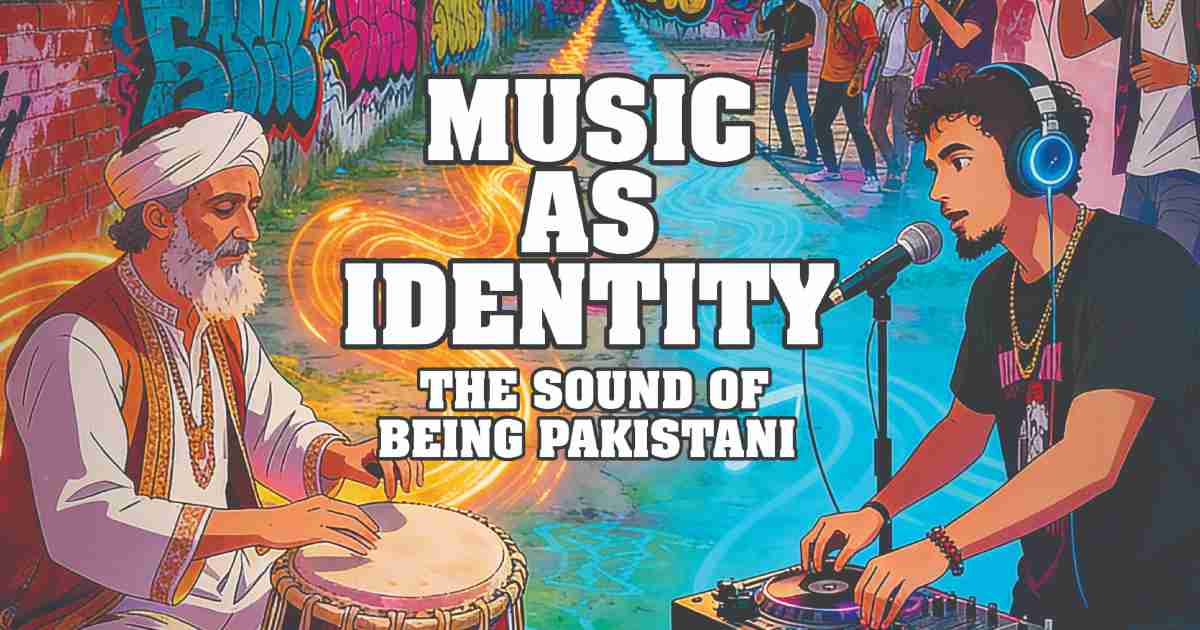
Nations’s soundscape has never been louder, stranger, or more beautifully mismatched. This story unpacks how generations share, fight over, and reinvent sound, revealing a culture that refuses to pick a single mood, and sounds better because of it.
Pakistani music today feels like stepping into a house where every room has its own personality. The living room is fully committed to qawwali, echoing like a spiritual conference. The corridor is busy, humming a gentle ‘90s pop anthem. And somewhere behind a closed door, a Gen Z kid is listening to a rap that sounds exactly like two best friends arguing about life at 3 A.M.
Somehow, all these sounds live together. Quietly. Strangely. Off-beat. Now, if you ask someone who grew up before Wi-Fi what ‘Pakistani music’ sounds like, they will smile like they are seeing civilisation for the first time. They will talk about folk heritage, qawwali, the Nazia Hassan magic, ‘real lyrics,’ and harmonium players who could fix your entire week with one note. But ask a Gen Z listener the same question, and they’ll pause their playlist, remove one AirPod with dramatic patience, and proudly say, “It’s catchy and trendy, and we love it.”
But, but, but, “It’s basically… a conversation, with beats.” Of course, they would never admit that.
One moment, you’re happily singing a ’90s tune that feels like home; the next, Faris Shafi pulls you into an emotional rap monologue, Talha Yunus and Talha Anjum narrate everyday life, and JJ47, BDX, Jani, and the rest of the “I’m-going-to-tell-you-my-life-story-on-a-beat” generation take over.
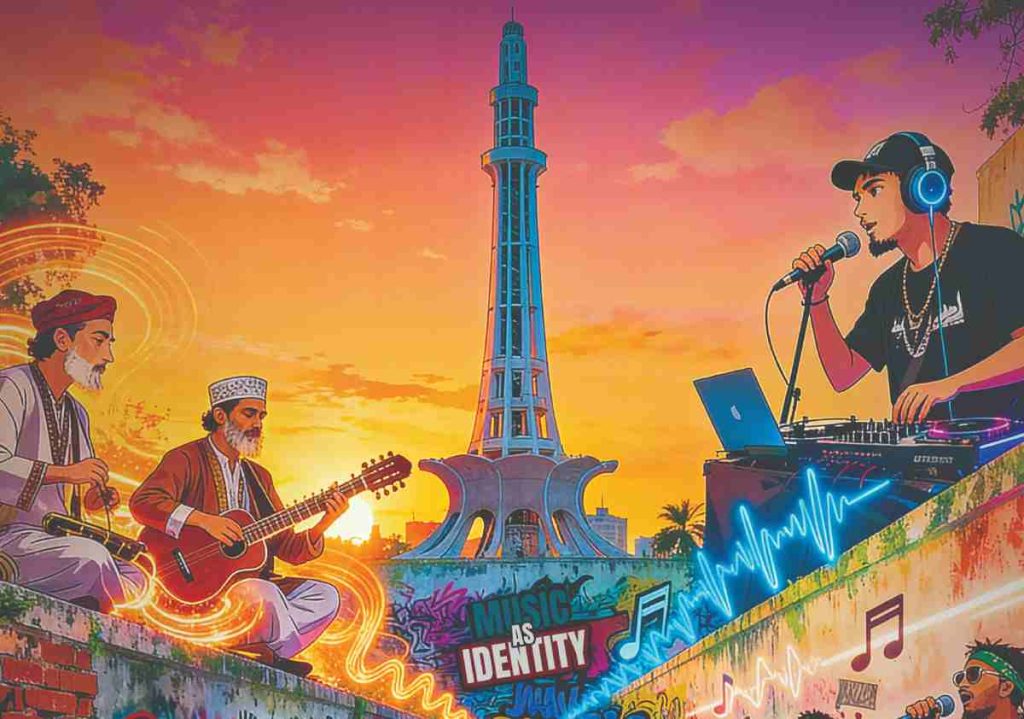
Let’s be honest here, not everyone is a ‘fan’. And the older generation? Their reaction is priceless, “Aay ki laya hoya aay?” (What on earth is this?) Or, as many parents sigh: “Beta, isko music kehtay hain? Humare zamane mein to shayari hoti thi, ye to lag raha hai koi larrayi kar raha hai.” (Kid, do you call this music? In our days, we had poetry, this sounds like a fight.) And honestly… they are not wrong.
There was a time when music meant poetry. Real, thoughtful, soothing, soul-settling poetry. The kind that made you sit down, breathe, think, and sometimes even apologise to people you weren’t wrong about. The kind of music that had sukoon built into every note. The ‘90s carried that elegance effortlessly. Strings, Vital Signs, Kaavish, Junaid Jamshed, and many more… this was music that felt like soft rain and long walks with tea. But today? Most songs feel like someone opened their diary, ranted about life situations, then added the masala of music in the form of drums, piano, guitar, etc., and uploaded it.
Still, somewhere in this chaos, this mixture of emotions, this tug-of-war between nostalgia and noise… lies the real sound of Pakistan today.
Heritage on one shoulder, hype culture on the other, and a very expressive, slightly overwhelmed Gen Z sitting in the middle, trying to honour both while adding their own rhythm to the mix.
Gen Z Is Not Listening to Music. They are Listening to Conversations
The very obvious thing everyone hears, but no one admits out loud, is the rise of modern Pakistani rap. Yes, the genre where half the nation is pouring its emotions into a mic at hours when they really should be sleeping.
Spotify’s 2024–2025 data shows a spectacular rise in hip-hop across Pakistan, with a 245% increase in streams. For Gen Z, hip-hop is the number one genre. Not pop, not rock, not Sufi soul. Hip-hop. They are also making playlists at a frightening pace; playlist creation among Gen Z has increased by 45%. If only this enthusiasm could be extended to homework submissions.
Their favourite listening hours are between 10 p.m and midnight, when the rest of the country is trying to sleep, but Gen Z is busy decoding the meaning of life through sad trap beats.
Analyse today’s top tracks and a clear pattern emerges: half of them sound like soft-spoken panic attacks set to music. It’s as if the artists are saying, “I’m tired. I’m confused. I’m misunderstood.”
Now imagine that over a bassline. Congratulations, you have a Pakistani rap hit.
Pakistani rap has become a safe space where young listeners feel seen, heard, and occasionally yelled at in rhyme. It is raw, honest, and loud enough to drown out a generator, which is really all anyone wants these days.
But the Glorious Past Is Also Back (Because Gen Z Found Their Parents’ Playlists)
Now brace yourself for the twist. While Gen Z is passionately diagnosing their emotions through rap, they are also streaming more Nusrat Fateh Ali Khan than many boomers, who swear they personally attended his ‘legendary Islamabad concert’ that no one can confirm actually happened.
Spotify ICON Pakistan confirms that roughly 60% of Nusrat’s listeners today are Gen Z. This is the same generation that says “bro” after every sentence.
And it is not just Nusrat Fateh Ali Khan. Sajjad Ali, Hadiqa Kiani, Nazia Hassan, Strings, and Vital Signs are all having a full-scale renaissance. Streams for ‘90s artists have increased by nearly 75%. Somewhere right now, a seventeen-year-old is listening to Disco Deewaney with the expression of someone discovering a lost civilisation.
Legacy music has shapeshifted from ‘old’ to ‘aesthetic.‘ To Gen Z, it is ‘timeless.’ To millennials, it is “our childhood.” To boomers, it is ‘finally something decent.’
Pakistan’s Sound Today: A Mash-Up That Should Not Work, But Does
So, what does Pakistani music in 2025 sound like? Honestly, like a group chat with no admin. Everyone is talking at once, every genre is doing its own thing, and somehow it still makes sense. One track lifts your soul, the next raises your blood pressure, and by the end, you’re emotionally confused but weirdly satisfied.
Identity. Unity. Rebellion. Belonging.
All co-existing in the same playlist.
It should not work. And yet, beautifully, it does somehow.
Why This Beautiful Chaos Matters to Brands
This Synergyzer edition explores how music fuels marketing, and the truth is simple: nothing shapes Pakistani culture faster than a trending track.
In the ‘90s, brands relied on jingles so catchy they essentially hypnotised the nation. To this day, someone will shout, “Chai chahiye?” and ten people will instinctively reply, “Lipton hi tou hai”.
Today, the rules have changed. Gen Z can smell corporate pretence from a mile away. They want music that feels unfiltered, honest, and connected to lived emotion.
Brands that win will be the ones that sound real.
Not polished-jingle real.
Not forced-brand-rap real.
Actually real.
Pakistan’s new sweet spot is where heritage meets hype. Where nostalgia is remixed. Where modern sound builds on cultural memory instead of replacing it. Because that is how Pakistan is listening now.
A Final Word on Who We Are, Musically Speaking
Our playlists today are proof that Pakistan refuses to commit to one identity. We are emotionally attached to too many eras. We want a bit of Junoon’s jazba, a sprinkle of Vital Signs’ patriotism, and just enough Young Stunners to remind us why we’re stressed. And maybe that’s the real sound of Pakistan. A country that will forever remain gorgeously, dramatically, unapologetically confused. This generation turns conversations into music, music into therapy, and therapy into a trending track—preferably with a hook made for a TikTok transition.
In short, the sound of being Pakistani today is a beautifully organised mess, sentimental, loud, dramatic, and expressive. Basically, a national playlist that refuses to stay on shuffle.