


As companies rush to control narratives and hire storytellers, Taylor Swift offers a timely case study in how compelling stories are built, communicated and sustained.
Taylor Swift sings, in her 2022 hit Anti-hero, “Did you hear my covert narcissism I disguise as altruism, like some kind of congressman?” The singer-songwriter is a master in narrative building and has created vibrant visual scenarios for not only her work but also her life.
In January 2026, a Wall Street Journal article how companies need to and are hiring storytellers. Although there was a lot of discussion, I, for my own part, found the premise of the article that companies needed to hire people who are experts at storytelling unusual.
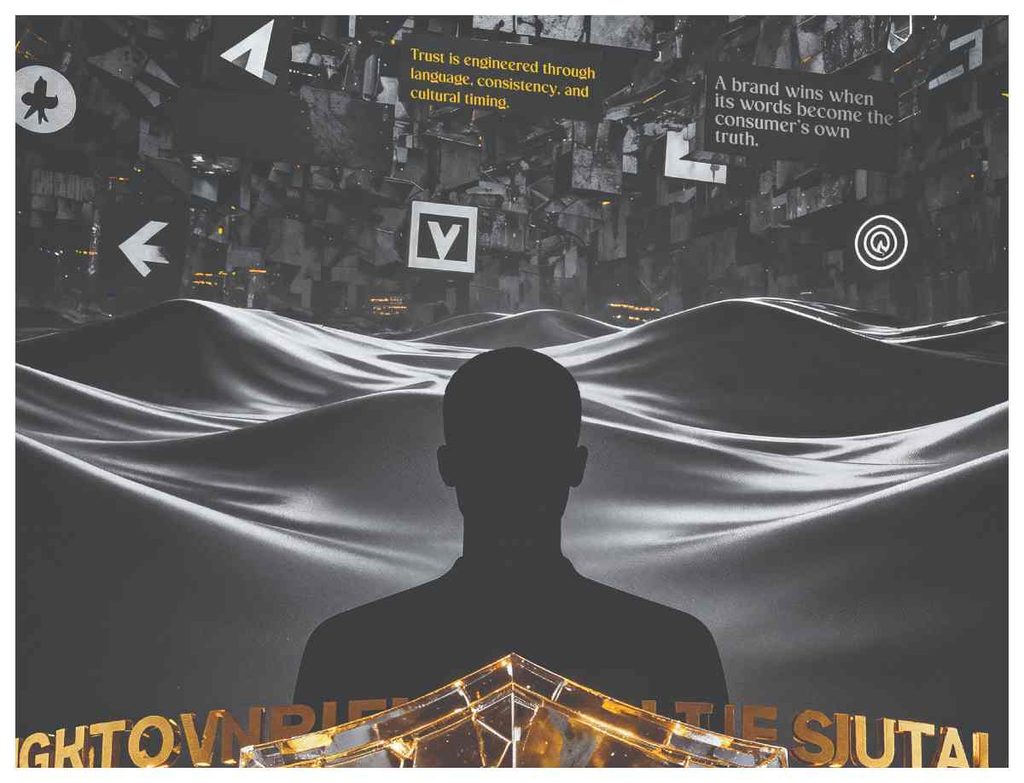
My point of view is simple: communication is storytelling and narrative building, and it seems alarming that companies and institutions are admitting that they do not know how to. Where you advertise and communicate is just as important as how and what. For a person, brand, company, community, institution, or country, everything you do or don’t. Sends a powerful message which is as important as how and what you say. Another layer to consider is that every person in a group, especially those who interact with customers and other stakeholders are telling the stories; are they all telling a cohesive and integrated one?
Every Brand Has a Story to Tell
Before you fine-tune the delivery of the narrative, it’s important to first choose your basic components. Around the same time that the WSJ article was doing the rounds, a person I know on LinkedIn had offered me a $100 course for free. It was in an online cohort from Tomorrow University in Germany, and the course was titled ‘Finding Your Mission and Purpose.’ She had done it herself, and I decided to take the plunge. It turned out to be one of the best spontaneous decisions I have ever made in my life. Definitely one for my memoirs or autobiography.
As part of the course modules, there were quite a few sessions on storytelling and identifying and fine-tuning a narrative because, at the end of the day, that is what a mission and purpose statement is. A story you are maybe telling the world and one you tell yourself. I was amazed at the depth of the process and the knowledge material in the course, as well as amused by the results of the WSJ article and its premise, as companies scrambled like ‘Chicken Little’ in the aftermath. On the other hand, in the course, they taught me about types of stories, types of characters, and components of story/narrative building. I’ll be exploring these in the paragraphs below.
Building the Narrative: From Quest to Rebirth
The first step is to identify the approach to be adopted: Author, marketer, journalistic, or scientific. Each of these approaches is best suited to a typical journey or situation. Next is the story theme or arc: Rags to riches, quest, rebirth, defeating the monster.
The rags-to-riches narrative fits in with the all-present self-made person storyline. Quest is about discovery, so it could, in a way, line up with a journalistic approach for a process of discovery and information gathering. For rebirth, a prominent example could be the story communicated by British-Dutch oil giant Shell. In 1989, Shell was almost a pariah after the Piper Alpha fire. The company took drastic steps to transform and is now not only a safety-focused company but one that is at the forefront of eco-friendly options.
Years ago, Martin Lindstrom spoke about how branding and religion are similar, and every religion or popular brand has a villain to defeat. For a brand like Apple, it is Android, which plugs into the defeating the monster narrative storyline. Another example, but more of an urban legend, is Netflix and Blockbuster, or closer to my heart and nearer to the truth, Taylor Swift and her former record label, Big Machine.
Know Your Audience, Tell Their Story
Here’s a telling perspective from Dale Carnegie, a world-renowned author of self-help books. which was part of the introduction to a later module: When Dale was a young boy, he wrote about the importance of understanding your audience. “I often went fishing up in Maine during the summer. Personally, I am very fond of strawberries and cream, but I have found that, for some strange reason, fish prefer worms. So, when he went fishing, Dale did not think about what he wanted or preferred. He thought about what they wanted. As he says, “I did not bait the hook with strawberries and cream. Rather, I dangled a worm or grasshopper in front of the fish and said: ‘Wouldn’t you like to have that?’”
That is the approach we need to adopt as marketers. The golden rule in life is, what’s in it for me? The audience must derive some value, even if it is only entertainment. As I am writing this, Taylor Swift has once again got her fans, including me, in a frenzy. In her interview with the New York Times, which was captured on video, she spoke about her process as well as how some of her famous and not-so-famous songs came about.
Understanding Your Audience Through Storytelling
First off, if you are a 20-year-old, reading books is a great way to increase your knowledge and material base, but watching movies and being in tune with pop culture are effective too. Secondly, Taylor writes in a way that resonates with a large segment of her audience deeply. She uses personal as well as literary and fictional stories to create.
Taylor is very democratic about the creation process, and everyone in the room, literally, is allowed to be open and suggest ideas, lyrics, and tunes. She uses common phrases to create relevance, but she loves to twist them.
Advertising agencies dream of receiving the perfect brief, but Taylor is the Queen of brief communication; she uses a turn of phrase that is unexpected but so powerful to express a common emotion. In her fan/critic acclaimed song Maroon, she doesn’t say ‘we grew apart’, she sings about the ‘rust that grew between telephones.’ Here’s another component of what makes her a master at storytelling: she uses colours to match moods and seasons. Her hit song Red, which I first heard many years ago, spoke about how “Loving him was Red”. That phrase is so simple, and yet it can be interpreted in so many different ways.
The Art of Letting Go of Control
And this is the ultimate power of the storyteller that the WSJ article and frantic marketers seem to miss: surrendering control of part of the narrative and not getting drawn into countering or combating it. What makes Taylor one of the best is definitely her ability to create and maintain a frame while also being confident enough to let the audience interpret it as they desire. The process of release is liberating and powerful at the same time. And that’s something Taylor knows all too well – pun intended.