
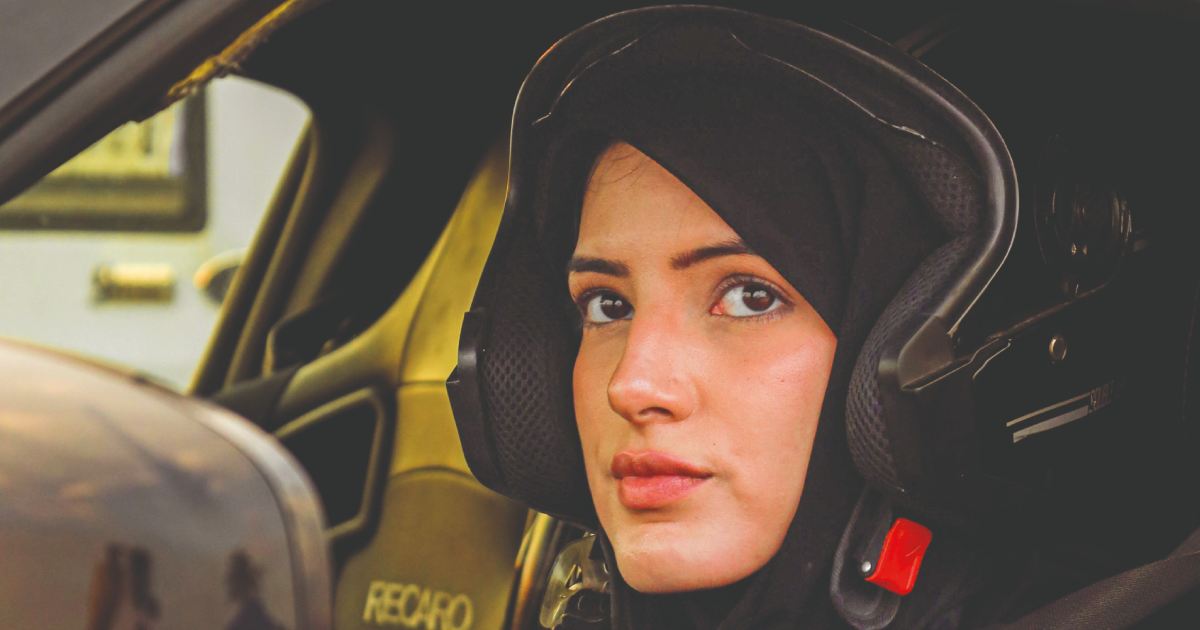
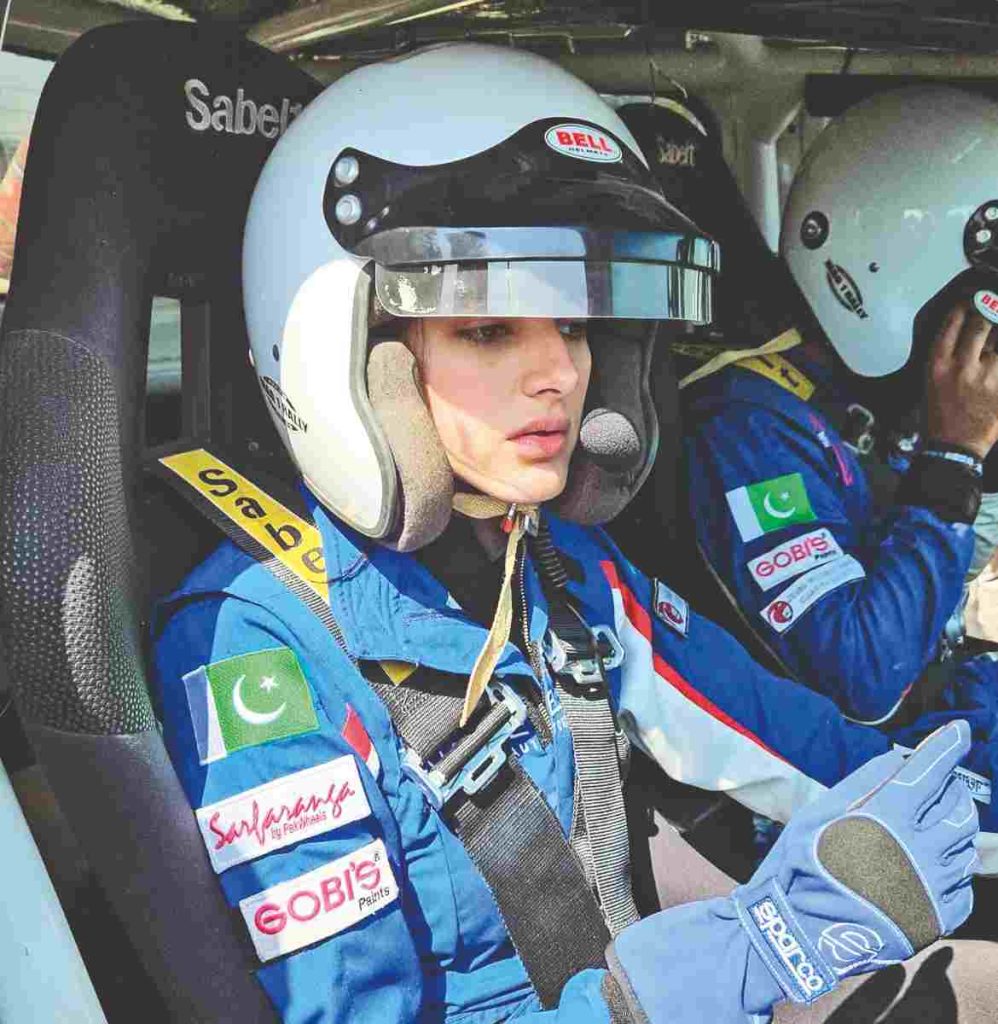
Grip tight. This is not a smooth highway; it is a drift entry at full throttle. Ayesha Khan Lodhi, known as Laiba Khan, does not follow lanes. She breaks traction. Pakistan’s first female drifter and a force in the Cholistan desert, she has turned torque into proof that speed has no gender. From podiums in Saudi Arabia to rewriting motorsport narratives at home, she is not just chasing apex lines; she is creating them. Artist, entrepreneur, racer. Barrier breaker. This is not just a drive; it is a statement in oversteer.
Synergyzer: You didn’t just drift, you rewrote history. When you entered that Saudi track, were you carrying ambition or the weight of representation?
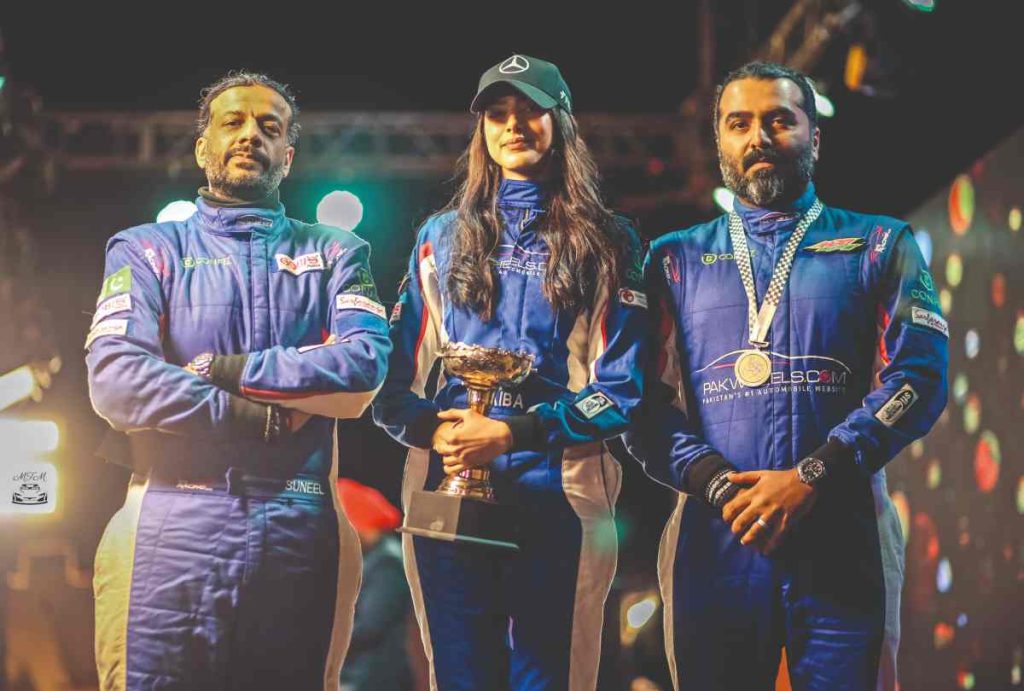
Laiba Khan: I think it was both. I had my own ambition as a driver because drifting is something very close to my heart, and I have worked hard for it for years. But at the same time, there was also the weight of representation. As a woman coming from Pakistan, bringing my car all the way to Saudi Arabia and stepping onto that track where every other driver was a man, it felt bigger than just a race.
There was not a single other girl participating; I was the only female on that track. In that moment, I knew I wasn’t just drifting for myself; I was also representing girls who dream of doing things people say they can’t do. It was emotional; I felt proud, and it was very humbling at the same time.
Synergyzer: As CEO of a fashion brand and a motorsport athlete, you straddle two very different worlds. What connects modest wear and high-speed drifting?
Laiba Khan: For me, modesty and drifting are not opposite worlds at all. There is a stereotype that if a woman chooses modest wear or embraces the hijab, then her life becomes limited and she cannot follow big dreams. I always wanted to challenge that idea. Modesty is a part of my values and my identity, while drifting is my passion and the place where I feel most alive. One does not cancel the other.
As a woman from Pakistan, a fashion brand owner, and a motorsport athlete, I believe you can stay true to your beliefs and also chase speed, ambition, and big goals. Modest wear doesn’t hold me back; it reminds me of who I am while I’m breaking barriers on the track.
Synergyzer: As Pakistan’s first female drifter, do you feel empowered or pressured by the title? And in a country where women’s mobility is limited, what does speed mean to you?
Laiba Khan: When people call me Pakistan’s first female drifter, it feels both empowering and like a responsibility at the same time. In a country where women’s mobility can still be limited, speed means something deeper to me than just driving fast. For me, speed is freedom.
It is the feeling of breaking boundaries, of proving that women can take space on the track, in motorsports, and in any field they dream of. Every time I am on the track, it feels like I am not only driving for myself, but also opening a small door for other girls who want to follow their own path.
Synergyzer: How do you balance giving an honest review while working with major automotive brands that value positive visibility?
Laiba Khan: Honesty is the most important thing in my work. When I review a car, I always try to share my genuine experience because that is what my audience trusts me for. At the same time, when I collaborate with major automotive brands, I understand the responsibility of representing their product in a respectful and professional way. I focus on highlighting the strengths of the car while still giving a real driver’s perspective.
I believe the best partnerships happen when brands respect authenticity. My audience follows me because they know I actually drive these cars and share my real thoughts, not just promotions. So, the balance is simple: stay honest with my audience and stay professional with the brands.
Synergyzer: From Cholistan’s desert to Saudi Arabia’s circuits, how do the challenges differ, and what did the Cholistan Rally teach you about endurance beyond the glamour?
Laiba Khan: Both experiences were amazing in their own way. The Cholistan Jeep Rally was like a dream for me because it showed me how talented and professional Pakistani racers are, especially the male drivers who have been doing this for years. The desert is very unforgiving; the terrain is tough, and it really tests your endurance and mental strength. It teaches you patience, resilience, and how to keep going even when conditions are not perfect.
In Saudi Arabia, the experience was different but equally special. The motorsport scene there is very professional, and the level is extremely high. I received a lot of respect, and being the only female participating made it even more meaningful. Saudi Arabia is a country I truly love, especially because of how strongly motorsport is growing there. Both tracks are battles in their own way, but Cholistan teaches you survival and endurance, while Saudi Arabia shows you the precision and professionalism of modern motorsport.
Synergyzer: EVs, digital enforcement, smarter roads; mobility is changing. Do you think the future of racing in Pakistan will become more inclusive or more commercial?
Laiba Khan: When I first started, the scene was extremely different. Motorsport in Pakistan was much smaller, and there were not many facilities or opportunities like we see today. At that time, I was just focused on taking part and learning as much as I could. Now I feel the scene is slowly growing; the tracks are getting better, the community is becoming stronger, and people are starting to take motorsports more seriously.
I think the future of racing in Pakistan will become both more inclusive and more commercial. As the industry grows, more brands, sponsors, and technology will come into the sport, which will make it more professional. At the same time, I also hope it becomes more inclusive, especially for women, so that girls feel confident stepping onto the track and following this passion.
Synergyzer: Drifting means losing control to master it. Has that shaped how you navigate society’s limits on women, and what was harder: mastering the car or challenging mindsets?
Laiba Khan: Drifting is about learning how to control something that looks out of control, and in many ways my journey has been similar. When I first stepped into this field, most of the comments were negative. People told me I belonged in the kitchen and that motorsport was only for boys. Some even sent threats. In a way, my career began because of that hate, because I wanted to prove that those limits people place on women are not real.
I moved to Dubai, joined drifting academies, and started competing internationally. I’m still learning, and I do not call myself a professional drifter yet because for me this is still a learning phase. But the truth is, the toughest part was not the machine; it was the mindset. Cars can be mastered with practice, patience, and skill, but changing people’s thinking takes much longer. Still, I believe that by continuing to show up on the track, I’m slowly proving that girls are not less, and that passion doesn’t belong to one gender.
Synergyzer: Saudi Arabia is investing heavily in motorsports. What does Pakistan need to build a serious global racing ecosystem?
Laiba Khan: Pakistan needs structure, safety, and support. Saudi Arabia has shown what happens when a country seriously invests in motorsports through professional venues, big partnerships, and long-term planning. Saudi’s ecosystem now includes major international events, sponsorship investment, and new circuit development, while the Fédération Internationale de l’Automobile FIA has also emphasised grassroots pathways and lower-cost circuit homologation for emerging motorsport nations.
For Pakistan, I think the biggest needs are better tracks, stronger safety standards, proper driver development from karting upward, and real sponsor backing. It also needs media support and more belief in local talent, especially women, so motorsports is not seen as a niche hobby but as a serious sport.
The FIA has specifically highlighted that countries like Pakistan need safer, more regulated circuits and entry-level homologation to grow participation. I think a serious global racing ecosystem in Pakistan would start with infrastructure, training, governance, and inclusion. Talent is already here. What we need now is a system that helps that talent grow.
Synergyzer: Young girls watching you might see possibility for the first time. What responsibility comes with being someone’s ‘first example’?
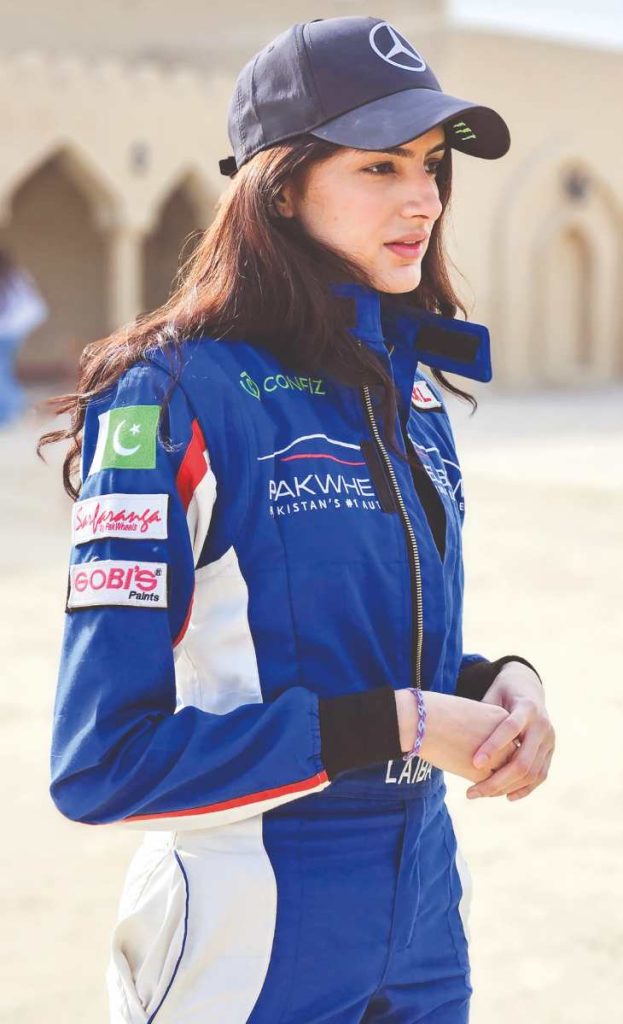
Laiba Khan: It’s a very big responsibility. When young girls see me and tell me they want to learn drifting, it honestly feels very special. It means they are starting to believe that this path is possible for them too. But sadly, in Pakistan, we still don’t have many academies or facilities. Right now, there is basically only one proper track, Vroom in Lahore, and many talented people cannot afford the sport even if they have the passion for it.
That’s why I believe we also need government support and more investment in motorsports so that young drivers, especially girls, can get opportunities to learn and grow. Being someone’s first example means showing them that their dreams are valid. If one girl sees me and believes she can step out of the usual expectations and try something different, whether it is motorsports or any other passion, then I feel I’ve done something meaningful.
Synergyzer: If your car had a personality, what would it be: rebel, artist, queen, or troublemaker?
Laiba Khan: Honestly, probably a rebel. My car isn’t calm or quiet; it is loud, unpredictable, and a little wild, just like drifting itself. It doesn’t like following the usual rules; it likes pushing limits and standing out. In a way, that is exactly what my journey in motorsport has been like.
Synergyzer: Who is more nervous before a race: you or your family?
Laiba Khan: My family, my mother especially, and my father too. They get much more nervous than I am before a race. For them, it’s always a mix of worry and pride, because motorsport is not the safest sport. But at the same time, their support means everything to me, and knowing they are standing behind me gives me even more confidence on the track.