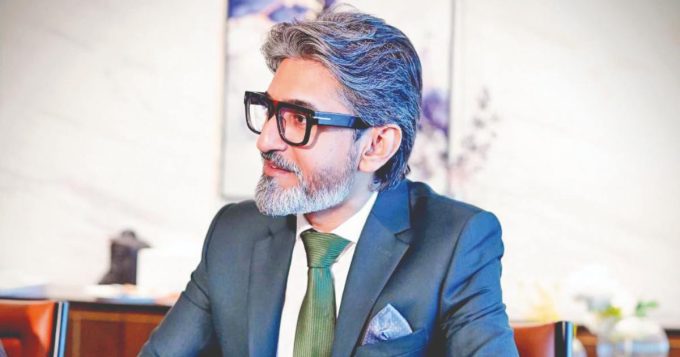


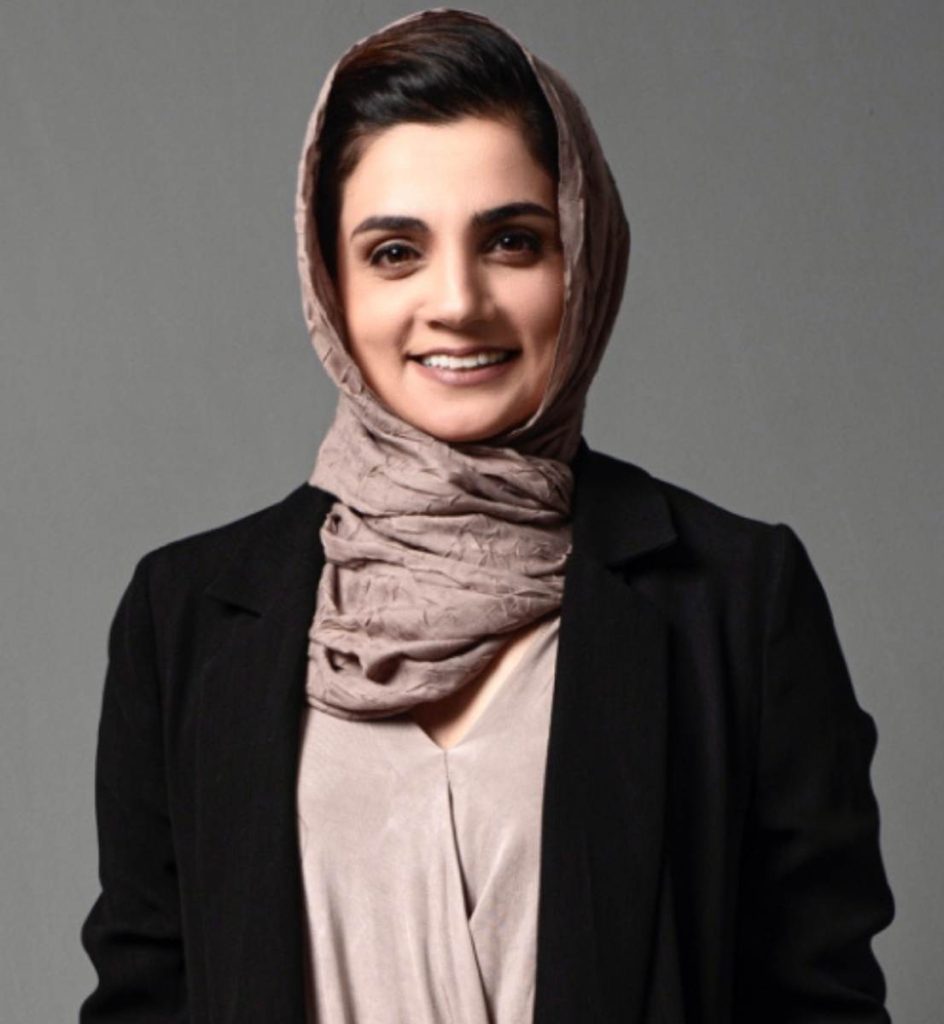
The future of mobility rarely arrives quietly. Sometimes it rolls in on silent wheels, challenging the roar of engines that once defined the road. At the centre of Pakistan’s emerging electric mobility movement stands Huma Yahya Khattak, Chief Executive Officer of EV Technologies Pvt. Ltd. and the driving force behind ELFA Electric.
Khattak is steering a revolution, one that promises cleaner cities, smarter mobility, and new opportunities for riders and mechanics alike. Her mission goes beyond building electric bikes.
It is about rethinking how Pakistan moves, accelerating towards a future where progress is not measured in horsepower, but in possibility. The future of mobility in Pakistan will not be imported. It will be built here, made in Pakistan for the people of Pakistan.
Synergyzer: Before entering the EV sector, you worked in industries like energy and telecommunications. What perspectives from those sectors have influenced the way you approach mobility today?
Huma Yahya Khattak: My experience in energy and telecommunications shaped how I think about scale, infrastructure, and user behaviour, which are all critical in mobility today.
From the energy sector, I learned that electrification is not just about products; it is about ecosystems: how energy is generated, distributed, and consumed. That perspective directly influences how we approach EVs, not just as vehicles, but as part of a broader energy transition.
Telecommunications taught me the importance of accessibility and adoption at scale. The real success of any technology lies in how seamlessly it integrates into people’s daily lives. This is why, at ELFA, we focus heavily on affordability, ease of use, and digital touchpoints, because adoption is not driven by innovation alone, but by convenience and trust. By viewing mobility as a system rather than just a product, we unlock real transformation.
Synergyzer: In your view, what does a truly inclusive mobility system for Pakistan look like?
Huma Yahya Khattak: An inclusive mobility system in Pakistan is one where mobility is not a privilege, but a basic enabler of opportunity. Today, millions of people depend on two-wheelers not for convenience, but for survival. So, the question is not just how we electrify mobility, but how we make it more equitable.
For me, inclusion means affordability, reliability, and dignity. Affordability ensures access, reliability ensures continuity of income, and dignity ensures that people are not forced to compromise on safety or quality because of their income level.
At ELFA, we design with this reality in mind. An inclusive system is not built by premium products alone. It is built on solutions that work for the majority. When mobility becomes dependable and accessible, it directly impacts livelihoods, education, and independence.
Synergyzer: How do you make strategic decisions when the industry has still not yet developed?
Huma Yahya Khattak: When the ecosystem is still evolving, you cannot wait for perfect conditions. It must be built with conviction and clarity of direction. Our approach is to focus on what we can control: product quality, cost efficiency, and customer experience. At the same time, we stay flexible in areas where the environment is still maturing, such as infrastructure
and policy.
In emerging industries, speed of learning becomes more important than speed of execution. We stay very close to our customers, dealers, and partners, and we let real-world usage guide our decisions.
There is uncertainty, but also a significant opportunity to shape the market itself. If you are disciplined in your fundamentals, you do not just adapt to the ecosystem; you help define it.
Synergyzer: For millions of bike riders, especially delivery drivers and daily commuters, bikes are simply tools for survival. Do you think electric mobility has the potential to shift this mindset?
Huma Yahya Khattak: In Pakistan, motorcycles have always carried a dual meaning. They are both a symbol of progress and a tool for survival.
Electric mobility has the potential to rebalance that narrative. When the economics become compelling, with lower running costs, reduced maintenance, and predictable performance, the focus naturally shifts from image to utility.
For a delivery rider, saving even a small amount daily has a meaningful impact on income. For a commuter, reliability and cost stability matter more than image.
Over time, as more people experience the practical benefits of EVs, their mindsets will evolve. It will not happen overnight; eventually, sustainability becomes a natural extension of practicality.
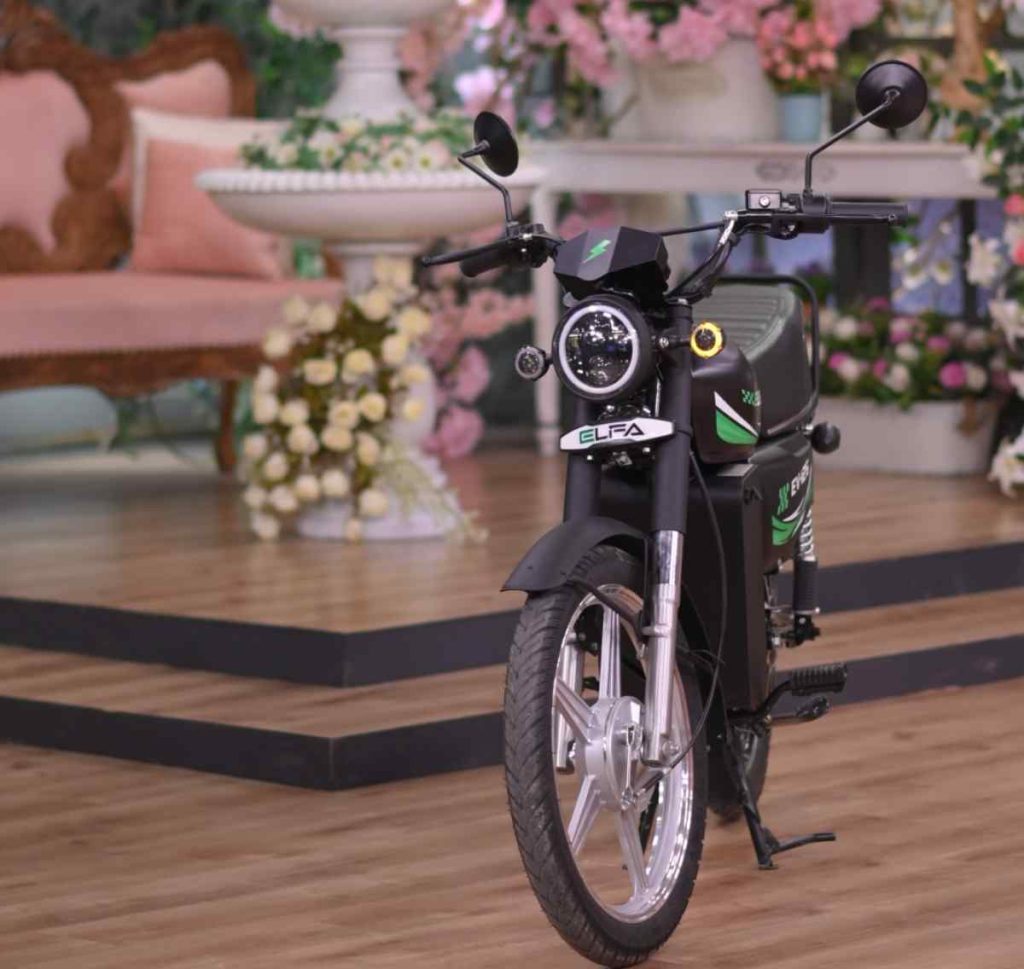
Synergyzer: How much of the ELFA EV-125’s battery technology is produced in Pakistan? And how do real-world Pakistani riding conditions, such as steep inclines, rough roads, and waterlogged streets, influence the engineering decisions behind the bike?
Huma Yahya Khattak: Localisation is a critical part of building a sustainable EV industry in Pakistan, and our partnership with Atom Power is a step in that direction.
While key components of lithium-ion technology are still globally sourced, as is the case worldwide, the battery assembly, integration, and optimisation are done locally. This allows us to adapt the system specifically for Pakistani conditions rather than relying on imported solutions.
Conditions in Pakistan are demanding, steep inclines, uneven roads, high temperatures, and water exposure during monsoon seasons, all of which influence our engineering decisions. This includes battery casing, thermal management, motor tuning, and suspension durability.
The goal is not to just build an electric bike, but to build one that performs consistently in the environments our customers actually ride in every day.
Synergyzer: Given Pakistan’s electricity shortages, rising tariffs, and frequent outages, how can electric motorcycles match the reliability and independence of petrol bikes?
Huma Yahya Khattak: This is one of the most important and valid concerns, and it needs to be addressed honestly.
Electric motorcycles do not replace petrol in the same way for every user today, but they offer a different kind of reliability. Most riders charge at home or at work, which reduces dependency on fuel stations and price volatility.
Even with rising electricity tariffs, the cost per kilometre remains significantly lower than petrol. The key is predictability; users know what their daily operating cost will be.
As for outages, charging flexibility becomes important. With proper planning, such as overnight or workplace charging, most urban users can manage their usage effectively.
The transition will not be immediate or uniform, but as infrastructure improves and battery technology evolves, the reliability gap will continue to narrow.
Synergyzer: In recent years, government programmes have distributed electric scooters to women. Do these initiatives drive lasting social change, or are they merely a first step towards overcoming deeper barriers to women’s mobility?
Huma Yahya Khattak: Programmes that provide electric scooters to women are an important step, but they are only the beginning. Access to a vehicle can enable independence, but long-term change requires addressing deeper barriers such as social acceptance, safety, infrastructure, and financial accessibility.
What these initiatives do successfully is shift perception. They make women’s mobility more visible and more normalised, which is a powerful first step. However, for lasting impact, this needs to be supported by ecosystem-level changes such as training, financing options, safe riding environments, and sustained policy support.
Real change happens when mobility is not just provided, but fully integrated into daily life without friction or resistance.
Synergyzer: The partnership between ELFA Electric and Bykea focuses on gig economy riders. What did you learn from observing how these riders actually use motorcycles every day?
Huma Yahya Khattak: Working closely with gig economy riders has been one of the most insightful parts of our journey.
These riders are extremely practical decision makers; they evaluate a bike based on how it impacts their daily earnings.
We learned that small efficiencies matter. Range consistency, charging time, durability, and cost per kilometre directly affect their income. Downtime is not an inconvenience for them; it is a lost livelihood.
This has pushed us to focus on reliability and total cost of ownership rather than just features. It has also reinforced the importance of building products that can handle continuous, high-frequency usage.
Gig riders are the most honest test of whether an EV truly works in Pakistan.
Synergyzer: How realistic is the 30% EV adoption target by 2030, and based on on-the-ground experience, what level is actually achievable by the decade’s end?
Huma Yahya Khattak: The 30% target is ambitious, and ambition is important because it sets direction. From a ground reality perspective, adoption will depend on three key factors: affordability, financing availability, and infrastructure readiness.
Two-wheelers are likely to lead this transition because they are more price sensitive and have clearer economic benefits for users. However, reaching 30% across all vehicle categories by 2030 will be challenging.
A more realistic outcome may be strong adoption in specific segments, particularly urban two-wheelers and commercial use cases, while other segments take longer to transition. What is encouraging is that the momentum has started. With the right policy consistency and private sector execution, the trajectory can accelerate significantly over the next few years.
Synergyzer: For young professionals, particularly women entering traditionally male-dominated sectors, what lessons would you consider most important to share?
Huma Yahya Khattak: One of the most important lessons is not to wait for perfect readiness before stepping forward. In male-dominated sectors, there can be added pressure to prove yourself, but over time, consistency, competence, and clarity of thought speak louder than anything else.
It is also important to build resilience. There will be moments of doubt, resistance, and setbacks. What matters is the ability to stay focused in your direction rather than getting discouraged by the noise.
Finally, do not limit your ambition based on existing norms. Many industries are still evolving, and that creates space for new voices and leadership styles. The goal is not just to enter these sectors, but to shape them.
Synergyzer: What is the most surprising misconception people have about
electric bikes?
Huma Yahya Khattak: One of the most common misconceptions is that electric bikes are weak or not suitable for day-to-day usage in Pakistan. In reality, electric bikes deliver instant torque, which makes them very effective in city riding conditions, including traffic and inclines. The assumption that they are fragile or underpowered usually comes from limited exposure, not experience. Another misconception is that they are inconvenient to charge. Once people start using them and integrate charging into their daily routine, it becomes far more manageable than they initially expect.
Synergyzer: If you could design the perfect electric bike specifically for Pakistani roads, what unusual feature would it absolutely need?
Huma Yahya Khattak: The perfect electric bike for Pakistan would need to go beyond standard specifications and truly adapt to local realities. From a technical perspective, it would need exceptional suspension and durability to handle uneven roads, strong water resistance for monsoon conditions, and intelligent battery management to perform in high temperatures.
From a user perspective, flexibility would be key. For men, especially those using bikes for work, features like extended range options and load adaptability would matter. For women, ease of handling, lighter frame balance, and safety-oriented design would be equally important.
If I had to highlight one unusual but highly relevant feature, it would be a modular battery system that allows users to extend range when needed, while keeping the bike lightweight for daily use. The ideal product is not just engineered for performance, but for the realities of how people actually live and ride in Pakistan.