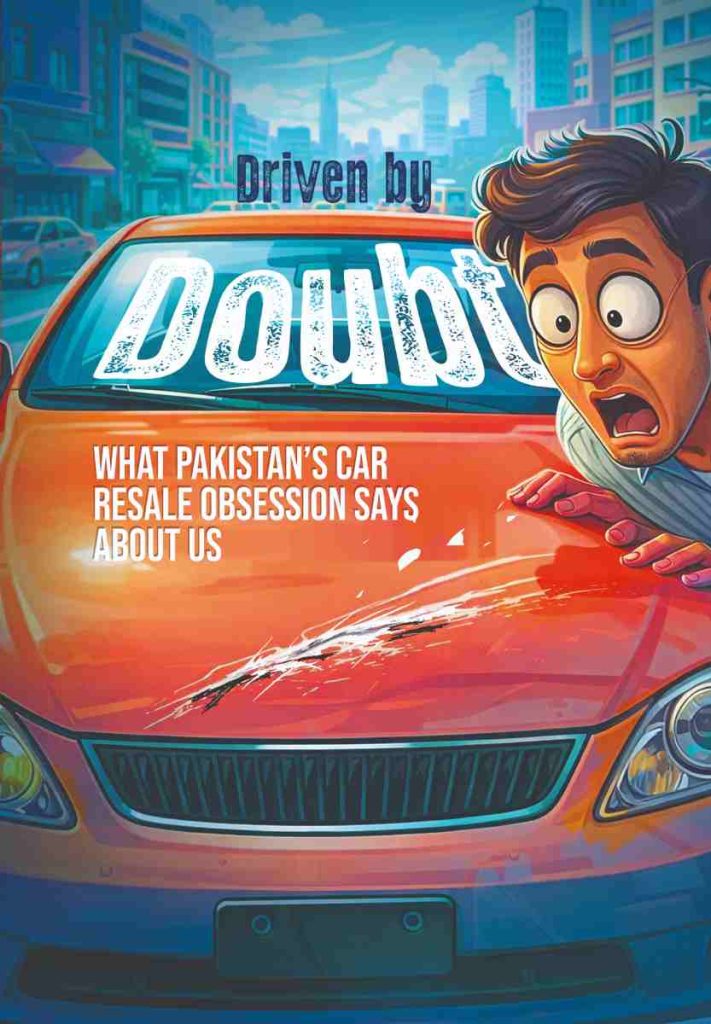

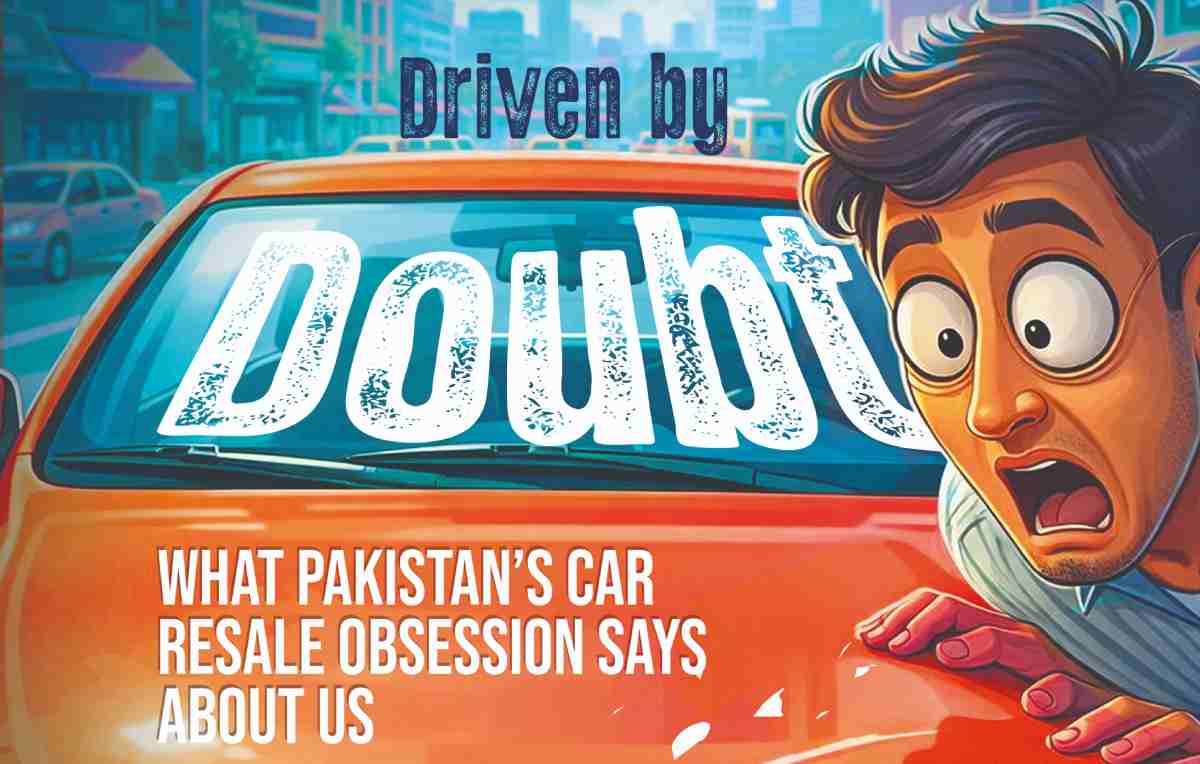
In a market built on doubt. Every car is judged not by how it drives, but by how easily it can be sold.
Ask any Pakistani what it’s like to buy a car, and they’ll explain that it’s one of the most tedious tasks in the world – whether it’s buying a new one or looking for the right used one. The variables seem to be never-ending when it comes to choosing the right car – from the car’s ‘genuineness’, to the logo that the car carries.
There’s something oddly revealing about the way we Pakistanis buy and sell cars. Whether it’s the shared suspicions around used vehicles or familiar frustrations with new ones, our preferences go beyond just budgets or brands and point to certain unwritten rules we’ve all quietly agreed to follow, even though we may resent every word of them when it’s time to sell.
These rules often defy the logic behind owning a car of your choice, but make perfect sense once you understand the psychology beneath them. A minor repaint could jeopardise the prospect of receiving a good offer, or a replaced engine could have the potential to drop the price. The reality is that owning a car in Pakistan isn’t just about having the ride you’ve always wanted; it’s about whether you’ll be able to resell this vehicle at a good price – regardless of how long you intend to own it. More importantly, it’s about trust – or the lack of it.
The Legend of ‘Bumper-to-Bumper Genuine’
Walk into any used car negotiation in Pakistan and you’ll find the same anxiety playing out, almost scripted in nature. The seller is seen bracing for the first objection as the buyer circles the car, looking for a reason to doubt. Somewhere in that exchange, there’s a logic that makes no technical sense. But absolute cultural sense, since the market rewards evident history, rather than a possibly cosmetically concealed one.
In most markets, a well-maintained car commands a premium. In Pakistan, it depends entirely on what ‘well-maintained’ looks like. A replaced part – even an improved one – is not considered good maintenance, rather it’s seen as interference. In a market with no reliable way to verify history, this interference becomes indistinguishable from concealment, and with the fact that we humans always jump to the worst possible conclusion first – you can imagine what people assume even in the face of clear claims.
Due to this, the standard that emerged became originality. ‘Bumper-to-bumper genuine’ has become less of a mechanical claim and more of a character reference. The result is a market that rewards untouched survival, not improvement – even if the car looks horrible. Surprisingly, a 10-year-old car with faded paint, over 200,000 km on the odometer, and a dirty interior is likely to be priced higher than the same vehicle, but repainted and with a pristine new engine.
When There’s No Paper Trail
None of this is arbitrary; it is the logical response to a market that has no memory. There is no standardised vehicle history database or an authoritative inspection framework that buyers trust uniformly. So every transaction, regardless of the car’s actual history, effectively starts from zero.
Into that vacuum go the proxies: first owner, low mileage, company maintained, original everything, doctor-driven. These are the closest available substitutes for institutional trust. The problem with this is that such shortcuts flatten reality – a poorly maintained ‘genuine’ car can command more than a well-kept modified one, because the system is pricing legibility more than condition.
Own Money and the Economics of Access
Then there’s the phenomenon that stops outsiders cold: paying above the manufacturer’s price for a brand-new car. ‘Own money’ is in its own way, a market solving a problem that the formal system created. Controlled supply, unpredictable demand spikes, and delivery timelines that stretched for months produced an environment where the car itself became less scarce than the delivery slot. The investors who look at cars as investment avenues recognised this and began pricing accordingly. What you’re paying for, ultimately, isn’t just the vehicle, it’s your place in the queue.
In an inflationary economy, that’s not an irrational transaction. If the price of the same car is expected to rise over the next quarter. A premium paid today is effectively a hedge. The car stops functioning as a consumer good and starts functioning as a financial instrument. Which, in Pakistan, is closer to how it has always been understood, given the fact that the Rupee has been losing value and assets have started appreciating – especially cars.
Resale is a Real Purchase Decision
In stable economies, cars depreciate. The only question is how fast. In Pakistan, depreciation is negotiable, and for certain models it is reversed. This has less to do with automotive greatness than with liquidity. A car that everyone wants to buy is a car you can always sell. And that tradability has its own value on top of the vehicle’s utility. Think of a Toyota Corolla in Pakistan, or the Honda Civic like – hot cakes that always have a buyer ready. In fact, even in the motorcycle market, we have models that literally have ‘Cash Deposit’ as a model name – that’s what the Honda CD-70 stands for. This is why the actual question driving most purchase decisions is not ‘Is this right for me?’ but ‘How much will I lose when I sell it?’
This calculus shapes everything downstream — brand preference, colour, trim level, even whether to buy new or used. Features matter to the extent that they support resale, such as white cars which have a ‘higher resale value’ since they don’t make dust as evident as black ones, and because that the paint fading isn’t noticeable. Everything else is secondary.
Risk, Not Irrationality
It’s easy to look at all of this and think that Pakistani car buyers are irrational and only stand to secure their investment. However, the more accurate reading is that they’re adaptive. A car is, for most households, among the two or three largest purchases they will ever make. It sits in a broader economic environment marked by currency volatility, limited consumer protection, and weak institutional recourse when things go wrong. Given that context, the behaviour makes sense: stick to known brands, avoid anything tampered with, pay for certainty, and be ready for exit.
These aren’t the habits of an uninformed market. They’re the habits of one that has learned, over time, that it cannot fully trust the systems around it – and has built its own rules accordingly.
Small glimmers of change
The conditions that produced these behaviours are not fixed. Digital inspection platforms are gaining ground. Younger buyers are starting to weigh features and experience alongside resale value. Transparency, slowly, is improving.
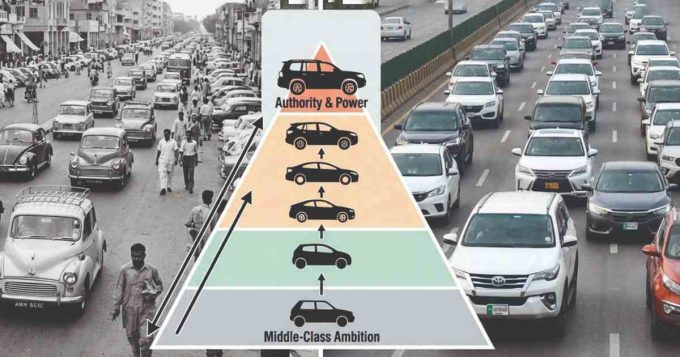
For decades, Toyota, Suzuki, and Honda weren’t just the dominant players in Pakistan’s car market – they were the market. Buying anything outside that trinity was an act of financial risk, a bet most households weren’t willing to make. Then Kia and Hyundai arrived, and rather than being absorbed into the margins, they stuck. The Sportage found real buyers when it filled a real gap that existed in the market.
Slowly, the conversation shifted, as these brands made resale anxiety manageable enough to take the leap. Now the field is widening further, with Chinese manufacturers entering a market that once seemed impenetrable by anything without a decades-long local reputation. Whether they can clear the same bar on the one thing that actually moves metal here – resale confidence – is the question the market is still working out.
But the underlying psychology won’t shift on the back of better information alone. What it requires is something harder to build: trust.
Until that infrastructure exists, perception will continue to do the work that systems haven’t yet earned the right to do. So the next time someone walks away from a perfectly sound car over a resprayed trunk, or pays a premium simply to get in line, know that they’re not being irrational. They’re being Pakistani in a Pakistani market – which, under the circumstances, is the only sensible thing to be.