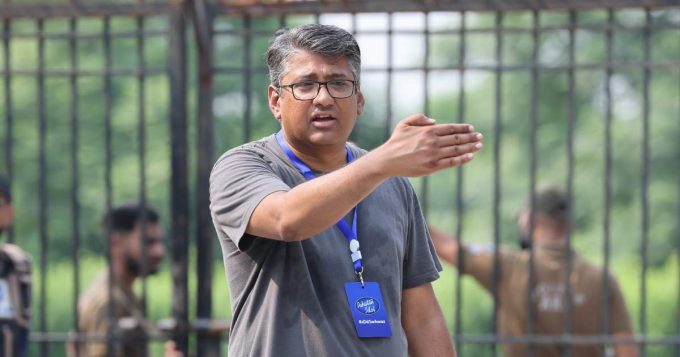

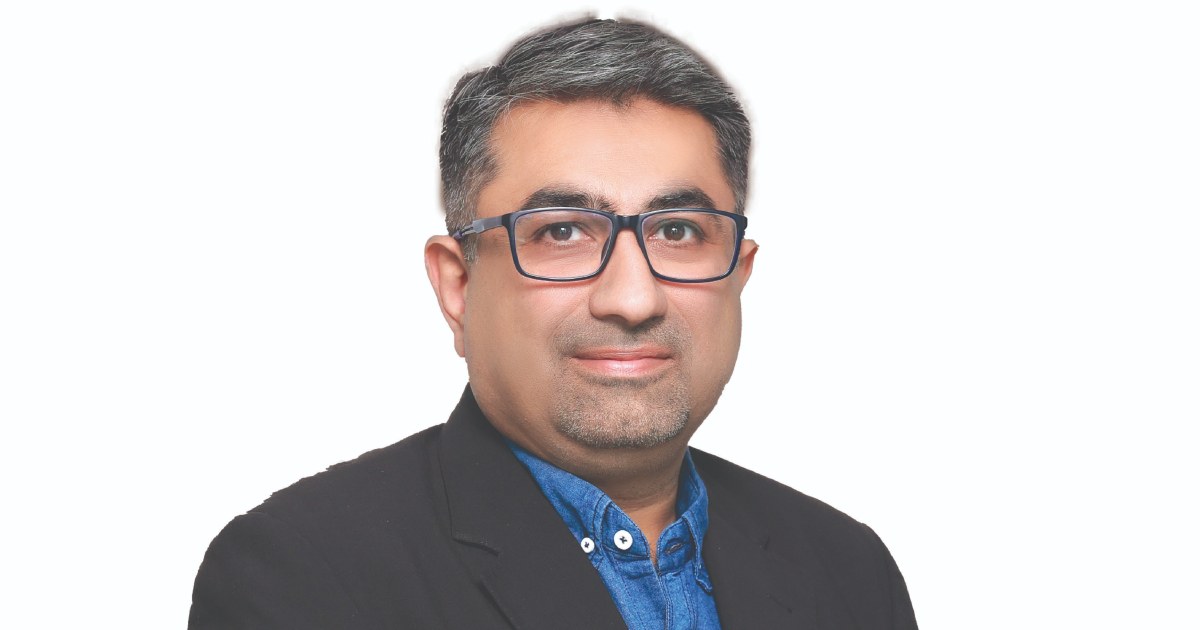
If universities were systems, Dr Mohammad Asad Ilyas would be the engine ensuring everything functions efficiently amid complexity. At IBA, he operates where policy meets people, shaping student lives long before they enter a classroom. Known for disrupting outdated systems, he believes the greatest institutional risk is standing still, guiding how education, technology, and culture collide at speed.
Synergyzer: You have worked as both a strategist and an academic. How do you balance the urgency of adopting new technologies with risk management, ensuring progress while respecting an institution’s legacy?
Dr Asad Ilyas: I see myself as a disruptive personality, a change agent by instinct. When you are driving transformation, you cannot obsess over short-term landmines; you have to focus on the one that’s waiting down the road. Not changing is often the bigger explosion. There is a clear difference between digitisation and digitalisation. One converts physical records; the other reshapes processes, and when you automate processes, you inevitably challenge gatekeepers. That disruption is cultural, not just technical. The only way to do it is: decisively and collectively, not in fragments.
At IBA, I began with my own office. Admissions moved fully online, with applications, payments, grades, and testing, all blind and automated. Decisions are based on numbers, not names. That shift removed the potential for influence, favouritism, and manual intervention, and it is now fundamentally changing behaviour across students, faculty, and administration for other processes such as course enrolment, hostel room allotments, and similar processes, which initially had a person looking after them but now need to be done online.
Yes, the system crashed when it launched. That’s normal. Every major system does. Failure is part of progress; what matters is whether you persevere. Our society tends to punish failure, but failure is inherent especially in growth. Even globally, the biggest innovations have failed publicly before succeeding.
As for risk, I do not avoid it. I believe the greatest risk an institution can take is not taking one at all. Change requires philosophical courage. If the intent is institutional betterment, you move forward, inclusively and persistently, without letting short-term resistance derail long-term transformation.
Synergyzer: What guiding principles shape your decisions when developing new infrastructure and facilities?
Dr Asad Ilyas: Whether it is campus expansion or managing existing spaces, the starting point is always diversity. IBA draws students and faculty from over 200 districts, spanning age groups, cultures, and belief systems. That diversity shapes every infrastructure decision we make.
My guiding principle is simple: the campus must remain a neutral space. All ideas, philosophies, and schools of thought are welcome here as long as they remain personal and non-impositional. You have complete freedom of expression unless it infringes on someone else’s freedom.
Campus life should feel safe, inclusive, and open. You can live the way you choose, speak your truth, stay late, and debate fiercely, but you cannot force others to live or think the way you do. There is no need to be personal or coercive; dialogue is encouraged, enforcement is not.
So, when we develop infrastructure, we design for coexistence. The challenge, and the principle, is to create spaces that allow everyone to belong without anyone dominating. That balance defines our approach to campus culture and growth.
Synergyzer: In today’s higher education landscape, branding can feel like advertising a product. How do you balance authenticity with the need to market IBA to students and stakeholders?
Dr Asad Ilyas: IBA does not need to invent its brand; it lives through its alumni and word-of-mouth. In fact, many people don’t even realise we are a public-sector institution. They assume we are private when in reality, we operate under the Sindh government, with the Chief Minister as our patron. And yet, we are constantly compared to elite private universities. That comparison itself is a source of pride. I come from Lyari myself, and so do many of our students. So, when people place IBA alongside institutions backed by multi-billion-rupee endowments, it tells you something important: we are punching way above our weight, and succeeding.
Branding, for us, is not about selling an image. It’s about reinforcing what already exists: that IBA, its students, faculty, and administrators are forces to be reckoned with. Despite being financially humble, resource-constrained, yet resilient. We survive and thrive because our ecosystem is strong. That’s authenticity. Everything else is just a reminder.
Synergyzer: The registrar’s office often operates behind the scenes, yet it drives institutional transformation. What is the most misunderstood aspect of your work?
Dr Asad Ilyas: The registrar’s office is often misunderstood as an administrative function, when in reality it manages the entire cradle-to-grave academic operations and experience, from admissions to alumni. We operationalise everything the academic board creates through policy: eligibility, enrolment, calendars, courses, and assessments. We also oversee the physical life of the campus, the academics, ICT, transport, hostels, student spaces, food, and infrastructure, all under one roof. It is a high-impact but largely invisible role. You can get 99.9% right, but a single failure makes headlines.
What is most misunderstood is the scale and pressure of the work. Disruption creates crises, and crises are part of progress. My job is to absorb that pressure, stand by my team, and take responsibility when things go wrong, because institutional change does not happen without resistance, nor does it happen without risk.
Synergyzer: How does the Registrar’s office foster an environment that supports student startups and innovation?
Dr Asad Ilyas: Entrepreneurship thrives when policy and culture align, and that is where the Registrar’s office plays a quiet but critical role. I am particularly proud of contributing to IBA’s ORIC policy, which is among the most progressive in the region. As a public-sector institution, IBA allows faculty members to retain full ownership of what they create, whether companies, products or innovations, even when developed using IBA resources. The institute asks only for academic value in return, such as research, curriculum development, or knowledge contributions.
Our focus is impact, not profit. Innovation at IBA is driven by societal value, alumni success, and knowledge creation, rather than institutional ownership. That philosophy extends to students as well. From food ventures to fintech, mobility services to start-ups, we actively provide physical space, infrastructure, and the freedom to experiment.
We deliberately discourage gatekeeping. Resources exist to be shared, risks to be taken, and ideas to be tested. When institutions remove fear and ownership barriers, entrepreneurship becomes a culture and a norm.
Synergyzer: What do you see as the biggest challenge for university administration in Pakistan today, and how is IBA addressing it?
Dr Asad Ilyas: The biggest challenge for university administration in Pakistan is the growing disconnect from global progress. The world is moving rapidly into areas like AI, quantum computing, space sciences, and advanced digital economies, while local ecosystems, industries, and infrastructure remain limited. This widening gap directly impacts curriculum, students and the country.
IBA is addressing this through internationalisation. We actively build global partnerships, faculty and student exchange programmes, joint courses, and institutional MoUs to keep our academic ecosystem exposed to where the world is headed. At the same time, we engage policymakers and industry leaders to create awareness that this gap must be narrowed, not ignored. Collaborations with institutions like Stanford, engagement with financial markets, emerging technology councils, and industry platforms are all part of ensuring our students do not learn in isolation, but in the context of the future.
Synergyzer: If you could give one piece of advice to students about making the most of their time at IBA, what would it be?
Dr Asad Ilyas: Experiment. The world you are preparing for today will not exist by the time you graduate, and the frequency of change will be highest in human history. Skills now have a product life cycle; even human skillsets are becoming outdated every two to three years.
The first ten years of your life should be about exploration, learning fast, failing early, and understanding yourself. Alongside that, build financial awareness and savings habits early, because adaptability without financial discipline rarely sustains itself.
Synergyzer: Admissions and standardised testing often spark debates on fairness. How does IBA ensure transparency as well as student diversity over time?
Dr Asad Ilyas: Fairness at IBA begins with decentralisation. Admissions decisions are not controlled by a single office but overseen by large academic councils and boards, making undue influence practically impossible. Once decisions are finalised, results are made public; transparency is the ultimate safeguard.
Beyond process, we rely heavily on admissions analytics. Data showed us where participation was lacking, particularly among female students and applicants from outside Karachi. The barrier wasn’t merit; it was perception and access. By expanding hostel facilities and communicating that support clearly, female enrolment in hostels grew from under 100 to nearly 300, and today almost a quarter of our undergraduate population comes from outside Karachi. With the admission numbers staying the same, this growth in outstation female hostel students demonstrates that overall diversity at IBA increased through this intervention.
On assessment, our standards remain aligned with global benchmarks like the SAT, ensuring one consistent academic yardstick for all applicants, whether local or international. Data does not dilute rigour… it sharpens it, helping us correct blind spots while preserving merit.
Synergyzer: As a business university, how do you view the inclusion of music-related courses or creative arts modules in the curriculum?
Dr Asad Ilyas: Yes, I strongly believe that a person needs a liberal side. While course design itself falls under the academic domain, our role is to enable an environment where that balance can exist.
We focus on providing the infrastructure and opportunities that allow creative expression to coexist with rigorous business education. IBA has its own jam room, an active music society, and spaces where students can explore ideas beyond the classroom, whether through music, philosophy, or other forms of creative thought.