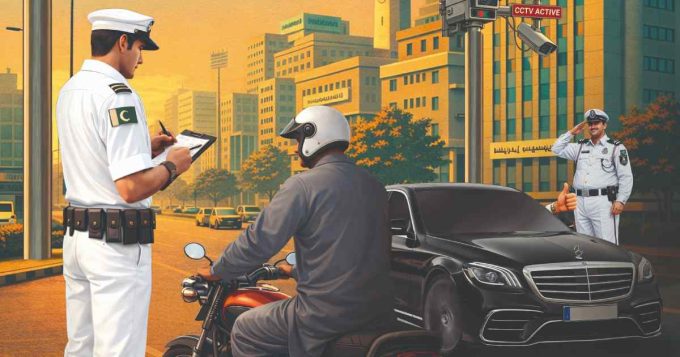


AI has entered Pakistan’s advertising boardrooms, promising speed and spectacle. But as brands race to experiment, the real challenge emerges: can technology complement creativity without diluting the human storytelling that audiences
still crave?
You know, two letters are every human’s favourite right now. Yeah, you guessed it, they are A and I. We have forgotten how to live without our best friend, Mr ChatGPT. Be it a formal email to the boss or a caption for an Instagram reel, Mr ChatGPT’s opinion is what matters most.
Pakistan is just entering the AI game. The promises are big: faster campaign rollouts, fresher creative ideas, and budgets that can finally stretch beyond their limits. And while the first wave of AI-driven ads from local brands has certainly garnered attention, it also raises questions about creativity, originality, and where this experiment is truly headed.
Across industries, brands are cautiously yet curiously testing AI in campaign development. Some results have been sleek and efficient. Others have felt strange and soulless. Together, they point towards a critical truth. AI is not confined to being another tool in the box anymore. It is already shaping how brands imagine, execute, and measure their stories.
The most obvious benefit so far is speed. Campaigns that once required weeks of mood boarding, storyboarding, and production cycles can now be turned around in days. With generative visuals, surreal animations, and even voiceovers. Marketers are creating global-standard imagery at a fraction of the time and cost.
For smaller players, this has levelled the creative playing field, giving them access to a quality of execution previously reserved for big-budget advertisers. Yes, it is about saving money. But it is also about levelling the creative playing field.
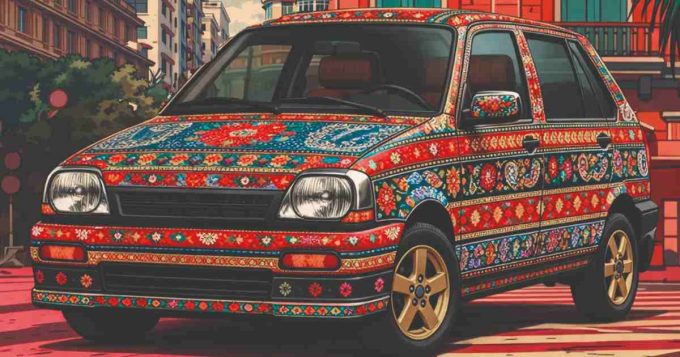
Yet, the experiments have not always gone smoothly. Several recent campaigns, though visually polished, drew criticism for feeling generic and disconnected from local culture. The images were sharp, the copy technically sound, but the soul was missing. Audiences could sense the hollowness, as though the work had been assembled from mood boards rather than real human insight. This is the paradox of AI in advertising. The more we lean on it, the more everything starts to look the same.
Let’s take an example, “Pakistan’s 1st AI-Generated Ad in the Beauty Industry,” by Golden Pearl, which marks a groundbreaking milestone in Pakistan’s beauty industry, showcasing the first-ever AI-generated TV commercial for their Vitamin C Face Wash.
The visuals were dazzling and novel, but the story underneath felt weak and generic. The use of AI came across as a gimmick rather than an integrated creative tool, leaving the campaign looking global in polish but lacking the local texture and cultural grounding that makes it relatable. There is also very little clarity on whether these ads deliver real business impact or simply generate short-term buzz.

The Zong 4G AI-driven ad promoting free streaming of ICC matches is best classified as an early win rather than a wild experiment. It successfully leveraged AI innovation while tapping into the passion for cricket, one of Pakistan’s most popular sports, to connect with a broad audience. Positioned as Pakistan’s industry-first AI ad on TV, it uses AI-enhanced production to capture attention and provide a relevant, timely offer.
Unlike some purely experimental AI ads that may suffer from generic messaging or a lack of cultural nuance, Zong’s campaign benefits from a clear value proposition and contextually relevant storytelling, setting an example of how AI can boost existing strengths in Pakistani advertising.
Another milestone in Pakistan’s early AI journey came with “Only for Her,” the Jewel Smartwatch campaign by ZERO. Marketed as the country’s first story-driven AI ad, it deliberately shifted away from pure spectacle and leaned into cultural and emotional relevance.
By celebrating women who give, care, and inspire with grace, the ad used AI not as a gimmick but as a storytelling partner. The result was a campaign that felt purposeful, socially aware, and emotionally charged. Proof that when AI is guided by strong intent, it can deliver more than visuals; it can deliver impact.
We should remember that AI is a tool, not the idea itself. The strongest work begins with human insight and uses AI as an enhancer. The weakest workst rely on AI to be the idea, and that is when audiences disengage. Crafting the right input requires both creativity and cultural nuance. Local flavour still matters because Pakistani advertising thrives on emotional storytelling, humour, and cultural cues that machines cannot replicate.
So, where does this leave Pakistani advertising? Somewhere between awe and unease. AI has delivered early wins in speed and access. But it has also exposed the risks of sameness and the limits of machine-made originality. The next stage depends on how boldly the creative industry chooses to lead. Do we settle for prompt-driven shortcuts? Or do we insist on keeping human imagination at the centre, using AI only as a stagehand rather than the star?