
A behind-the-scenes look at how artists are built, branded, and scaled in Pakistan’s evolving music industry. Zayan Abedeen breaks down the thinking behind persona-led marketing, data-driven decisions, and the calculated risks that turned Hasan Raheem’s album rollout into a cultural moment.
Synergyzer: When you begin planning an artist’s brand, what central narrative do you want audiences to associate with them? And how does that shape your marketing decisions?
Zayan Abedeen: When I begin to plan an artist’s brand, the main focus needs to be on their own character. It ranges from picking up on things from their everyday life, their personality, what kind of products they like and what kind of persona they have on stage. From there, we build on these qualities, and that helps to shape the marketing decisions around them.
Synergyzer: What does audience data tell you about Pakistani listeners? And how does that information guide partnerships, releases, or platform choices?
Zayan Abedeen: Audience data tells us that Pakistan is becoming a hotspot for music. Not just for the Pakistanis based in the country but for the diaspora community all around the globe. We look for platforms that not only promote Pakistani culture within the country but also resonate with the Pakistani diaspora community as well.
Synergyzer: You have heavily marketed Hasan Raheem’s new album, from him becoming a barista, to collaborations with local brands like Ronin and Ndure, to a countrywide tour. What was the strategy behind these campaigns?
Zayan Abedeen: We always want to help shape the music industry and show artists how they can push boundaries to promote their music and themselves. Hasan and our team have always wanted to do what nobody has done before in Pakistan. The strategy was multi-layered. We recognised early on that Hasan is a persona that many brands want to associate with. But the real success came from pushing beyond that.
He built every collaboration around his authentic interests, making each partnership feel organic and true to the artist rather than like a forced brand placement. Crumble’s branding matched Hasan’s attitude of being funny and witty. Ndure was a leading local player in the sneakers category, which Hasan was extremely interested in. Ronin blended well with music due to their catalogue of earbuds and speakers.
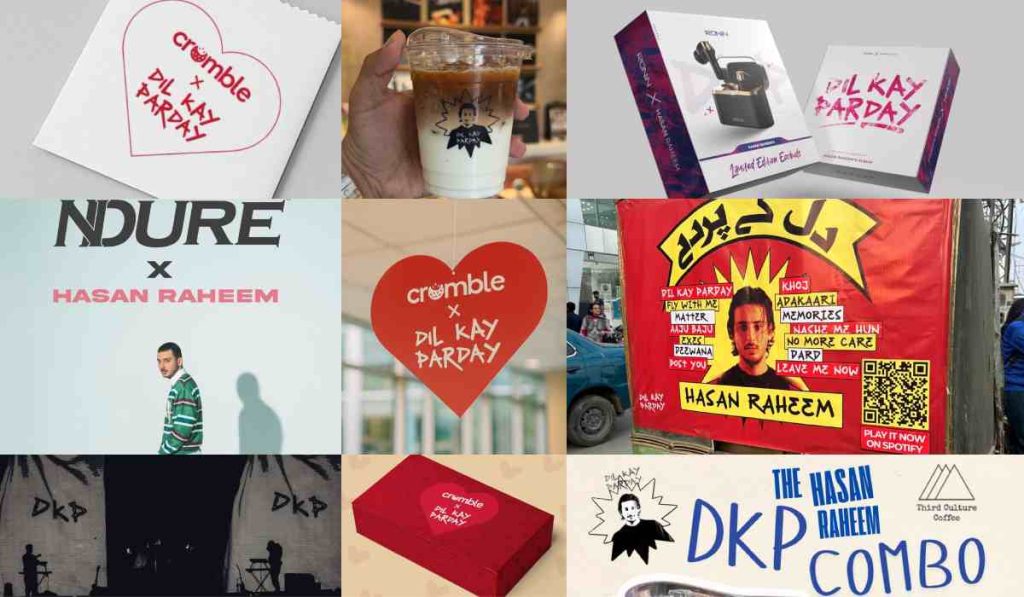
Coffee has always been a way to target a demographic of Hasan’s fanbase. We then took inspiration from really famous brand collaborations with major artists like Travis Scott, Nike, Kanye West and Adidas. We figured out that working on collaborations is the way forward.
The main point of all these collaborations had to be the promotion of DKP and the tour. All conversations with the brands were about how. If we leverage Hasan’s brand to help promote theirs, how can they help to promote our album? We kept it collaborative and fun so that creativity from both ends flowed well.
Synergyzer: How much risk did that involve, and what impact have you seen so far from both the tour and the marketing efforts?
Zayan Abedeen: Last year’s Unfiltered Tour was intentionally small, with 1,000-capacity venues in Karachi, Lahore, and Islamabad. Initially, we planned to repeat that model to stay conservative. But once the season began in September and the hype around Hasan’s performances grew, we decided to scale up.
We moved to larger venues, expanded to Multan, Faisalabad, and Hyderabad, we decided to make this a much bigger project and looked for venues that could accommodate up to 3500-4000 people in KLI and 1000-1500 in MFH. We took another risk by opening the tour up in Multan, Faisalabad, and Hyderabad.
This meant our costs were at least growing by three to four times. We wanted to make our mark, and decided to go in without knowing what we were really going to sell. The impact in the end was way beyond our expectations.
We ended up selling over 17,000 tickets across all six cities. Previously, the maximum we had achieved in KLI was around 3,000 tickets last year. We sold out Karachi, Lahore, Islamabad and Faisalabad; surprisingly, it was one of our biggest shows in which we had planned a show for 1200 people.
But we had to upgrade the venue as we had almost 3500 people at the event. Another major impact we’ve seen is Hasan’s popularity growing since the marketing started for the album. The streaming numbers and the demand for him to perform at shows have all been positively affected.
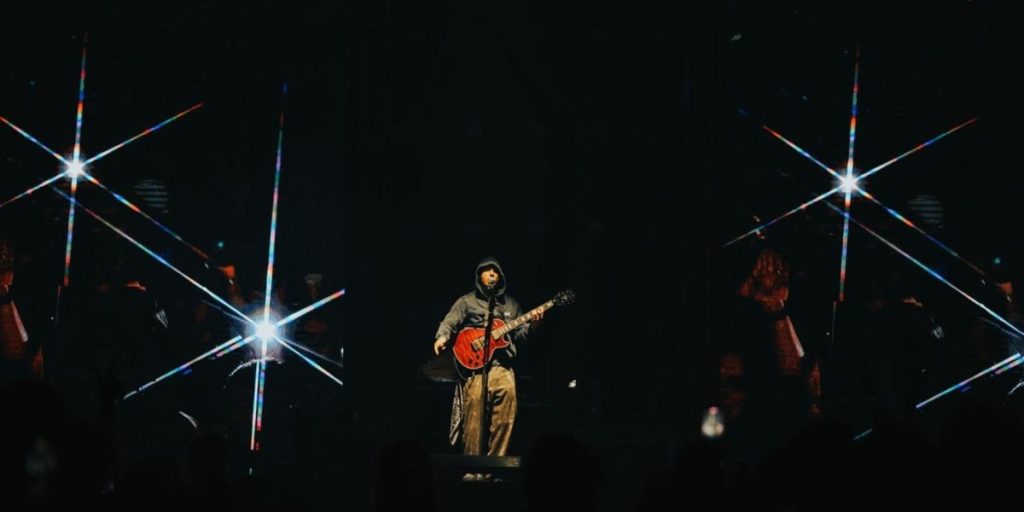
In Karachi, we ended up reviving Pakistan’s only indoor venue that was built in 2005 but was never completed and sold that out too. What happened was a mix of things that came together. Hasan’s popularity grew a lot in the middle of this year. We took a break of about six weeks to give space to plan out our tour, and didn’t perform anywhere during that time.
The marketing for the album and the success of the album all contributed to these numbers that exceeded our expectations. The risk taken actually ended up being successful. And I owe it all to the teams and brands that worked behind the scenes to make it successful.
Synergyzer: What does a successful campaign look like for you beyond streams and views? How do you measure impact?
Zayan Abedeen: The answer for this is very simple: we do this for all the fans that show us love. When we see the response and happiness of everyone who leaves the venue, that for us is how we measure the real impact.