
Jensen Huang’s sudden exit from Nvidia has raised questions that go beyond a CEO’s personal life. When one individual becomes the face of a global business, how much of the company’s reputation, money and future can be tied to that person?
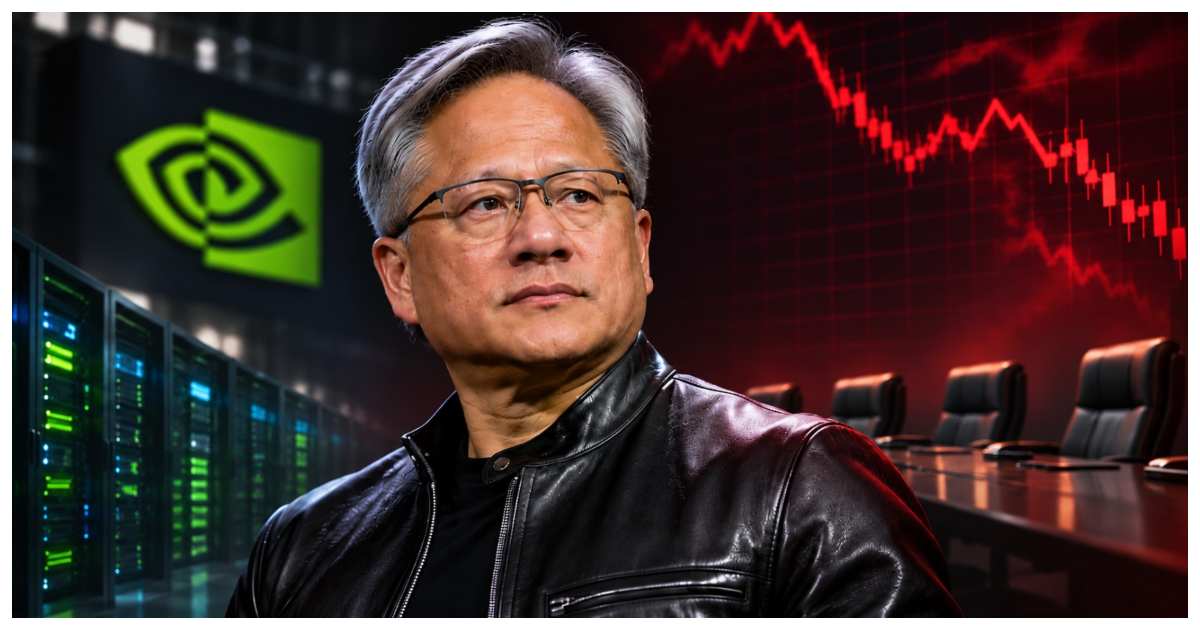
For more than three decades, Jensen Huang was not just the CEO of Nvidia. He was its identity. His signature black leather jacket, ambitious vision and confident predictions about artificial intelligence made him one of the most recognisable faces in technology. Under his leadership, Nvidia went from a graphics-chip company to a central player in the global AI economy.
At times, even the biggest names can find themselves at the centre of controversies that have little to do with the products they sell.
When a Personal Controversy Becomes a Corporate Crisis
On 12 November 2026, Huang resigned as Nvidia’s president, CEO and board member following reports of extramarital relationships. One reportedly involved Alice Huang, a businesswoman suspected by US intelligence officials of having links to Chinese intelligence. Another reportedly involved Kimberly Powell, a senior Nvidia executive who reported directly to him. The allegations surrounding Alice Huang’s alleged intelligence links remain unproven. Huang acknowledged being unfaithful to his wife, while Nvidia’s board launched an independent investigation into the matter.
What began as a story about personal relationships quickly became a much bigger corporate question. When the person at the top of a company is involved in a controversy, where does the personal end and the professional begin? There are plenty of questions circulating online right now.
In Huang’s case, the stakes are unusually high. Nvidia is not simply selling chips. Its technology powers AI systems, data centres and businesses that have invested billions in the promise of artificial intelligence. Its relationships with customers, suppliers, governments and investors are closely connected to its leadership.
The Financial Impact of One Leadership Exit
The market reaction offered an immediate reminder of that connection. Nvidia shares fell by as much as 14% during Thursday’s trading before recovering some ground to close down 4.3%. Investors were not necessarily questioning the quality of its chips overnight. They were questioning the uncertainty. What happens to the company’s direction, relationships and investment commitments when the person who shaped them is suddenly gone?
There is also a bigger financial story here. Huang had pushed Nvidia into increasingly ambitious financing arrangements with AI companies and infrastructure businesses. Its finance chief, Colette Kress, reportedly raised concerns about some of these deals, including the company’s proposed support for an OpenAI data-centre project in Ohio.
The plan, initially reported at around $250 billion, was later scaled back to a proposed guarantee of approximately $120 billion, according to reports on the revised arrangement. These were proposed financing arrangements, not money already invested by Nvidia.
Such arrangements raise questions about how money moves around the AI industry. Nvidia’s financing support can help companies build infrastructure that may then use Nvidia technology. This can support growth, but it also creates financial dependencies. If leadership changes affect these commitments, the consequences may extend well beyond Nvidia’s own balance sheet. Investors, customers and other businesses built around the AI boom could all feel the effects.
Where Do Influence and Accountability Meet?
Then there is the question of influence. A CEO’s personal relationships can become a corporate concern when they involve employees, business partners or people with access to sensitive information. Add international tensions and technology exports to the picture, and what might otherwise remain a private matter can become a national security issue.
Nvidia has said it had no reason to believe that company secrets or national security had been compromised. The board’s investigation will be important in establishing whether any company policies or responsibilities were breached. It is a reminder that influence and access come with responsibilities, particularly when billions of dollars and strategically important technology are involved.
Colette Kress and the Glass Cliff Question
Meanwhile, Nvidia has appointed its long-standing CFO, Colette Kress, as interim CEO. She has been with the company since 2013, and the board is searching for a permanent successor. Kress will continue to serve as CFO while taking on the interim role.
Her appointment has also brought attention to the idea of the glass cliff: the tendency for women to be given leadership positions when organisations are already facing serious difficulties. Is this a significant step for women in technology leadership, or another example of being handed responsibility when things are already going wrong? It is worth asking, without assuming that Kress’s appointment is anything less than a genuine leadership opportunity.
The Internet Has Its Own Take
Across the internet, reactions have been interesting too, with everyone seemingly having their own take on the news. Bernstein analysts have raised concerns about the uncertainty surrounding Nvidia’s future and whether anyone could replace Huang’s influence across its business ecosystem.
On X, Elon Musk expressed support for Huang, saying it would be an honour to hire him, while other business figures questioned the idea that any founder or executive should be considered indispensable. The reactions reflect a wider debate about separating a person’s contribution to a business from their personal conduct.
No Individual Is Bigger Than the Organisation
Perhaps that is the bigger takeaway. We often celebrate founders as visionaries, give CEOs enormous influence and build entire corporate narratives around their personalities. But businesses are not supposed to run on personality alone. Boards, governance structures and succession plans exist precisely because no individual should be bigger than the institution.
Huang’s contribution to Nvidia does not disappear because of this controversy. Equally, business success does not make personal conduct or questions of accountability irrelevant. Both things can be true.
And perhaps that is where the real lesson lies: money, reputation and power may build an empire, but they cannot make its leadership immune to scrutiny. Even a company at the centre of the AI revolution is not above the oldest rule in business: no individual is bigger than the organisation.