


Publicis and WPP’s public spat over a major account win was about more than business. It was a battle over who gets to shape the story, set the rules and define the future of the advertising industry.
I found the Publicis-WPP feud the way modern discoveries are made: by accidentally stumbling into an Instagram post and refusing to leave.
At first, I had no idea what was happening.
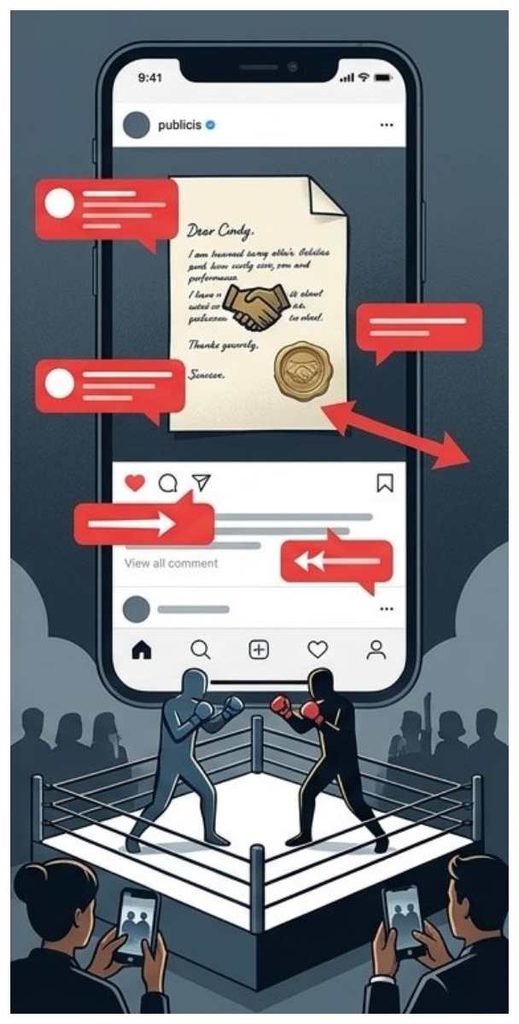
A letter sat in front of me. Not a tweet. Not a corporate statement. Not a carefully sterilised press release. A letter. Addressed to “Dear Cindy.” Complete with a handshake emoji.
I was hooked.
Not because I understood the argument. I didn’t. But because I recognised the performance.
The letter was dripping with cold, deliberate sarcasm. The kind that smiles while sharpening a knife. By the time I reached the caption, “We’re not angry, just disappointed,” I had already abandoned my public-holiday peace and plunged into what felt less like an industry dispute and more like a beautifully choreographed emotional war.
Judging by the comments, I wasn’t alone. Some were treating it as corporate reality television. Others dismissed it as drama, ego or a playground fight between powerful executives. Many admitted they had no idea what was going on but were happy to watch anyway.
But the deeper I dug, the harder it became to dismiss this as another social-media argument. What fascinated me wasn’t just the disagreement. It was the choice of a letter.
In an age of emails, tweets, threads and reels, why choose one of humanity’s oldest communication formats?
An open letter is theatre. It pretends to be private while performing for the public. This was more than a response. It was a production, and Publicis knew there was an audience.
How a Governance Comment Became a Public Showdown
During WPP’s third-quarter earnings discussion, CEO Cindy Rose faced a question about major agency appointments that bypassed traditional competitive pitches.
She referred to what she called the “pitchless CEO handshake thing” and urged brands to conduct proper due diligence before making high-stakes decisions.
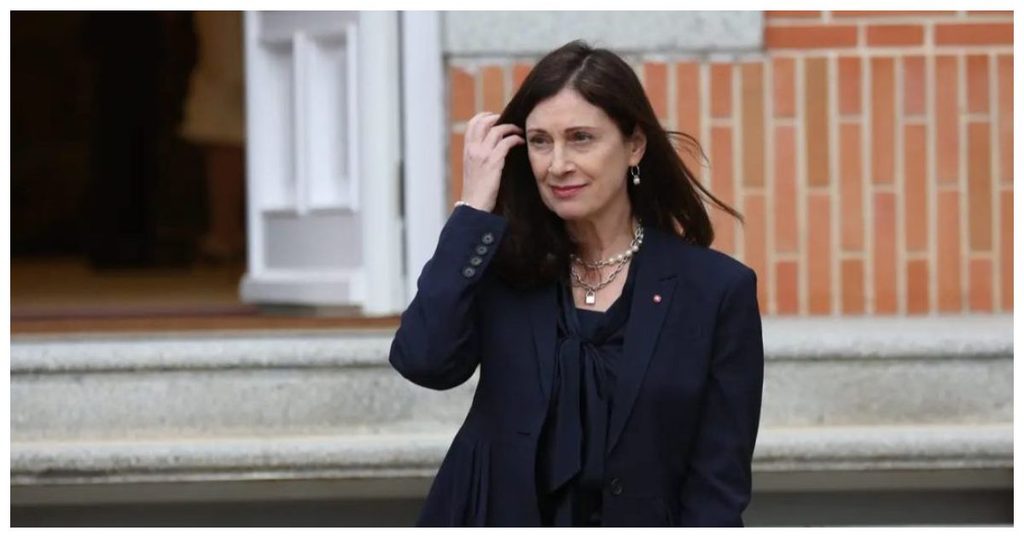
“These are really high-stakes decisions with material business consequences,” she said. “I do not think we do ourselves any favour as an industry of professionals by encouraging clients to bypass proper due diligence.”
She never mentioned Publicis Groupe by name. Still, many connected the remarks to Publicis, which had recently secured major accounts through direct appointments, including Microsoft and PepsiCo’s estimated US$1.9 billion global media business.
Publicis clearly heard its name in the silence.
The company responded with an open letter on Instagram addressed directly to Rose. It challenged the idea that executive relationships alone could secure billion-dollar accounts, arguing that marketers, engineers, data specialists and procurement teams now spend months testing agencies before making a selection.
“Skipping an old-school pitch circus isn’t skipping due diligence,” it declared.
Then the gloves came off.
Publicis questioned WPP’s decision not to pursue part of Coca-Cola’s North American media review, arguing that “you can’t be a passionate defender of pitch culture and plead exhaustion in the same breath.”
By the time it signed off as “Your friends at Publicis” and added “We’re not angry, we’re just disappointed”, a discussion about governance had become a public confrontation over credibility, competence and the future of agency selection.
Publicis Was Defending More Than a Win
At first glance, Publicis appeared to be responding to a comment. But the deeper I dug into the coverage, the more it seemed that the company was defending something bigger: its version of why it had won.
The debate was never really about whether agencies should be vetted. Both sides agree they should. The disagreement lies in what modern due diligence looks like.
For Rose, the concern was governance. If massive business decisions are made without competitive reviews, how can clients be certain they are making the right choice?
For Publicis, that framing felt outdated. The company argued that today’s agency evaluations go beyond pitch presentations and beauty contests. Clients are examining technology stacks, AI capabilities, data infrastructure, commerce solutions and integrated service offerings. The process may look different, but that doesn’t make it less rigorous.
This is also central to Arthur Sadoun’s position. The Publicis chief executive has consistently argued that the industry’s future lies in integrated solutions built around technology, AI and data, rather than traditional pitch theatre. The question, in this model, is no longer who gives the best presentation, but who can demonstrate the strongest capabilities.
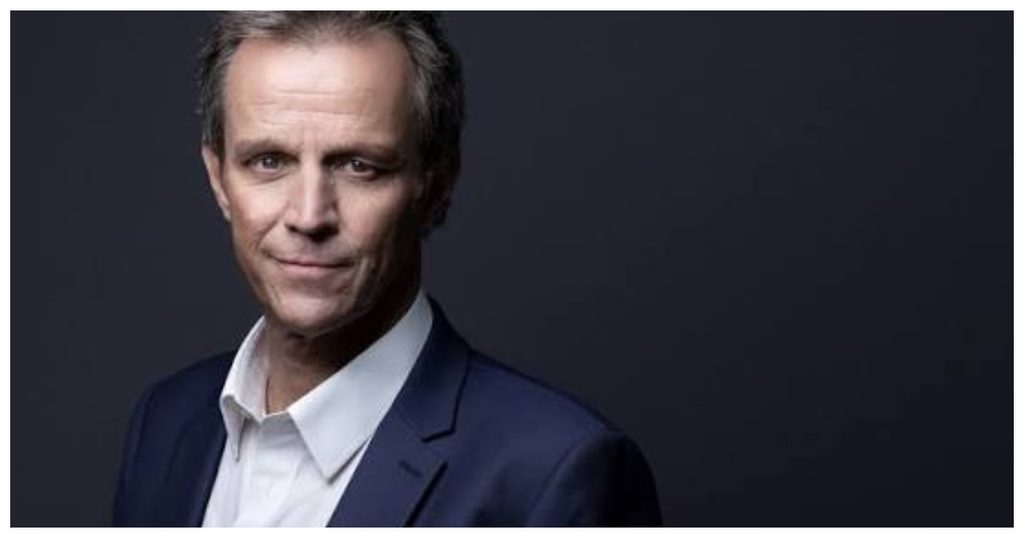
Yet the picture isn’t entirely one-sided. Jay Wilson, VP Analyst at Gartner, offered a more measured perspective, noting that pitchless appointments do exist but thorough evaluation remains essential, particularly for large advertisers.
And that is where the disagreement becomes interesting.
If the industry accepts the “CEO handshake” narrative, Publicis’ wins risk looking like the result of executive access and closed-door influence. If it accepts Publicis’ explanation, those same wins become evidence of stronger capabilities and a more advanced agency model.
One version suggests access. The other suggests merit. That is a very high-stakes difference.
When the Response Becomes the Story
The letter itself soon became as interesting as the argument behind it.
For Sandeep Joseph, CEO and co-founder of Ampersand Advisory, the issue was largely the tone. “I found the tone off, too confrontational. It could have been more tongue in cheek and lighter,” he said.
Ed Burleigh, founder of Reverb Marketing, felt Publicis crossed a line when it moved beyond industry debate and began questioning individual capabilities.
“Where I think they overstepped is in making it personal. The thinly veiled attacks on Cindy, implying she sold her previous employers short and questioning her teams’ capabilities, were unnecessary.”
Then came perhaps the most difficult question: Why respond at all?
Patricia Malay, general manager at Bud Communications, felt saying nothing would have been the stronger move. Publicis had already secured some of the industry’s most talked-about account wins. It wasn’t defending itself from a position of weakness, but from a position of victory.
“It’s well made and it will get attention, but attention isn’t the same as advantage when you’re already ahead,” she said.
Malay also raised the gender dimension of the exchange, pointing out that “talking down to the first woman to run WPP was a choice, and I’m not sure anyone stopped to think how it would read.”
These reactions raise a fair question: Did Publicis strengthen its position by responding, or simply give a passing comment a much bigger platform?
The Business of Being Watched
A few years ago, this exchange might have remained inside boardrooms, earnings calls or carefully worded press statements. Instead, it unfolded on Instagram.
And that is not a coincidence.
We live in an age where CEOs have followers, brands have personalities and corporate announcements are expected to generate engagement. Business communication no longer simply informs. Increasingly, it performs.
Publicis could have issued a statement or responded through a spokesperson. Instead, it chose theatre.
A letter. “Dear Cindy.” A handshake emoji. A tagline worthy of a disappointed Victorian aunt, a reality-show judge or a particularly ruthless English teacher:
“We’re not angry, we’re just disappointed.”
Theatrically speaking, it was brilliant.
One Letter, Multiple Audiences
People who would never voluntarily read about agency procurement suddenly found themselves scrolling through comments, choosing sides and sharing opinions. Even those who had no idea what was happening stayed for the performance.
And perhaps Cindy Rose was never the only intended audience. Clients, employees, journalists, competitors, future recruits and investors were all watching.
The open letter was a way of addressing one person while speaking to everyone else.
The Story Behind the Win
But there is an interesting contradiction here. Publicis was arguing that the industry needs to move beyond traditional pitch theatre and focus on actual capabilities. Yet, in making its case, it staged a very public performance of its own.
Does that make its argument any less valid? Not necessarily. But it does raise another question: If your capabilities speak for themselves, how much does the story around them really matter?
Quite a lot, it seems.
Publicis had already won the business. What it wanted next was to explain why it deserved to win. The letter turned that ambition into a public spectacle, positioning the company not just as a successful player in a changing industry, but as one with a claim to shaping its future. The account battle may have been over. The fight for narrative authority had only just begun.