As advertising budgets shrink and production evolves, Pakistan’s creative industry faces an uncertain future. Behind every commercial is an ecosystem of people whose livelihoods depend on the work, yet their struggles often go unnoticed.
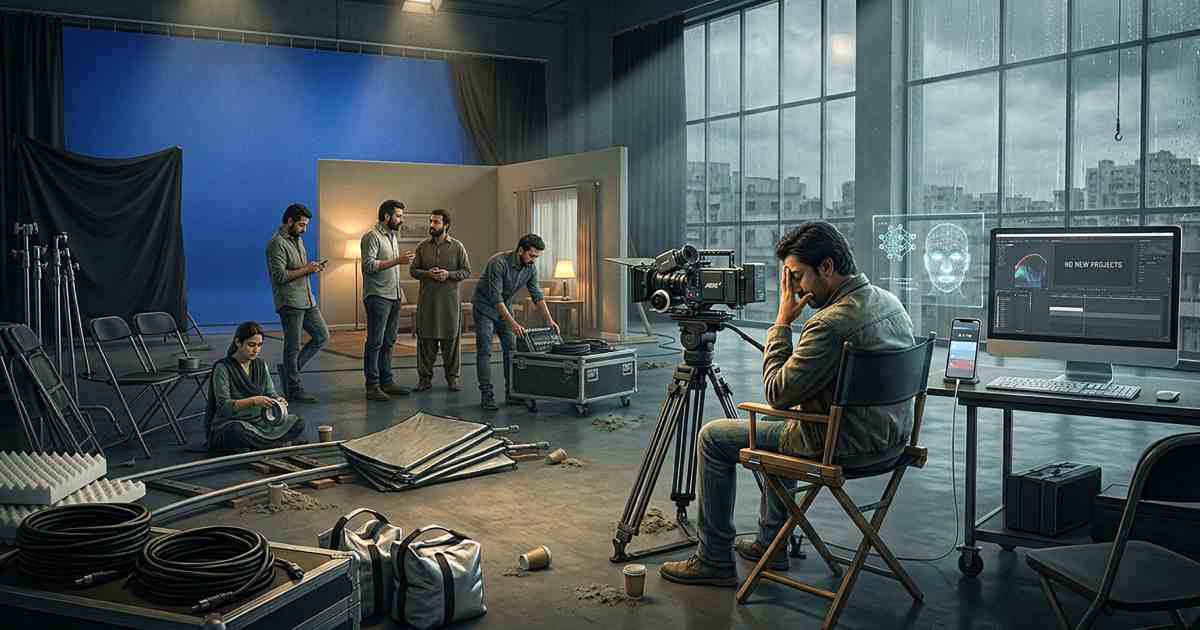
There is a particular kind of silence that filmmakers recognise. The phone rings less often. A campaign gets postponed. Another becomes smaller. A third quietly disappears. For the last four or five months, that silence has become increasingly familiar in Pakistan’s advertising and production industry. At first, you read it personally. Maybe work is slow for you. Maybe budgets have shifted somewhere else. But when directors, producers, technicians, actors, editors, vendors and freelancers begin saying the same thing, it stops being personal. It becomes an ecosystem problem.
Beyond the Commercial
There is an interesting irony about advertising in Pakistan. We are a nation deeply invested in television drama and almost instinctively reach for the remote/skip button when the commercial break begins. In skipping the ads, perhaps we also skip thinking about the entire industry behind them. Advertising carries its own clichés: expensive productions, large budgets, highly paid directors, agencies and production houses making good money. There is some truth somewhere inside that image. But it represents only the visible end of a much larger ecosystem.
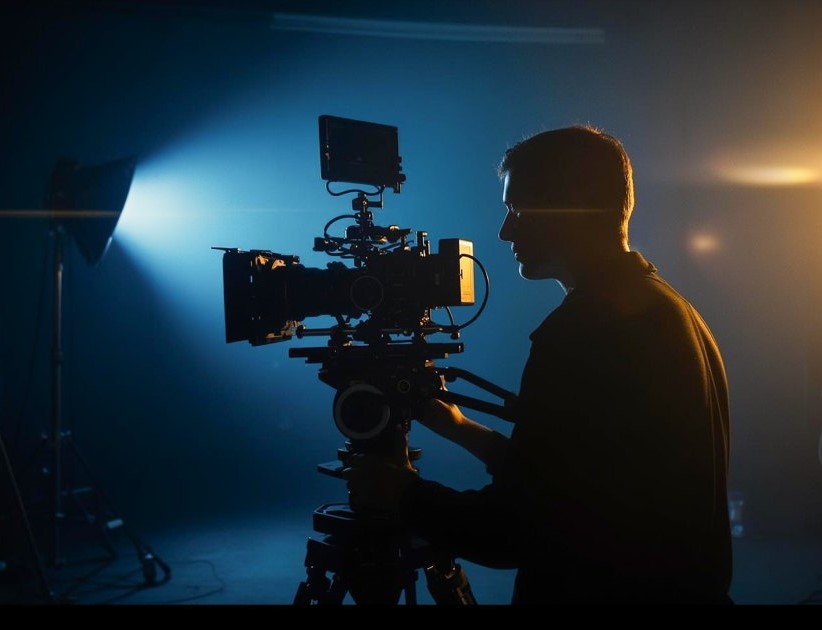
Behind every commercial are assistant directors, camera crews, grips, gaffers, art departments, wardrobe teams, makeup artists, actors, production assistants, drivers, editors, colourists, sound engineers, casting teams, equipment vendors, caterers and countless others.
A very large proportion of them are freelancers. They do not necessarily have a salary arriving at the end of every month. Their economy is measured in working days.
So, when three commercials become one, the effect does not stop with an agency, director or production house. It quietly travels down an entire chain of livelihoods. And very few people talk about it. Perhaps part of the problem is that we have never really regarded advertising as a serious creative industry. It sells things, therefore we treat it primarily as commerce.
But for decades, it has also been one of Pakistan’s most consistent training grounds for filmmakers, cinematographers, actors, musicians, designers, editors and technicians. A commercial may ultimately be selling soap, tea or a bank account. But someone still has to imagine it. Someone has to frame a face, direct a performance, design a world, compose its music and find an emotion within thirty or forty seconds. For many of us, advertising hasn’t simply provided an income. It has provided a place to practise our craft.
Beyond the Commercial
Of course, when one source of income becomes difficult, people adapt. There are other businesses, other platforms and increasingly other ways of making money. But there is also a quieter question: Is finding another way to make money necessarily the same as finding another place to create?
And all of this is happening at a particularly strange moment. Pakistan has its own economic fragility. Around us, wars, energy prices and geopolitical uncertainty are once again affecting economies and everyday lives. Corporations become cautious. Consumers become cautious. Spending contracts. Naturally, the first conversations are about fuel, food, electricity, manufacturing, exports and employment.
They should be. But somewhere much further down that list sit film, advertising, music, art and the creative industries. There has to be someone talking about what economic uncertainty does to them too. Because the creative economy doesn’t disappear during difficult times. The people working inside it simply become less visible.
An Industry in Transition
At the same time, something more fundamental is changing globally. Advertising money is moving towards digital platforms, creators, shorter content, performance marketing and new technologies. Artificial intelligence is beginning to change how some creative work is produced altogether. So perhaps what we are experiencing is partly an economic slowdown and partly structural change. Waiting for everything to simply become “normal” again may therefore not be enough.
Production companies will need to become more than vendors, developing ideas, intellectual property, formats and stories that can travel. Pakistan needs to look at production as an exportable creative industry: encouraging international shoots, co-productions, easier permissions and collaborations that bring work into the country. And within the industry, we need to resist destroying ourselves through panic pricing. When work becomes scarce, everyone undercuts everyone else. One person may win a project, but eventually the whole ecosystem loses value.
None of these are instant solutions to an economic slowdown. But perhaps the first step is simply recognising that this industry exists. That behind the advertisements we skip are thousands of people making a living, practising a craft and contributing to a creative economy we rarely count when we talk about the economy at all. The plight of a filmmaker today is therefore not merely about getting the next job. It is about asking whether, while the world around us is changing, we are paying enough attention to the ecosystem that makes the next piece of work possible.