
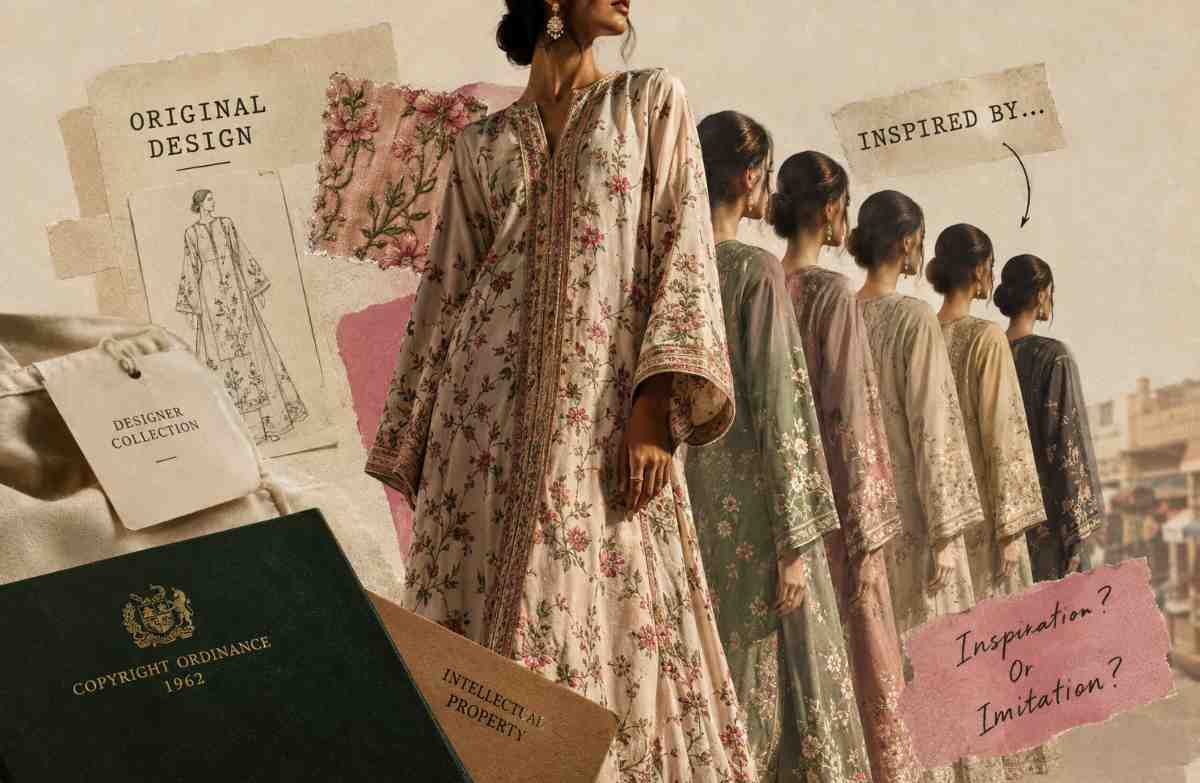
From farshi shalwars and embroidered shawls to viral silhouettes and statement prints, Pakistani fashion is built on borrowing, adapting and reinventing. But when a designer’s distinctive embroidery, print or cut appears across multiple labels within weeks, where does inspiration end and imitation begin? Pakistan has copyright and intellectual property laws that can protect original artistic expression and registered designs, but not broad fashion ideas. As social media makes designs easier to discover and reproduce, copying has become faster and harder to police. The result is a fashion ecosystem where originality can quickly become everyone’s property, raising an uncomfortable question: who really owns an idea?
Do copyrights exist in Pakistan? The short answer is yes. The longer answer is far more complicated.
Over the past few weeks, I have wandered through malls, open bazaars, designer studios and boutiques in search of clothes. Instead of discovering something new, I kept running into the same dress. Not literally the same one, of course, but versions of it. One particular design that exploded in popularity last year seemed to have multiplied overnight. Different labels, different price tags, slightly different fabrics, but unmistakably the same concept.
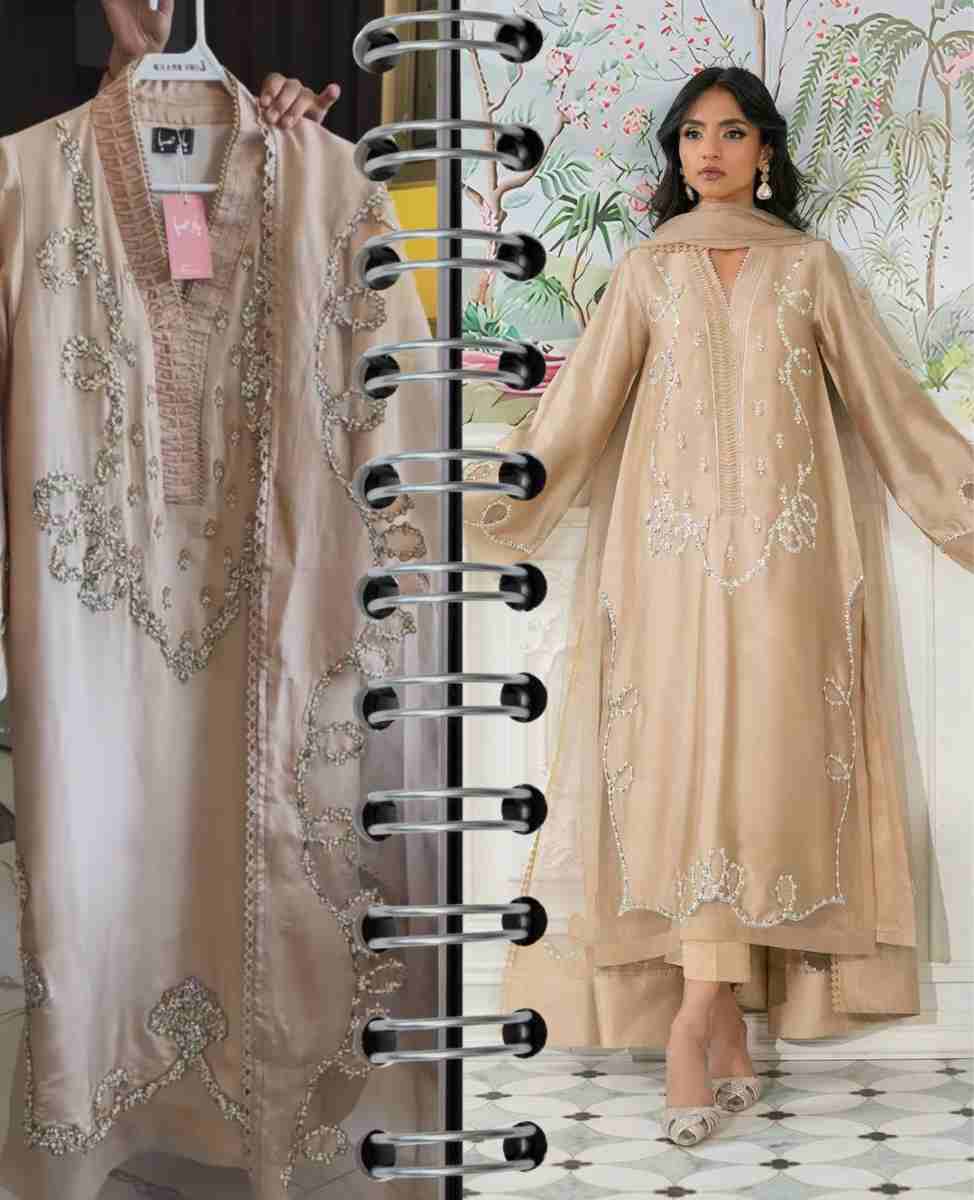
Curiosity got the better of me, so I asked a sales assistant whether anyone had questioned why a designer was selling what appeared to be an almost identical version of another designer’s work.
Her response was simple:
“No one has stopped them so far.”
I could not forget about this answer…
Pakistan does have intellectual property laws. The Copyright Ordinance of 1962 governs copyright, while separate legislation, administered by the Intellectual Property Organisation (IPO) of Pakistan, protects trademarks, patents, and industrial designs. Original artistic works, including sketches, prints, illustrations and textile artwork, can receive copyright protection. A registered industrial design can also protect the visual appearance of a product, including aspects of fashion, provided it is new and properly registered.
What the law generally does not protect is the broader idea of a garment. No one can own the idea of a long shirt, a farshi shalwar, a floral print or a certain sleeve style. Fashion trends belong to everyone. But the specific artistic expression of those ideas, the original print, embroidery layout, motif arrangement or other distinctive design elements, may qualify for legal protection.
That distinction explains why the market looks the way it does.
Fashion has always been cyclical. Designers borrow from history, reinterpret silhouettes from decades ago and take inspiration from cultures around the world. Inspiration is expected. Replication is where things become murkier.
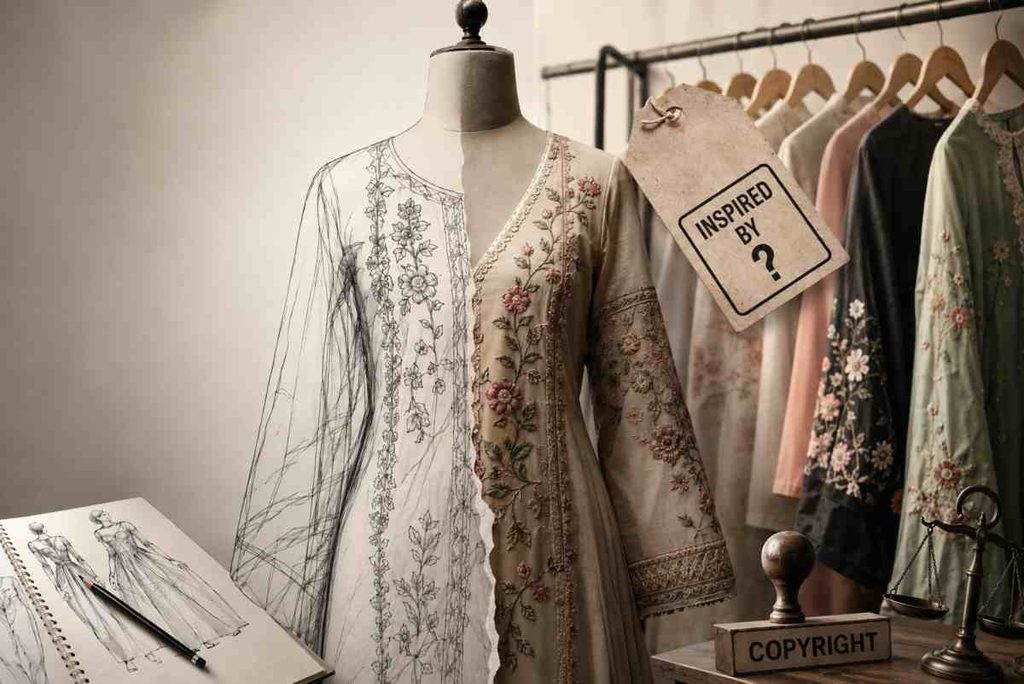
In Pakistan, the line between the two often seems to disappear.
A dress debuts on the runway or appears on Instagram. Within weeks, versions begin appearing across the market. Sometimes the changes are substantial enough to create a fresh interpretation. Other times, the only noticeable difference is the label stitched inside.
The phrase “inspired by” has quietly become one of the most convenient disclaimers in fashion.
It is also incredibly difficult to define. At what point does inspiration stop and copying begin? Is changing the colour enough? What about swapping the fabric while keeping the embroidery placement identical? There is no universal answer, which makes enforcement even more complicated.
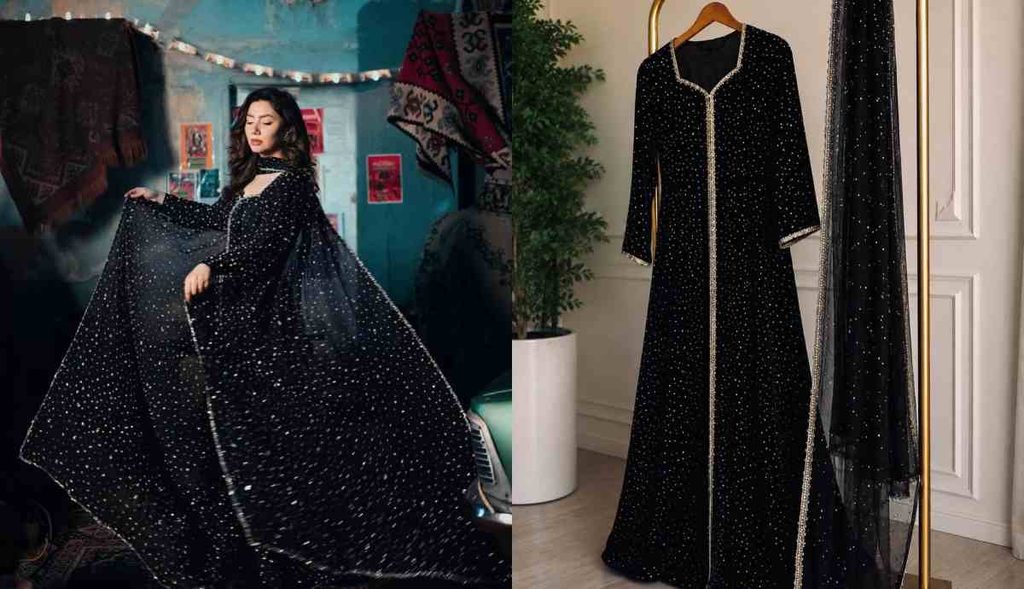
Social media has only accelerated the cycle.
Designers now launch collections online months before many customers even visit stores. A person can screenshot, enlarge, analyse, and reproduce a single viral outfit before the original collection even finishes selling. What once took an entire season now takes days. By the time the original designer has established demand, cheaper versions have already entered the market.
Ironically, success almost guarantees imitation.
The more popular a design becomes, the more likely it is to be copied. Eventually, the copies become so widespread that the original loses the exclusivity that justified its higher price in the first place. Consumers stop associating the design with the creator because they have seen it everywhere.
That is particularly difficult for emerging designers.
Established fashion houses may have the financial resources to absorb the loss or pursue legal action when necessary. Smaller designers rarely do. They spend months developing original concepts, sourcing fabrics, refining embroidery and perfecting samples, only to watch copies appear before they have recovered their investment. For many, the greatest cost is not the lost sale but the loss of recognition. Their work becomes known, but not necessarily under their own name.
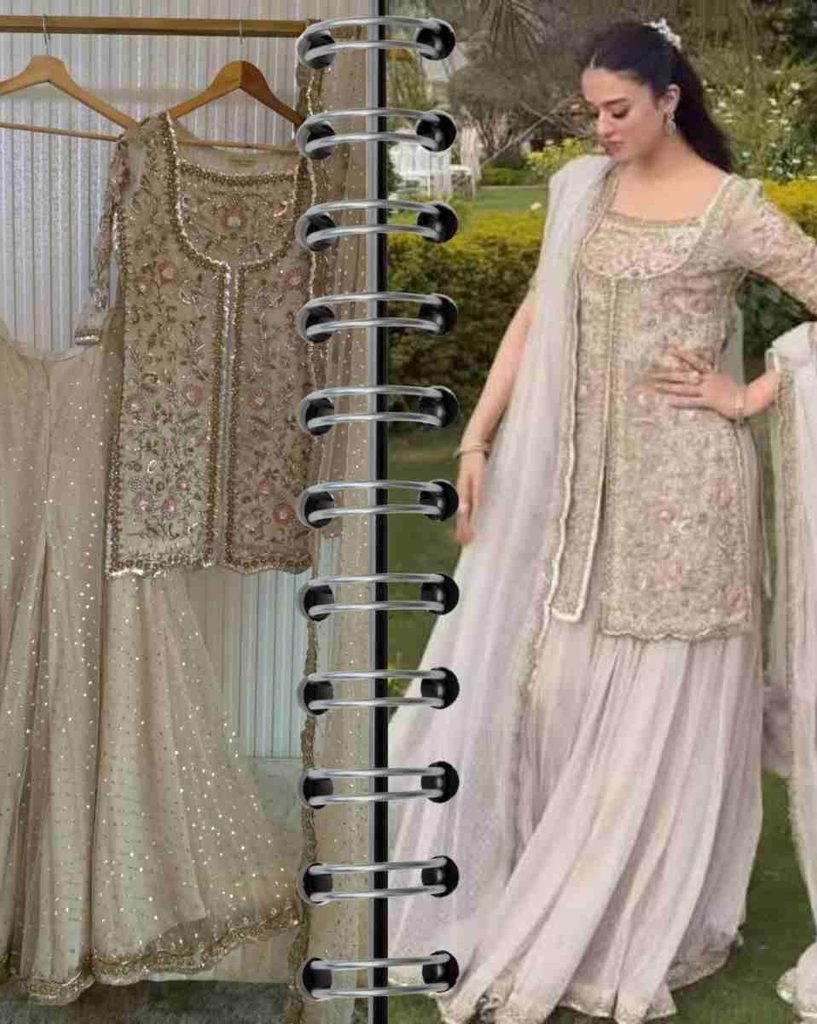
Of course, the conversation is not entirely one-sided.
Pakistan is an extremely price-sensitive market. Many consumers admire designer clothing but simply cannot justify spending tens or hundreds of thousands of rupees on a single outfit. Inspired collections make certain aesthetics more accessible, and that demand has created an entire industry of affordable alternatives.
Accessibility, however, should not come at the expense of originality.
There is a meaningful difference between creating an affordable garment that draws inspiration from a trend and reproducing someone else’s work so closely that the average customer struggles to tell them apart.
The most surprising part is not that copies exist. Counterfeit and imitation goods are a global problem. Luxury brands such as Louis Vuitton, Gucci and Chanel spend millions every year pursuing counterfeit manufacturers and sellers. Yet, in many countries, those products are generally sold as obvious knock-offs through informal markets or online platforms. Consumers know they are purchasing a copy.
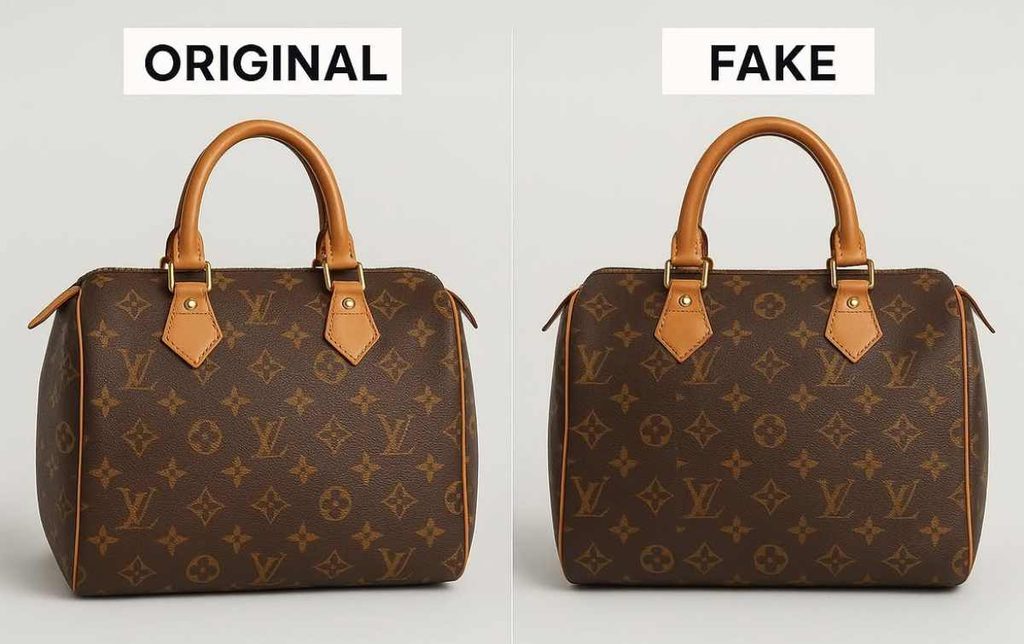
In Pakistan, copies often sit comfortably inside mainstream boutiques. They are not presented as counterfeits. They are marketed as designer-inspired, making imitation feel almost normal.
Part of the reason is practical. Enforcing intellectual property rights is expensive, slow and often uncertain. Registering industrial designs, gathering evidence and pursuing litigation require both time and resources. Many designers conclude that moving on to the next collection is more commercially viable than fighting over the previous one.
That leaves consumers with their own choices to make.
When we buy fashion, are we paying only for fabric and stitching, or are we also paying for creativity? If originality has value, then surely the people behind it deserve recognition and some degree of protection.
Perhaps the bigger question is not whether Pakistan has intellectual property laws. It does.
The question is whether our fashion industry has developed a culture that respects them.
Because if everyone copies every successful design within a matter of weeks, we have to ask ourselves whether we reward creativity or simply reward whoever copies it fastest.