
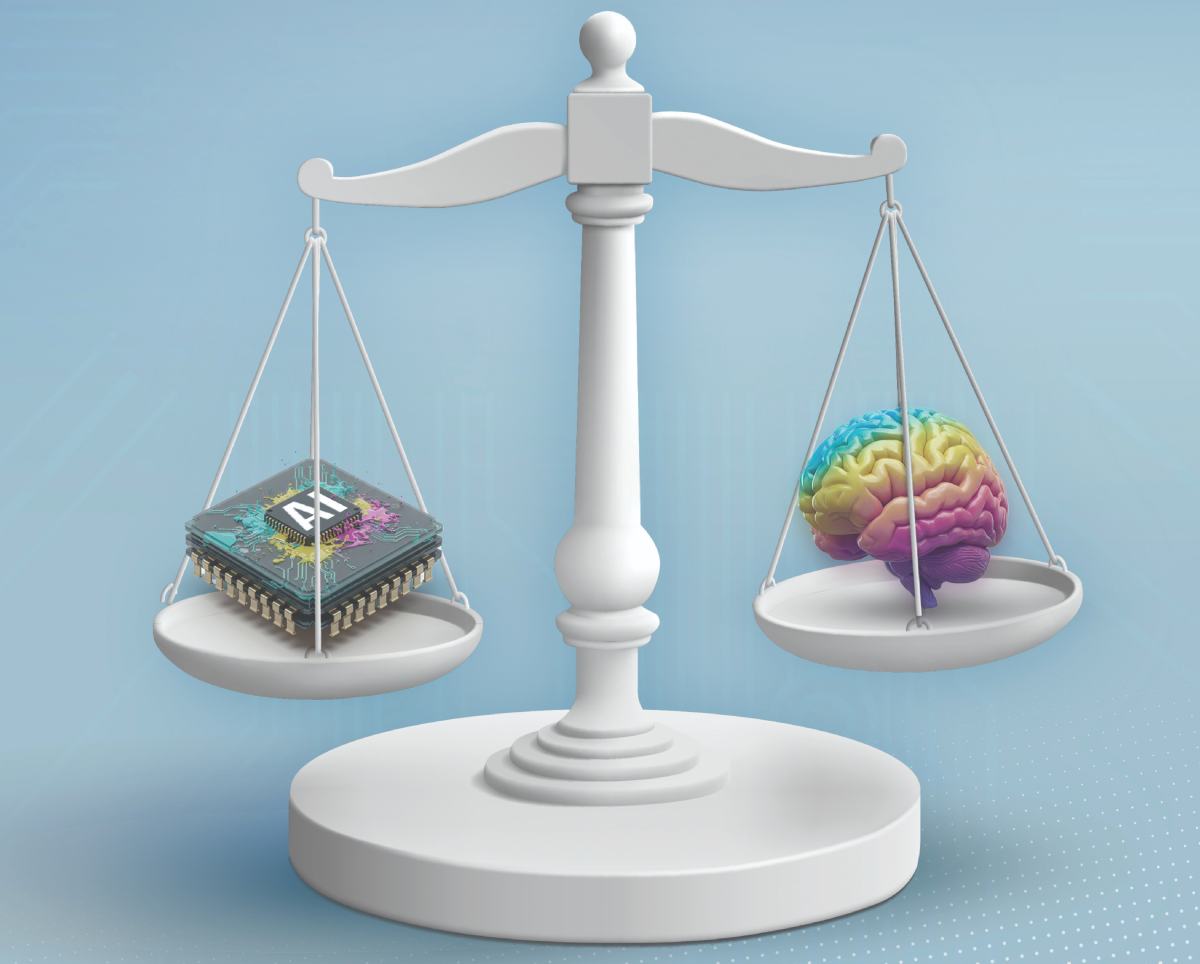
As AI reshapes creativity in Pakistan, the future of storytelling lies in striking a balance between data-driven precision and human insight.
Storytelling has always been at the heart of every great advertisement. Whether it is a warm family moment around Ramadan. A cricket commercial celebrating national pride, or a campaign that seeks social change, the success of a campaign relies on its power to move people. In Pakistan, creative teams have traditionally been responsible for understanding local values, cultural nuances, and unspoken emotions that data alone cannot capture.
However, Artificial Intelligence is rapidly becoming a storytelling solution for brands. With its ability to find patterns in large datasets, analyse consumer behaviour, and even create campaign-ready content. AI is transforming how brands embrace creativity. The point is no longer whether AI can assist in advertising, which it already is. The main question is: where does real storytelling come from – the human mind or the machine?
The Rise of Algorithmic Storytelling
AI tools have completely reshaped the way brands design and personalise narratives. Platforms like Runway, ChatGPT, and MidJourney are allowing agencies to produce human-like ad scripts, visuals, and even jingles within hours. For time-constrained brand managers, this is a game-changer. Imagine a niche digital brand testing different variations of a Facebook ad, each tailored to a micro-segment of customers. This one-to-one personalisation at scale is only possible through AI, which was once a daunting task.
Coca-Cola’s “Create Real Magic” is one of the most prominent examples of AI application in creating a powerful brand story. Instead of just running ads, Coca-Cola used artificial intelligence (AI) to provide people with the opportunity to co-create Coca-Cola-themed digital artwork using AI tools like DALL-E and GPT.
It was the company’s first step into using AI for marketing and a true testament to how AI can democratise creativity, making storytelling personalised and participatory at a broader level. Although the campaign created excitement, Coke’s human-centric insight, that people enjoy being involved in the brand’s story rather than only being passive customers, was what really made an impact.
Similarly, Spotify’s new AI feature for Wrapped is getting huge engagement because it combines machine learning with human insight. The yearly summaries and playlists are controlled by algorithms. But the story, “you were in the top 0.01% of Taylor Swift listeners”, resonates with the human emotions of pride and belonging.
For small businesses in Pakistan, where marketing budgets are often limited. AI offers a level of advancement that was previously out of reach. Nowadays, a small business does not need to hire a full-scale agency to create ads that appear professional. To put it briefly, AI has begun to democratise creativity by making AI tools widely accessible.
Why Human Insight Still Matters in Storytelling
Despite the increasing reliance on AI tools for creativity, advertising has never been only about efficiency. At its core, it is about resonance. The most memorable Pakistani campaigns, from Tapal’s “Tum, Mein, aur Aik Cup Chai” to Surf Excel’s “Daagh Tou Achay Hotay Hain”, were not driven by algorithms. They were born from human insight, by creative directors who understood how a partner’s support and a child’s innocence could create an emotional bond with millions.
This is where AI struggles. While AI can potentially identify trending hashtags and excel in data processing, it does not “feel.” It cannot sit in a chai dhaba in Saddar and absorb the everyday struggles and joys of a common Pakistani. It cannot intuitively understand that a tagline in Urdu carries greater intimacy that English simply cannot replace.
Brand storytelling often lives in the small details: the use of local traditions, the style and inflection of delivery, as well as sensory cues, all of which demand cultural and emotional context. This is the essence of brand storytelling, something that raw data patterns cannot yet replicate.
What AI Can Do and What Only Humans Can
AI’s biggest strength is its versatility. Advanced algorithms can analyse massive datasets (browsing behaviour, purchase history, location) and instantly predict each customer’s best content or offer. AI-driven decision engines now enable marketers to design “micro-segmented” messages and even auto-generate custom copy, imagery, or product recommendations. However, without human oversight, AI frequently fails to recognise cultural sensitivity or the nuances of human emotion.
Besides, AI systems are largely trained on global datasets, which often overlook local nuances. For instance, an AI system primarily trained on Western languages, cultures, and perspectives may not fully capture the realities of Pakistani culture. Leading to campaigns that seem disconnected.
Gucci’s partnership with Lil Miquela, an AI fashion influencer, shows how surprisingly AI is pushing the limits of human creativity. Although these digital creators are designed using advanced algorithms, they only work well when they are combined with human-managed narratives about identity and lifestyle.
The Synergy Model: Human + AI is the Future of Storytelling
The real scope in brand storytelling is not choosing between AI and human insight, but creating a hybrid model by leveraging the best of both AI efficiency and human creativity. While AI is highly skilled at pattern recognition, only humans can introduce novel ideas that disrupt the norm and grab attention.
For instance, an AI model might create a storyboard for a fashion brand targeting Gen Z. It can predict the colour themes, style, and aesthetic that appeal to this demographic. However, it will take human insight to suggest that featuring a festive occasion, a glimpse of university life, or a local street style in Pakistan will make the campaign truly relatable.
Most importantly, this synergy model will also open doors for new roles in advertising. Instead of worrying about being replaced, creatives in the industry can position themselves as “AI Directors” or “AI Experts” who oversee and design AI outputs to create culturally relevant work. In essence, the future of brand storytelling in Pakistan depends on how effectively agencies can balance this delicate partnership to produce not only high-quality data-driven content but also the emotional connection that will remain a crucial differentiator.