
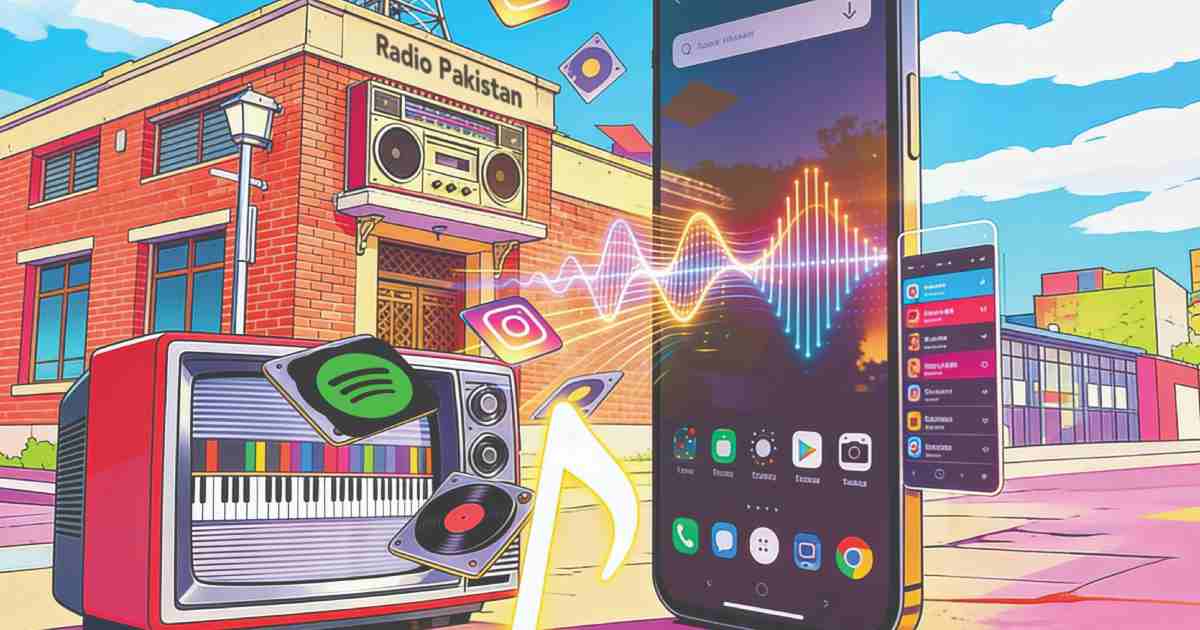
Those who grew up with RJs, cassettes, VJs, and cross-border MTV moments know that Pakistan’s music once carried an energy that felt impossible to contain. Today, that world has transformed almost beyond recognition, fragmented by apps, corporate agendas, and the relentless churn of viral content. This piece revisits the eras that shaped us, while asking a necessary question: in a landscape where brands increasingly call the shots, does music still lead?
My relationship with music began most strangely. At the age of four, I won a radio in a lucky draw simply by choosing the number seven. That little windfall in Bahrain sparked a love affair that has lasted decades and has taken many shapes. Music wasn’t just entertainment; it was an essential part of our family life.
When I returned to Pakistan in 1995, there were no familiar RJs to keep me company for hours the way Radio Bahrain’s hosts once did. Instead, I turned to television: NTM, PTV, and the Indian channels that dominated our homes in the dish era. Even though I did not yet understand Urdu, I was fascinated enough by Pakistani music to buy cassettes. The first album I ever purchased was Raaz by the immensely talented Hadiqa Kiyani.
Radio, of course, occupies a special place in Pakistan’s cultural history. A visit to the hallowed grounds of Radio Pakistan off M.A Jinnah Road once made me feel as though I had stepped back in time. For the generation that witnessed Partition, Radio Pakistan was the lifeline that connected leaders and citizens. It was where history was spoken into existence. Its relevance has faded since the 2010’s, yet the institution’s legacy persists, forever linked to the mehfil and ghazal culture that shaped our artistic identity, which we also associate with PTV but in a more visual way.
As FM 100 and FM 101 emerged, a new wave of RJs, music, and engagement arrived. I became a regular caller, requesting songs, chatting with hosts, and even speaking to musicians like Najam Sheraz and members of Junoon. The late 1990’s gave us a pop explosion; the 2000s cemented the era of Pakistani pop and rock.
Channels like ARY Music and Vibe introduced us to personalities who remain cultural fixtures, including Anoushey Ashraf, Dino, and others who helped define youth culture. Pakistani bands were crossing borders, appearing on MTV India, and carrying a distinct blend of modern and traditional sounds.
It was during this period, particularly my university years, that brands began stepping boldly into the music scene. Anyone who grew up in that era remembers the 2002 Pepsi Battle of the Bands final. Aaroh and EP facing off for the crown was appointment television. Aaroh won, but EP won the crowd, and both became household names. The competition also introduced us to acts like Mekaal Hasan and Mizmaar.
A few years later, in 2008, Coca-Cola presented its own answer to branded music: Coke Studio. The show, despite its ups and downs, has become one of Pakistan’s most influential cultural exports. Its international adaptations in India, the Middle East, and elsewhere…may have been short-lived, but they are a testament to the strength of the concept.
For nearly a decade, Coke Studio stood alone as a branded music platform. Then, in 2017, Pepsi revived Battle of the Bands for a new generation, once again becoming the talk of the town. Young artists found a stage, a fan base, and industry mentors, proving that these platforms still have relevance and impact.
Over the last five to ten years, the brand’s presence has grown even more. Nescafé, Kashmir, Tulsi, and most recently Velo have all ventured into music. The trend is hardly surprising: music has always been a powerful tool in advertising. Anyone who has worked in media knows the current overuse, and sometimes misuse, of rap in commercials aimed at Gen Z. Whether these efforts actually resonate is still debatable.
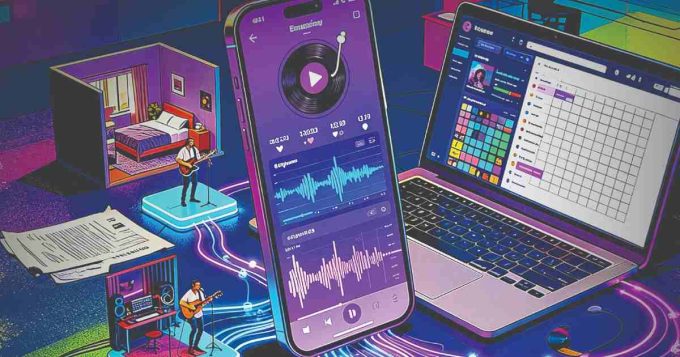
At the same time, the landscape of music consumption has shifted dramatically. The song from my childhood, Video Killed the Radio Star, now has a modern update: TikTok and short-form video have all but killed music TV channels and reduced radio listenership in urban Pakistan. Platforms like Spotify, Apple Music, and YouTube Music have changed not only where we listen to music, but how we discover it.
We once believed the internet would level the playing field for artists. It didn’t. In an era of cancel culture, censorship, and limited broadband access, success is both more accessible and more fleeting. A single viral clip can create a star overnight, but the fame often disappears just as fast. For brands, this creates a thrilling but unpredictable ecosystem. If content is ephemeral, is popularity equally temporary?
With corporate involvement comes another set of challenges. The boundary between sponsorship and artistic freedom has always been delicate. I still remember buying that Raaz cassette and being surprised to see a brand advertisement printed inside, apparently, so was Hadiqa. The need to protect artistic integrity while giving brands visibility is delicate but essential.
It matters not only for the music industry’s survival but also for the long-term credibility of the brands themselves. Music in Pakistan has always evolved alongside technology, culture, and now branding. The question is no longer whether brands should participate. It is how they can do so responsibly, in ways that elevate rather than overshadow the art. Elevating the art and artist