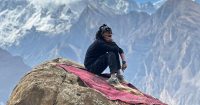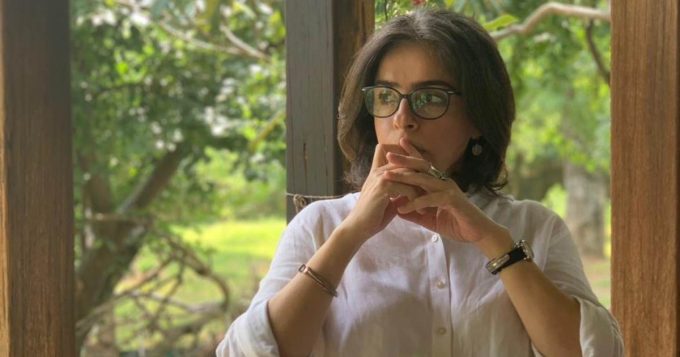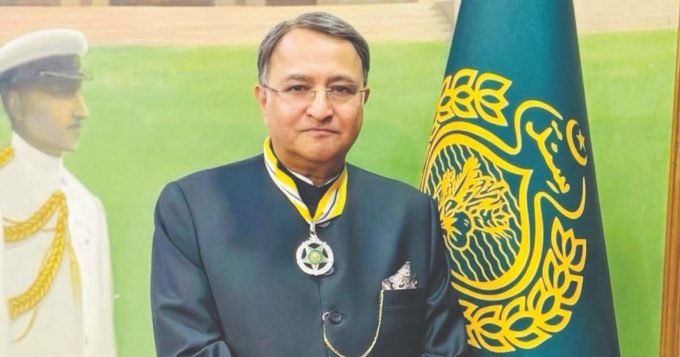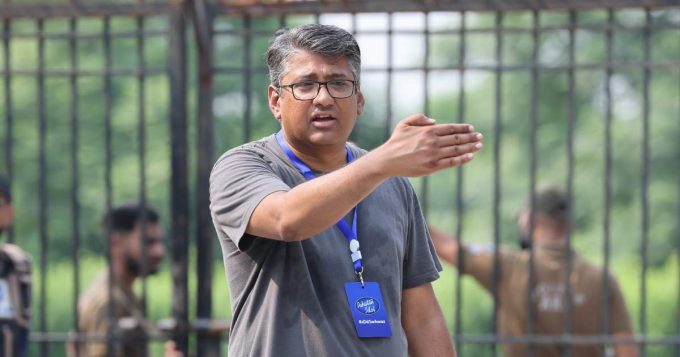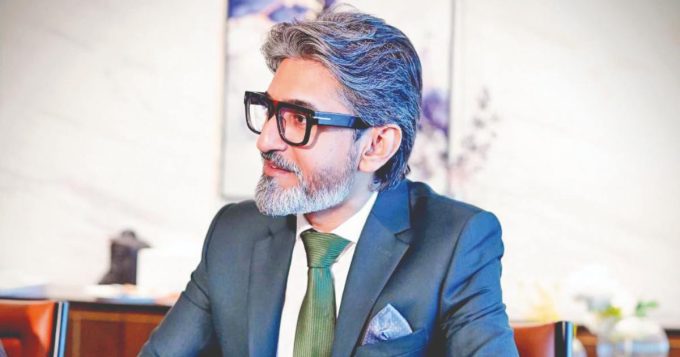

Some directors capture images. Soheb Akhtar captures truths, the kind the world only whispers when it thinks no one is listening. For over twenty years, he has walked with shadows, chased light across continents, and waited for the exact second a human soul steps out from behind its own defences. He builds frames the way poets build confessions…raw, unpolished, and trembling with life.
In his hands, a mountain becomes a memory, a silent face becomes a universe, and even darkness learns how to speak. Because Soheb is the kind of artist who knows every shadow has a secret…and every secret deserves a lens brave enough to hold it. If you want something genuine, untamed, and achingly beautiful, he is the man you call and the vision you trust.
Synergyzer: You have shot deserts, oceans, cities, and interiors; what truth about humanity do you think the camera reveals that people try hardest to hide?
Soheb Akhtar: The biggest truth the camera reveals isn’t emotions, it is presence. Some people fill the frame without trying; some disappear even when they are centred. You will meet people who glow on camera without knowing why; others feel lost even under perfect lighting. Presence can’t be faked. People try to mask it with confidence, styling or performance, but the lens knows who’s actually there.
Synergyzer: Your frames always feel “designed,” almost architected. When you are building a shot, what comes first – the emotion, the geometry or the chaos?
Soheb Akhtar: Emotion, always. And by emotions, I don’t mean tears on cue. Emotion can be a hesitant breath, a touch, a gust of wind on a face, or the way light quietly wraps around an object. It decides whether a frame whispers, shouts, or simply stares back. If the emotion isn’t guiding the shot, the geometry feels hollow and the chaos just ends up being tiring. But I’ll admit, I love chaos. I shoot where the sun shifts every few minutes, dust storms rewrite my storyboards, and water behaves like a diva. Most people run from that. I run towards it. And… in the end, a shot is always a tug-of-war. Emotion is the why, geometry is the how, and chaos gives the magic. My job is just to keep them working together long enough to hit action.
Synergyzer: You entered filmmaking through design. Does that still give you an unfair advantage or a creative burden you have to fight?
Soheb Akhtar: It’s a blessing with a fever. Design has trained my eyes to read space, form, textures, and light like a language. It helps me build frames that communicate without dialogue. But it also means I annoy my team by adjusting cups, curtains, clouds, and shadows. I can’t un-see crooked compositions or bad fonts. One misplaced prop can keep me up all night.
Synergyzer: After 300+ films, what’s the one thing Pakistani advertising still does not understand about visual storytelling and you’re tired of politely ignoring?
Soheb Akhtar: I feel Pakistani advertising still struggles with one thing: we try to hammer information. We don’t trust the audience enough, so we explain everything. We chase top-of-mind through noise instead of aiming for the heart. But, and I say this respectfully… brands are not wrong if their formulas work for their market. It’s not bad communication, it is just safe, predictable, and proven. I have always leaned the other way. I try to keep my visuals poetic. Poetic visuals aren’t garnish; they are the story. Real storytelling breathes in negative space, in quiet moments that pull you in rather than shout for attention. I’m constantly fighting to keep my frames from becoming too polished or too expected. The image should speak, not just sparkle.
So, my job is simple: find that middle ground where their strategy meets my madness. That is usually where the magic happens.
https://www.youtube.com/theartnoir
Synergyzer: Is there a moment when a director knows a brand doesn’t actually want a story, they just want noise? What do you do then?
Soheb Akhtar: Absolutely. When they say, “make it loud and full of energy,” that is code for, ‘forget nuance, bring fireworks.’ At that point I tell myself, fine! Let’s make noise but let’s make beautiful noise. Something with intention, rhythm, and a hint of rebellion.
Synergyzer: Your project ‘The Quiet Frame’ is an emotional tribute. What is the hardest part about turning grief, gratitude or memory into a visual language?
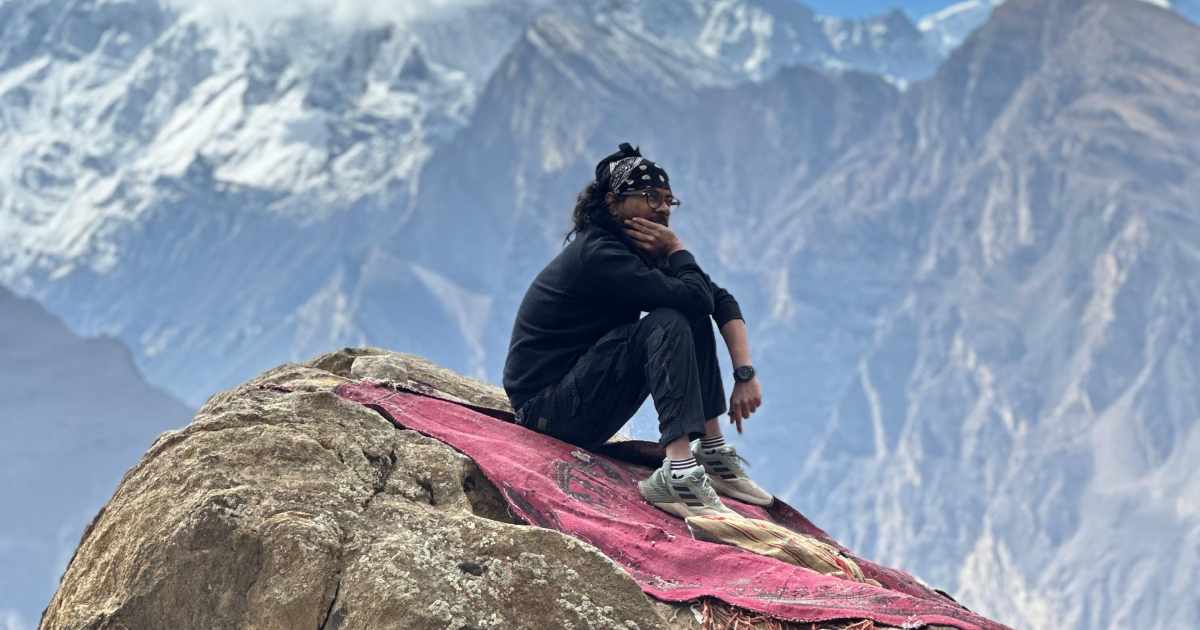
Soheb Akhtar: Restraint! Grief isn’t something you choreograph, and memory is not something you style to perfection. When I shoot The Quiet Frame my, series of photographs from travel encounters, I’m not a commercial film director. I am just a witness. A witness to light, to silence, to the landscapes that shaped me, and to a mentor who changed my world. It is the one project where I’m not thinking about markets, clients, or deliverables. Just honesty. Just presence.
Synergyzer: You have created “visual treats” without ever planning to become the guy known for them. What’s the one misconception people have about beauty in imagery?
Soheb Akhtar: People assume beauty comes from clinical perfection. For me, it never does. Beauty lives in the raw, in the truth that hasn’t been polished smooth. It is like how the Japanese mend broken vessels with gold, turning cracks into stories, not flaws. The imperfection becomes the beauty. Give me a rough, textured wall with honest light, and I’ll show you more emotion than a million-rupee set engineered to look flawlessly fake.
Advertising asks for polished and controlled. I am wired for authentic, unpredictable, and slightly inconvenient. My crew hates me for it, until they see the final frame. If a frame does not connect, it is not beauty, it’s a keynote slide with a jingle.
Synergyzer: What’s your creative red flag, the one thing on set or in a script that tells you, “this is about to go wrong”?
Soheb Akhtar: When someone says, “Rest in Post.” RIP!!! Literally.
That line has doomed more shoots than weather, broken rigs, late actors, and budget cuts combined. “Fix it in post” isn’t a plan, it is a prayer disguised as optimism.
Synergyzer: You turned Ujalon Mein into a cult visual moment (back in 2004). In an era of Tik Tok edits and 10-second attention spans, what makes a music video actually worth making?
Soheb Akhtar: I have never cared about trends. I care about moments and simplicity that stay, the atmospherics, the way a flare brushes the lens, the way a guitarist plucks a string, the breath a singer takes before a note, and the edit following emotion instead of the beat. Those natural, human moments age far better than any transition. If someone watches the work years later and still feels something stir inside, that, to me, is success. The same goes for the music video for “Titliyan” by Strings.
Synergyzer: What’s the most unintentionally hilarious feedback a client has ever given you the kind that was so wild you had to step out and laugh?
Soheb Akhtar: A client once said, many times, “make the night brighter, but keep it night.” I respect physics, but apparently physics wasn’t on their moodboard. People are terrified of shadows. They accept flash, saturation and glowing skin, but intentional darkness makes everyone panic. Light and mood speak as loudly as a powerful dialogue. Sometimes the silence of a shadow tells a story far brighter than any neon setup.
Synergyzer: When a shoot goes wrong and every shoot has “that moment” what is your signature coping mechanism: dark humour, quiet rage, or treating chaos like a creative prompt?
Soheb Akhtar: Chaos doesn’t scare me. If the universe improvises, I improvise back. When something collapses, I am already finding the alternate route, reframing the shot, and building a new sequence. That’s where my design, photography, and editing instincts take over, turning crisis into composition.
Synergyzer: What’s the one scene you have never shot, but burns in your mind every time you pick up a camera?
Soheb Akhtar: I have shot in the skies while free falling, have built a live audio-video stage in the middle of a deep lake, filmed fighter jets, survived sandstorms, I’ve even made tomatoes dance in sync. But there’s one visual that just won’t leave me. I’ve always been obsessed with clowns. I want to shoot a clown in a small, local circus… not performing, not smiling. Just standing there in the off-hours, talking to the version of himself he hides. A mirror, a quiet tent, dust in the air, the winter sun slipping through the canvas. Dark, poetic, a little unsettling. I don’t have the story yet, and I doubt any brand will ever ask for something like this. But it’s stuck in my head. Every year I wait for that winter soft sun to line up with the picture I see in my mind, and somehow it still hasn’t happened. Maybe I’ll stop waiting and just turn it into a photographic series. Sometimes the image chooses you.
Synergyzer: If you could direct a commercial completely uncensored, no brand approvals, what would it look like?
Soheb Akhtar: It would look like life, imperfections, real breath, and honest light. No over-styling, no forced smiles, and definitely no orgasmic expressions after a bite or a sip. Just moments that hit the heart before the brain gets involved. Emotional, messy, beautifully flawed… all the things a brand team might never approve, but that an audience would remember long after the logo fades.
Synergyzer: What is the boldest creative choice you have ever made on set, the one where you thought, “If this works, I’m a genius… if it doesn’t, I’m changing my name and moving to the middle of nowhere?
Soheb Akhtar: Two instantly pop up, both slightly insane in hindsight. The first was a tribute film with approximately 500 underground musicians; drummers, guitarists, vocalists, and egos of every size… all gathered for one massive performance together. The brand was huge, the pressure was huge, and then I casually said, “Let’s wait for golden hour… actually, let’s shoot the entire thing in golden hour.”
My producer and assistants looked at me like I’d been hit by a light stand. But when that sun dropped perfectly and lit up 500 faces in one unified glow, it was electric. Chaos turned into cinema. The second was when the brief and budgets only allowed green screen for a parachute concept. I said, “Great idea… let’s not do it.” Instead, we shot real paratroopers jumping from a real plane. We shot all across Pakistan, then headed straight to San Diego, strapped a RED camera onto a stunt cameraman’s helmet (the stunt guy behind Fast and the Furious, Charlie’s Angels, Point Break, to name a few), and filmed the whole thing live in the sky. No cheats. No rigs. Just altitude, adrenaline, and a prayer.