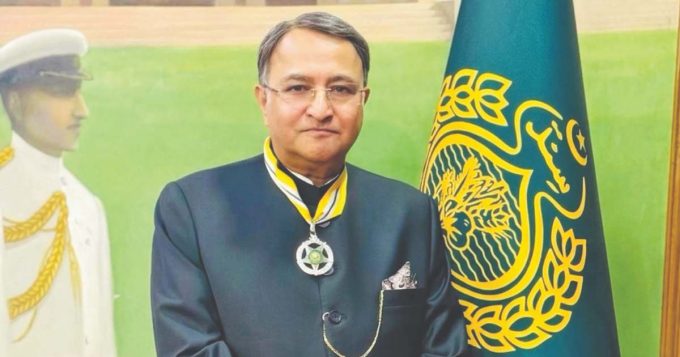

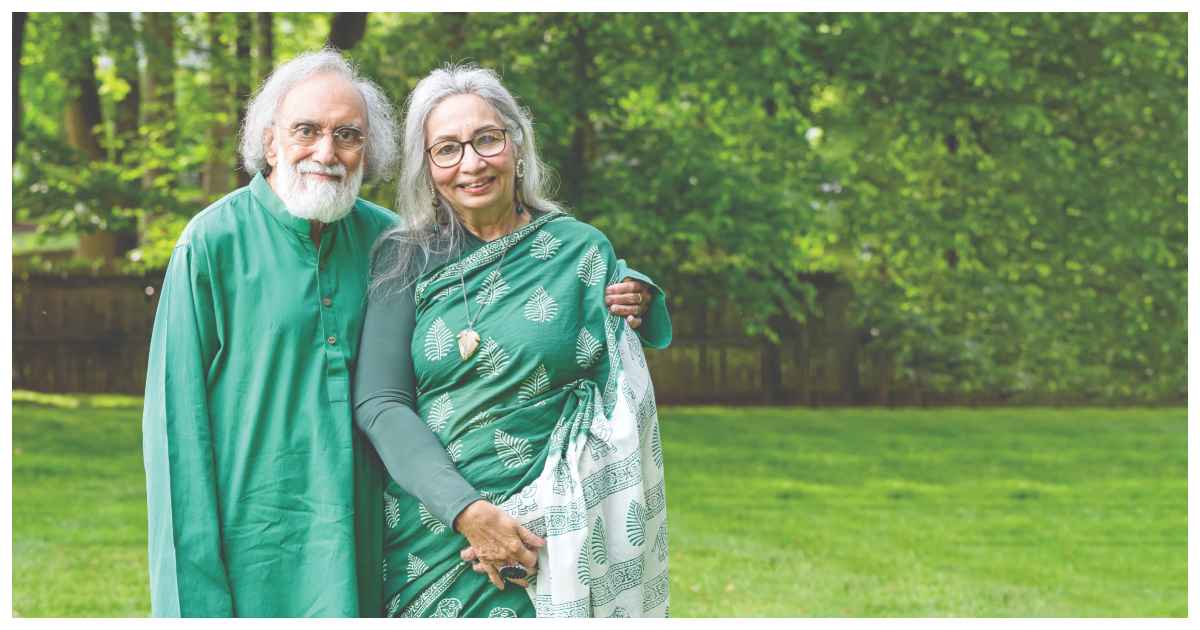
In a city that rarely pauses long enough to listen to itself, some homes become more than addresses. They become conversations. The home of Rumana and Mukhtar Husain is one such place, where stories unfold through books, walls, memories and the people who gather there. She has shaped how children imagine the world; he has shaped the spaces in which that world unfolds. Together, they have built something lasting: a shared narrative.
Rumana Husain
Synergyzer: Your work spans children’s stories, classrooms, murals, and Karachi. Looking back, do you see one continuous narrative, or many small stories that found their way to each other?
Rumana Husain: I see both. On the surface, they appear as separate stories – a classroom, a mural, a children’s book, a conversation with students, a corner of Karachi brought into visibility. Looking back, I see one continuous thread: a desire to help people feel connected – to themselves, to one another, and to the city they inhabit.
Children’s stories taught me that imagination helps us understand reality more deeply. Teaching showed me that learning is not only about knowledge, but about confidence and curiosity. Whether making toys, writing stories, teaching students, or training teachers, I carried the same lesson. Imagination is most powerful when it creates wonder, belonging, and emotional possibility within ordinary life.
Synergyzer: You have written and illustrated over ninety children’s books. What responsibility comes with shaping a child’s first understanding of the world?
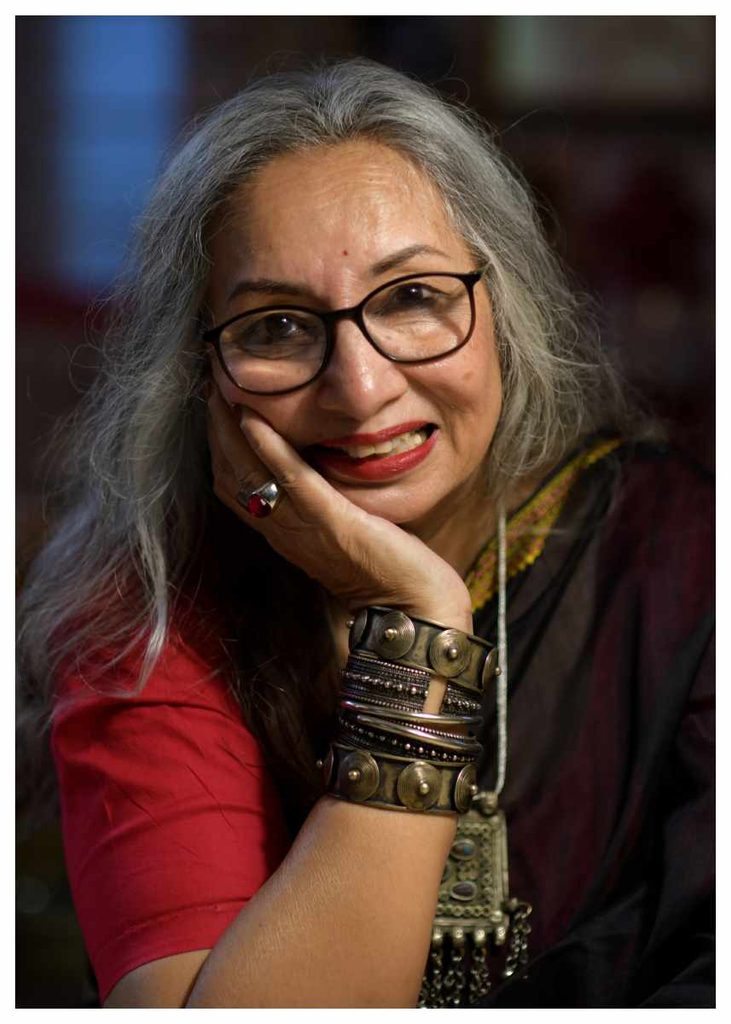
Rumana Husain: Shaping the stories a child encounters is both a privilege and a profound responsibility. These early narratives lay the foundations for how children perceive themselves, others, and the world around them. In a country still negotiating questions of identity, history, and belonging, this responsibility becomes even more nuanced.
One must offer stories that are inclusive, humane, and open-ended stories that celebrate diversity, encourage curiosity, and nurture empathy. It is important to present our cultural and linguistic richness without erasing complexities, while allowing space for questioning as much as pride.
Above all, children’s literature should empower young readers to imagine a more just, compassionate, and confident world, rather than simply inherit the limitations of the present.
Synergyzer: Your book Karachiwala treats the city almost like a living archive. What stories does Karachi tell that never make it into headlines, but define its truth?
Rumana Husain: In ‘Karachiwala: A Subcontinent within a City (2010)’, I came to see Karachi not as a backdrop of crises, but as a breathing archive of lived histories. Its deeper truth lies in stories that rarely make headlines: quiet acts of coexistence, everyday negotiation, and survival.
Karachi reveals itself through its neighbourhoods, where migrants built new identities, languages overlap, and informal economies thrive through ingenuity. It lives through artisans, workers, and communities who preserve knowledge and culture in often unseen ways. The city’s untold stories lie in its ability to hold contradiction – fragility and strength, chaos and creativity, loss and reinvention. These are not headline stories, but they define Karachi’s rhythm.
After Karachiwala, where I visited over sixty homes to document people’s lives, ‘Street Smart: Professionals on the Street (2015)’ explored Karachi’s informal street economy and those who sustain it.
Synergyzer: How does children’s literature shape memory and cultural identity over time?
Rumana Husain: Children’s literature enters memory quietly and enduringly. It is not just information to retain, but an experience to feel. Stories from childhood become intertwined with emotion – comfort, curiosity, fear, and wonder – shaping how we remember the world.
Unlike fleeting noise, children’s stories work through repetition, rhythm, and intimacy. Revisited across generations, they become part of cultural memory, carrying values and worldviews.
They also shape a child’s earliest sense of belonging by influencing whose stories they hear, what language they speak and whose lives they learn to value. Over time, children’s literature reflects how a society sees itself and how it wants others to see it.
Synergyzer: In today’s fast digital world, what do children lose when stories are no longer slow and immersive?
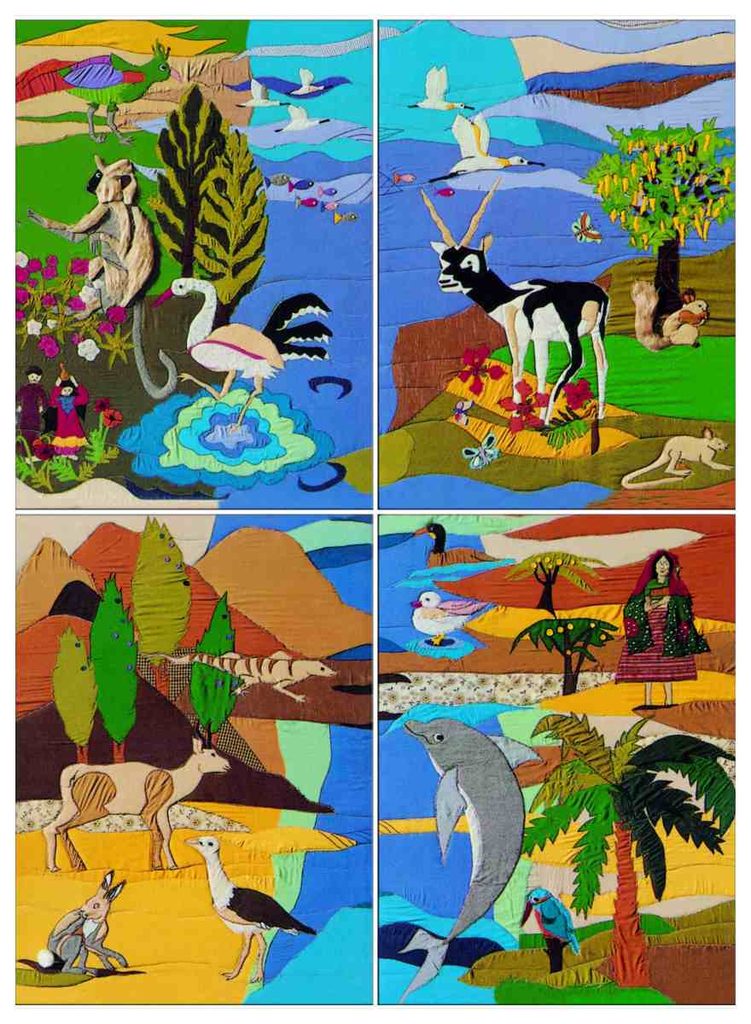
Rumana Husain: What is lost is not just attention span, but depth of experience. Slow, immersive stories allow children to stay with a character, place, or feeling long enough for meaning to unfold. In that space, they learn patience, empathy, and the ability to connect fragments into a whole. Slow stories expand imagination, giving children the freedom to visualise, question, and interpret. Without that inner space, they risk becoming consumers of images rather than makers of meaning.
Traditional storytelling also creates continuity, linking generations, cultures, and histories. This is not to dismiss the digital world, but to recognise that without balance, children lose the nourishment of deep stories, the kind that lingers, shapes, and stays.
Synergyzer: What makes a story powerful enough to change how people see their world?
Rumana Husain:
People do not change simply because someone tells them something new. They change when they recognise something familiar: an experience, an injustice or a longing expressed so clearly that they can no longer ignore it.
In my experience across education, art, and activism, the most powerful stories are both specific and humane. They are rooted in lived realities, yet open towards something larger than the individual. Working with the Children’s Museum for Peace and Human Rights as its Head of Activism & Outreach has taught me that details matter; they allow people to feel connected rather than instructed.
Powerful stories resist simplification. They hold complexity, ambiguity, and discomfort, inviting reflection rather than dictating conclusions. This is where art and activism intersect, not in slogans, but in stories that stay with you and quietly challenge what you thought you knew.
A story gains transformative power when it restores dignity and visibility. When marginalised people are presented as full, thinking, feeling human beings rather than symbols, it becomes harder to look away or remain unchanged. Such stories may not create immediate shifts, but they work slowly and persistently, reshaping perception and, over time, the world.
Mukhtar Husain
Synergyzer: ‘Foundations and Form’ began as a personal memoir. How did it become a reflection of Karachi’s changing story?
Mukhtar Husain: I began ‘Foundations and Form’ with my grandchildren in mind, wanting them to understand the context in which their Dada/Nana had lived and grown up.
Looking back, I became acutely aware of the profound transformations in our environment and way of life, changes whose speed and depth we could never have anticipated at the time.
Having lived and worked as a professional in Karachi for seventy years, I find it impossible to overlook these shifts or refrain from reflecting on them. The memoir, therefore, becomes not only a personal narrative but also a record of a generation and the evolving story of a city.
Synergyzer: You studied in Türkiye in the 1960s and returned to a very different Karachi. What did those years abroad teach you about how cities develop and sustain a sense of identity?
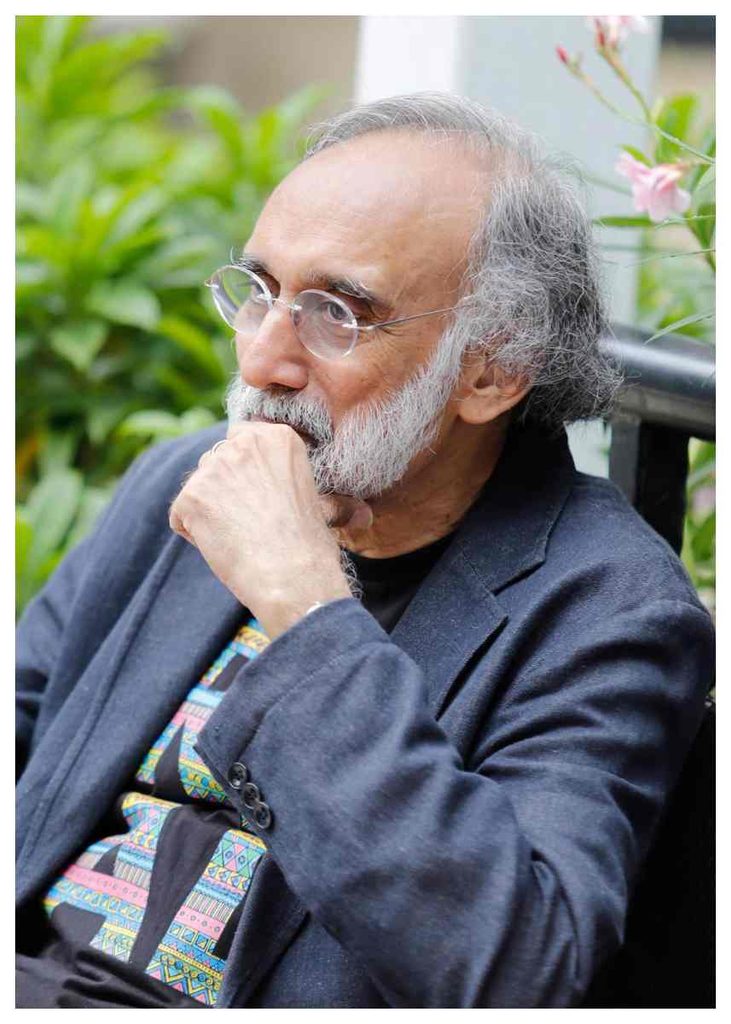
Mukhtar Husain: Leaving the Karachi I knew, my years in Türkiye exposed me to a range of metropolitan centres – Ankara, Beirut, Athens, Rome, Zurich, Munich, Paris, New York, Chicago, Singapore, Tokyo, and Bangkok. Each revealed a distinct urban identity shaped by its history, culture, and pace of change. What struck me was how these cities engaged with the present while remaining connected to their pasts. No two followed the same mould, yet each retained a coherent sense of self.
Karachi, in contrast, has undergone extraordinary expansion, from a population of half a million in 1947 to over thirty million today.
This rapid growth has brought significant challenges and shortcomings, but it also calls for deeper study and the possibility of a more thoughtful urban future.
Synergyzer: Your work has spanned practice, teaching, and writing. What has remained constant in your perspective as an architect?
Mukhtar Husain: Becoming an architect is, in many ways, a profound transformation of one’s personality, outlook, and modes of engagement with family, colleagues, and society at large.
Architecture is ultimately about how we live: what brings us comfort and joy, and what stimulates the intellect. It is not confined to buildings alone, but permeates the way we observe, interpret, and respond to the world around us. Equally important is the ethic of reciprocity – what we absorb must, in turn, be given back. Every decision, every act, must first answer the question: why? A building, or any project, is not the realisation of an abstract or esoteric vision, but a disciplined process of reasoning of evaluating, refining, and selecting what is truly relevant. Nothing should be arbitrary; each choice must be grounded in purpose and clarity.
It is this rigorous, questioning approach that has remained constant for me, what I have long thought of as an architect’s lens.
Synergyzer: Having designed more than 100 houses over the course of your career, what do personal spaces reveal that public buildings often conceal?
Mukhtar Husain: Unlike a sculptor, who works independently and answers only to personal impulse, an architect operates within a framework shaped by land, use, budget, timeline, and, most importantly, the client’s brief. These factors cannot be set aside.
Most projects, therefore, emerge as a negotiation between the client’s requirements and the architect’s own outlook, at times in tension with
one another.
Designing for oneself, however, removes this negotiation. The brief, process and vision are entirely self-determined. In such instances, the architect’s home becomes an unfiltered expression of their professional values and sensibilities, allowing them to pursue ideas without compromise.
Yet this freedom also carries responsibility: the architect must remain accountable to their own standards of discipline and skill. In that sense, personal spaces reveal an honesty and clarity that public projects, shaped by multiple constraints, often cannot fully articulate.
Synergyzer: Across projects like Jinnah Terminal and Aga Khan Hospital, what design choice has quietly shaped how people experience the space?
Mukhtar Husain: One decision I have consistently made, often unnoticed, is using materials in their natural state, allowing their inherent qualities to speak rather than concealing them with plaster or paint.
This approach is not only aesthetic but rooted in durability and longevity; natural finishes require less maintenance and age with grace.
I have always avoided transient trends, preferring a timeless quality. As a result, these spaces continue to retain their integrity and character over time.
Synergyzer: Unlike media, people cannot skip or scroll past architecture. How do built spaces create narratives that people inhabit, often without realising it?
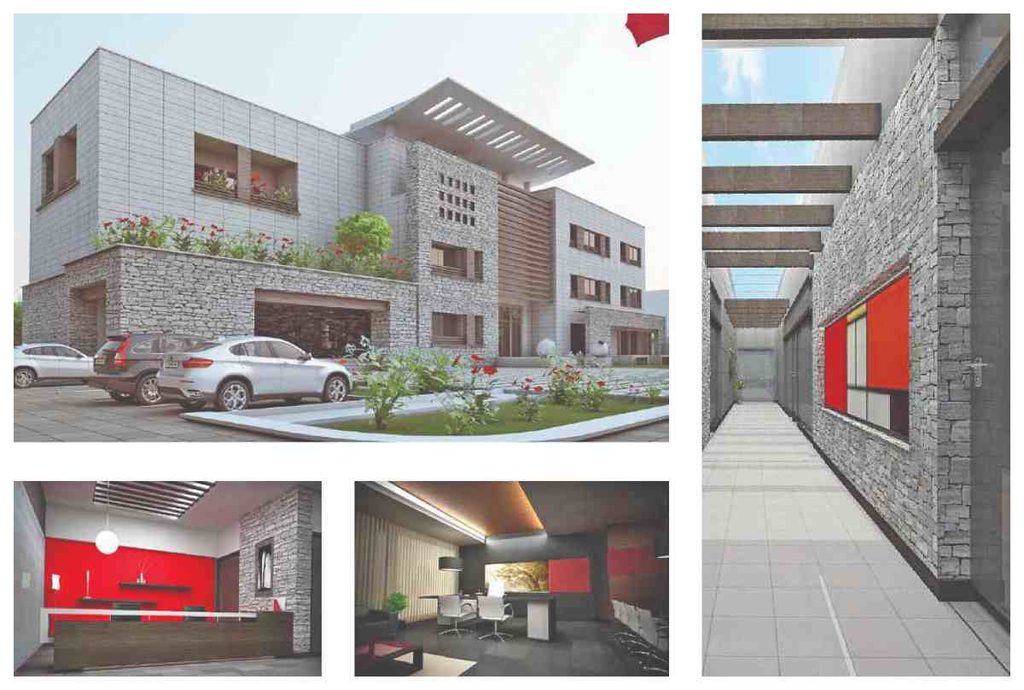
Mukhtar Husain: Spaces are inherently interactive. They shape the people who inhabit them, even as they themselves are continuously altered through use, adaptation, or changing purpose. This ongoing exchange is, in itself, the narrative.
A built space tells its story through its existence and the lives people lead within it. Unlike other forms of media, people cannot skip or set aside this narrative. It unfolds quietly over time, becoming part of their everyday experience.
It is cumulative, evolving with each layer of occupation and reinterpretation. In that sense, the narrative of architecture is enduring; it grows rather than fades, and does not disappear unless the space itself is erased.
Synergyzer: Having witnessed Karachi’s transformation over the decades, do you think the city has lost its narrative, or has it become too complex to fit into a single one?
Mukhtar Husain: Karachi was once shaped by a guiding vision, the MRVP, the Greater Karachi Plan (1952), but this became obsolete almost as soon as it was conceived. Rapid population growth and emerging complexities quickly overtook its assumptions.
Subsequent shifts, particularly the relocation of the capital to Islamabad, further strained the city’s administrative and planning capacities, setting in motion patterns of unchecked expansion that continue to this day.
In retrospect, the plan reflected a classical belief that planners could impose a fixed geometric order on a city, rather than allow it to evolve through its own organic transformations.
Today, Karachi has not so much lost its narrative as outgrown the possibility of a single, coherent one. Its scale and complexity now exceed the frameworks of conventional planning, demanding new ways of understanding and engaging with its ever-changing form.
Synergyzer: Your home often reflects your architectural philosophy. What story were you trying to tell through its design, and what did you want it to reveal to those who live in it and visit?
Mukhtar Husain: My house is, in every sense, an extension of myself. Almost every detail, including much of the furniture, emerges from my architectural outlook. It is a reciprocal relationship: the house belongs to me, and I belong to it. Beyond function, it expresses my architectural thinking through space, form, and context. The brief was complex, accommodating my wife, children, parents, a dog, a car porch, a basement activity area, and an outdoor courtyard-like space. Over time, it evolved naturally; the basement, for instance, became my office for over twenty-five years.
The house is defined by continuity, with spaces flowing into one another and the inside connecting with outside. Its language is modern, yet rooted in context and climate. Light, views, and seasons were carefully considered. I have always been a dreamer, and this house is that dream realised. Three decades of living in it have only deepened my architectural convictions.