
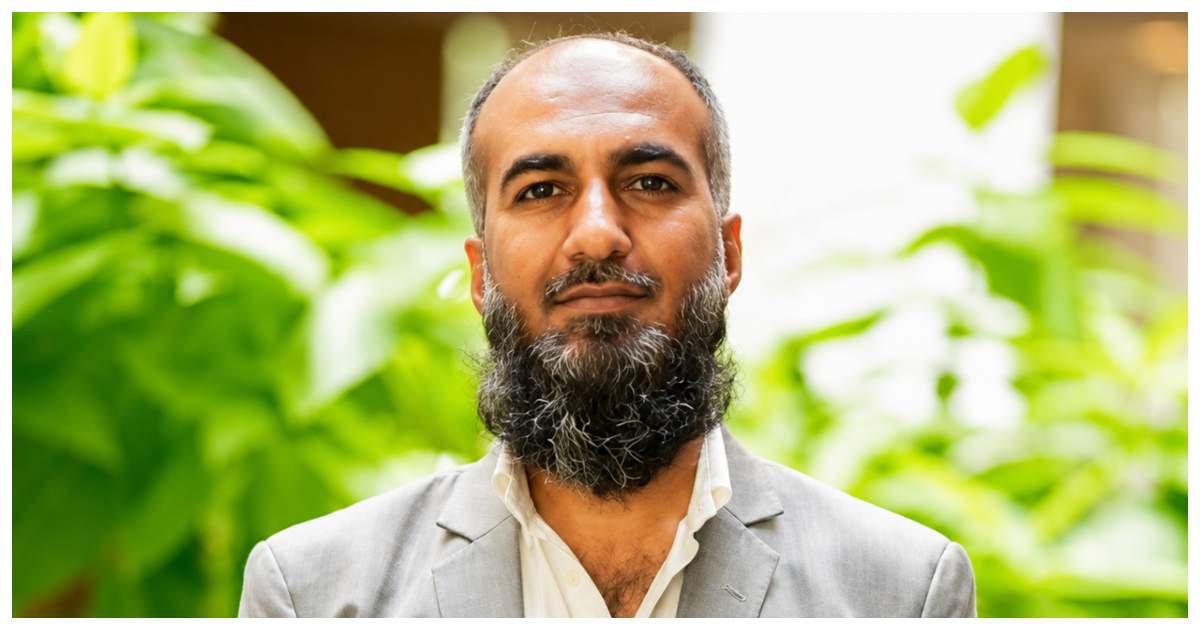
Dr Ubedullah Khoso, Assistant Professor of Marketing at IBA Karachi and a researcher of consumer behaviour, advertising, and multicultural marketing, explores how culture, emotion, technology, and digital platforms shape the decisions people make and the ones they think they make.
Synergyzer: Your journey spans industry, academia and research in France. How have these experiences shaped your understanding of marketing and your current work?
Dr Ubedullah Khoso: My journey has been shaped by constant learning across industry, academia, and international research. I moved from Pakistan to France, and from practical marketing problems to deeper theoretical questions, making my career an intersection of theory, practice, and reality.
In the early phase of learning marketing, the field appears structured and highly conceptual: segmentation, positioning, branding, and decision-making frameworks. However, entering industry quickly disrupts that neatness. Practice introduces complexity, where deadlines, market pressures, limited resources. And unpredictable consumer responses often sit outside what models can comfortably explain. That gap between theory and practice becomes
difficult to ignore.
Academia, in contrast, encourages slowing down and questioning. It creates space to examine not only how marketing works, but why it is assumed to work in certain ways. Industry experience, therefore, becomes a reference point that constantly tests theoretical assumptions against messy realities.
The PhD experience in France added another layer by creating intellectual distance. Being outside Pakistan made everyday market realities more visible rather than less. It highlighted how easily familiarity can normalise assumptions that actually deserve scrutiny. It also reinforced that most marketing theories are context-bound: they are built within specific societies, consumer behaviours, and economic structures, and cannot be transferred unchanged.
This realisation reshaped research orientation. Instead of treating theory as a fixed lens, it became something to interrogate. The focus shifted towards understanding how local consumers construct meaning within their own cultural, religious, social, and economic constraints. It also raised the importance of developing knowledge from within the Pakistani context, rather than relying exclusively on imported frameworks.
In that sense, these different phases did not simply add to one another; they reconfigured how marketing itself is understood. It is no longer seen as only a functional tool for selling, but as a way of studying people, their contradictions, and the systems that shape their choices.
Synergyzer: What did your early industry experience teach you about marketing that you hadn’t understood before?
Dr Ubedullah Khoso: I was a kind of fundamentalist in marketing before my industry experience, strongly relying on marketing fundamentals. But applying them in practice proved difficult. It made me question whether theory always translates into real-world contexts, sometimes even feeling that practice rejects it.
Later, I realised the issue was not the theory itself, but treating it as a fixed formula. I assumed consumers would behave as models suggest, and in doing so, misread behaviour through theory rather than lived experience.
Industry exposed the complexity of consumers. They are not always rational; they may understand benefits yet still not buy due to price, family opinion, social pressure, trust, habit, or fear.
During my PhD, I further realised that models are not reality but interpretations shaped by specific contexts. When applying them in Pakistan, the key question becomes whether they truly reflect local consumer realities.
Synergyzer: In your view, what is currently under-researched in consumer behaviour that is becoming increasingly important in real-world marketing?
Dr Ubedullah Khoso: Culture remains underexplored in consumer behaviour research, especially in our context. It is often interpreted through Western or Orientalist frameworks rather than examined from within, reducing it to a background variable instead of something that actively shapes consumption.
In Pakistan, culture goes beyond tradition or values. It is embedded in family influence, class aspiration, religion, community pressure, gender roles, language, food practices, trust, and local meanings of respect, success, health, and status. These forces strongly shape behaviour, yet research often still assumes an isolated, rational decision-maker.
Emotion is another overlooked dimension. While consumer research emphasises rationality, marketing practice actively engages emotions such as fear, pride, shame, aspiration, guilt, belonging, nostalgia, love, and insecurity.
The key question is not only whether emotions influence behaviour, but how culture shapes their meaning. Concepts like guilt, pride, shame, respect, and happiness are not universal; they are culturally constructed.
Synergyzer: In food well-being research, does co-constructed well-being blur the line between health and marketing, and who defines it?
Dr Ubedullah Khoso: Yes, it does blur the boundary, but not in a negative sense. It reflects the fact that health and marketing were never fully separate in lived experience; the distinction mainly exists in academic silos.
For consumers, food is not just nutrition or medical guidance, but also pleasure, family, culture, religion, memory, affordability, and social meaning.
In my food well-being research, this became evident. People define well-being in broader terms, such as happiness, satisfaction, peace, social life, and financial ease, and these same dimensions appear in how they describe food experiences, survival, taste, sharing, love, and enjoyment. This overlap shows how closely food and well-being are intertwined.
Marketing becomes part of this system by shaping what is perceived as healthy, desirable, modern, natural, or appropriate. Food brands do not only sell products; they produce meanings related to care, lifestyle, status, and even morality.
Well-being, therefore, is not defined by a single authority. It is co-constructed across multiple actors: consumers through lived experience, families through habits and traditions, marketers through branding and communication, health experts through nutritional knowledge, policymakers through regulation, and culture through shared norms about what counts as “good” food.
Synergyzer: How are digital platforms shaping consumer decisions before people even make a choice?
Dr Ubedullah Khoso: Marketing research still largely relies on traditional models of consumer decision-making, where need recognition leads to information search, evaluation, and choice. While useful, this framework is increasingly insufficient today.
Many decisions are shaped before consumers are even aware of them. Platforms control visibility through recommendations, repetition, pricing cues, trends, and algorithmic ranking. What appears to be a “choice” is often the result of a pre-structured environment.
This shifts the key question from why consumers decide to how decisions are constructed. Who makes an option visible, desirable, urgent, or popular through algorithms, influencers, reviews, or discounts? In contexts like Pakistan, this becomes more layered, as consumers move between online and offline spaces. Decisions unfold across platforms, social networks, family input, and market interactions, making choice a distributed and continuous process rather than a single moment.
Synergyzer: In green advertising research, persuasion is no longer neutral but tied to ethics and identity. Is this a shift in marketing itself or in how consumers interpret it?
Dr Ubedullah Khoso: I see it as both. Marketing has changed, and so has how consumers interpret it. Earlier advertising focused on functional benefits, but green advertising now often carries moral meaning as well.
Terms like eco-friendly, organic, and sustainable signal not just product quality but also identity, suggesting what kind of person the consumer becomes through purchase: responsible, ethical, or socially aware. Persuasion therefore, extends beyond utility into self-image and social meaning.
My research also shows that responses to green appeals vary. Some consumers use them for self-expression and distinctiveness, others are shaped by social norms, though strong normative pressure can also produce scepticism or awareness of judgment.
Overall, green advertising operates less as product persuasion and more as identity construction, shaped by trust, ethics, self-congruity, and social perception.
Synergyzer: If you think about “persuasion” in marketing today, is it still about convincing people, or more about entering decisions that are already emotionally made?
Dr Ubedullah Khoso: Persuasion today is less about creating conviction and more about shaping emotions that already influence decision-making. Consumers often feel first and rationalise later, explaining choices through price or quality when deeper drivers may include identity, status, social approval, or emotional comfort.
This makes emotion central to persuasion. While academic models often emphasise rationality, marketers routinely engage feelings such as nostalgia, pride, guilt, aspiration, and belonging.
The specific emotions vary by context: food marketing appeals to care and family, green advertising to responsibility and identity, and beauty marketing to confidence and self-expression.
Synergyzer: What has been the most intellectually rewarding aspect of your journey at IBA, both as a researcher and as an educator?
Dr Ubedullah Khoso: At IBA, one of the most intellectually rewarding aspects of my work is engaging with students who are themselves active participants in consumer culture. When I teach marketing and consumer behaviour, I am not addressing abstract concepts detached from their lives. They are already consumers, platform users, content creators, and emerging professionals shaping and experiencing markets in real time.
This makes it possible to connect theory, practice, and local context in a meaningful way. My own academic and professional journey has consistently involved navigating the gap between these dimensions. Moving from a theory-centred approach to a more critical understanding informed by industry experience and doctoral research.
As a researcher, this environment allows me to explore questions rooted in Pakistan while contributing to broader marketing scholarship. These include how consumers interpret food well-being, respond to green advertising. And how culture, family structures, identity, affordability and emotions shape consumption.
These are locally grounded questions with wider theoretical relevance.
As an educator, the most rewarding outcome is when students begin to question their assumptions. Shift their understanding of marketing from selling and advertising to meaning-making, social influence, ethics, identity and behaviour.