

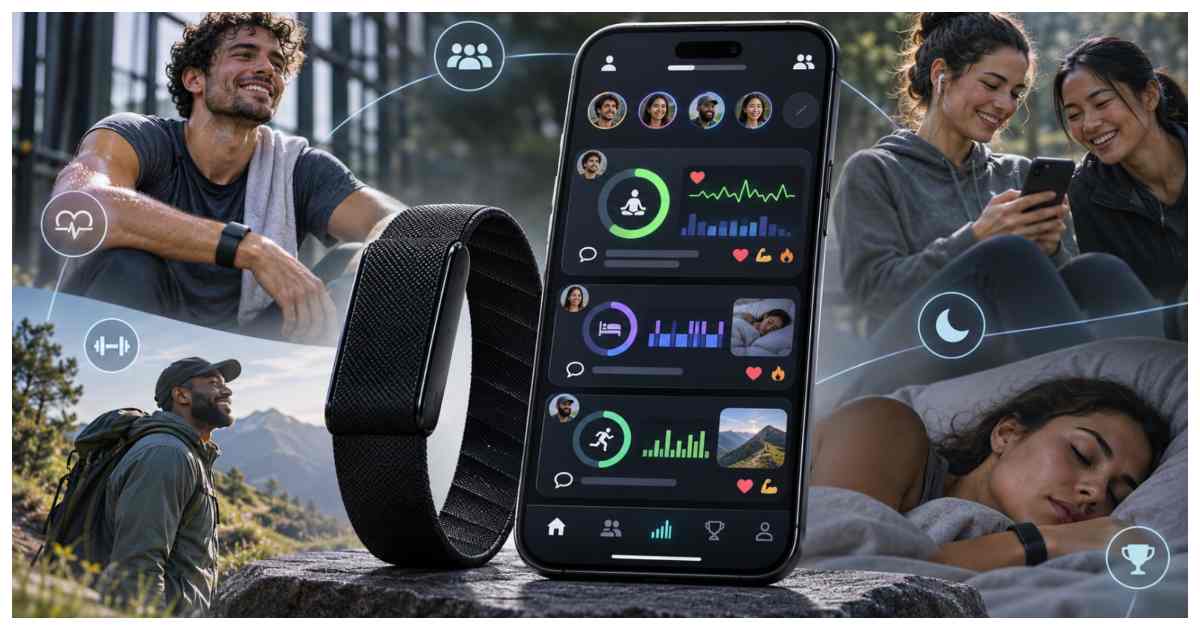
From sleep scores and workout updates to recovery stats, WHOOP is turning health tracking into a social experience. But is sharing your fitness journey a fun way to stay motivated, or are we getting a little too comfortable sharing personal data online?
Social media has made it easier than ever to stay connected, but how much of what we see online is actually real? Between carefully edited pictures, fitness transformations and increasingly AI-generated content, authenticity is becoming a bigger part of the conversation.
WHOOP, the wearable fitness and health technology brand, is approaching this differently. Its newly introduced WHOOP Humans brings a social networking experience into its app, allowing people to connect through something more personal than selfies: their health and everyday progress.
The idea is simple. Instead of just showing people what you did, why not share how your body responded? Is it another way to flex, only this time with a healthy twist?
Key Takeaways
- A social feed built around wearable-recorded health and fitness data.
- A new way to encourage friends and family through shared progress.
- A marketing move that turns individual health tracking into community engagement.
- A bigger conversation about privacy, comparison and healthy competition.
From Tracking Yourself to Connecting with Others
WHOOP Humans allows members to follow friends, family and colleagues, share selected health and fitness updates, and interact with each other’s progress. Think of it as a social feed, but instead of holiday pictures and restaurant check-ins, you might find someone’s sleep performance, recovery score, daily strain or latest workout.
Members can send follow requests, which others must accept before their updates become visible. They can also react to posts and leave comments.
Another addition is Moments, which allows users to attach photographs and notes to workouts, achievements or everyday activities. A picture from a morning hike, for instance, can appear alongside the Strain score and heart-rate data behind it. It adds a personal story to the numbers, making achievements more meaningful than another fitness statistic.
However, the idea of sharing health data with others is not entirely new. Apple’s Health app already allows iPhone users to share selected health information with friends and family. WHOOP’s difference is bringing these updates into a dedicated social feed, with profiles, reactions, comments and Moments, all connected to its wearable ecosystem.
The Marketing Behind Making Health Social
For WHOOP, this is more than another app feature. It is an opportunity to turn an individual health-monitoring product into a social experience.
The brand is tapping into two growing conversations: the demand for more authentic online interactions and the increasing interest in personal health and wellness.
WHOOP’s biggest differentiator is its claim that every account represents a real person with a verified heartbeat, thanks to its wearable technology. In an online environment increasingly crowded with bots and AI-generated content, this gives the brand a distinctive positioning.
There is already an audience for this approach. WHOOP says 57% of its members belong to at least one of its existing Teams, which bring people together through shared goals and leaderboards. Humans takes this further by allowing members to connect with individuals without necessarily joining a team.
From a marketing perspective, it also gives members another reason to return to the app, interact with one another and make WHOOP part of their everyday routines.
Can Sharing Health Data Go Too Far?
Sharing a holiday photograph is one thing; sharing sleep patterns, heart-rate variability, recovery scores and resting heart rate is another. These are personal health indicators, and not everyone will be comfortable making them visible to friends, colleagues or family.
WHOOP offers several privacy controls. Members can choose which metrics to share, manage their followers and use Stealth Mode to temporarily hide their shared information. Sensitive activities are not shared by default, while Moments remain private until users choose to share them. The company also states that it does not sell or monetise members’ personal health data.
But privacy is only part of the conversation. Could sharing these numbers create another form of social pressure? Seeing a friend’s impressive recovery score or daily activity might encourage someone to improve their routine, but it could also turn healthy motivation into a race to outperform others.
There is also the question of wearable technology itself. WHOOP uses wireless connectivity to sync data, raising familiar questions about exposure to radiofrequency signals. However, it is important to distinguish between general concerns about wireless devices and evidence of actual harm. The more immediate question here is how comfortable people are with continuously tracking and sharing such personal information.
What Does This Look Like Beyond the Fitness Community?
The idea could resonate beyond professional athletes and fitness enthusiasts. Consider friends living in different cities, siblings working in different countries or family members trying to maintain healthier routines despite busy schedules.
For Pakistani users, the concept has an interesting social angle. We are used to checking in on family and friends through WhatsApp groups, sharing daily updates and asking whether everyone has eaten, slept or reached home safely. WHOOP Humans offers a more data-driven version of that familiar habit.
Imagine siblings in Karachi, Lahore and Dubai keeping up with each other’s activity, or friends encouraging one another to get more sleep, walk regularly or stay consistent with exercise. Instead of another motivational quote in the family group, there is actual progress to celebrate.
Of course, this depends on owning a WHOOP device and being part of its membership ecosystem. It is not an open social network that everyone can simply join. Nevertheless, with members across different countries, the concept has room to connect people beyond geographical boundaries.
A More Human Side of Technology
Perhaps WHOOP Humans’ most interesting proposition is that it makes health tracking less of an individual experience. A recovery score might tell someone they need rest, but a friend checking in could make that reminder more meaningful. A workout milestone might be just another statistic to one person, but a significant achievement to someone who understands the effort behind it.
Social media does not necessarily need another place to display achievements. It could use more spaces where people genuinely encourage one another.
WHOOP Humans is betting that the next evolution of social networking might be less about showing people how well we are living and more about giving them a better understanding of how we are actually doing.