
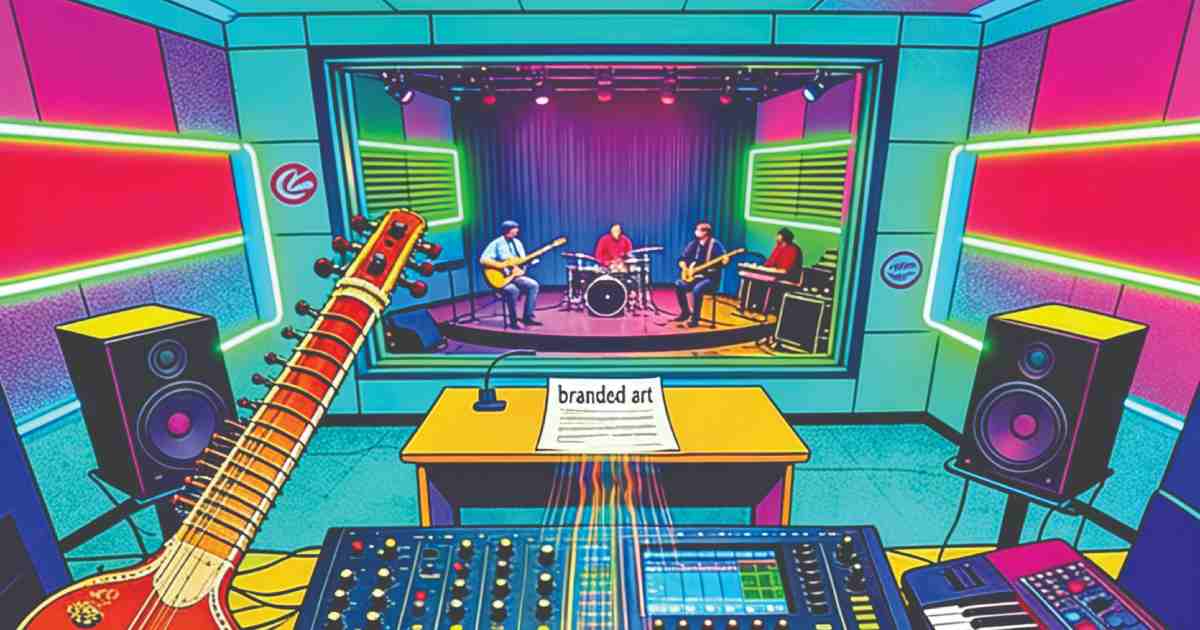
As Pakistan’s music scene collapsed under piracy and shifting media habits, brands stepped in to fill the vacuum. Their studios revived artists, reshaped the nation’s sound, and built powerful identities in the process. Here’s how branding revived an industry and why the balance it created remains precarious.
A country that once connected with Junoon’s electrifying concerts, Vital Signs’ soulful lyrics, and the unstoppable rise of underground rock, Pakistan’s music scene slowed down its momentum faster than anyone expected.
The mid-2000s were an evident era where piracy and digital file sharing did so much damage to the music industry. TV channels moved to fireside, talk shows, dramas, and reality TV distracted people from buying original music.
The trend peaked in the early and mid-1990s, but in the years that followed, live concerts gradually became uncommon. For the first time in a long while, a quietness settled over a scene once alive with guitars, folk melodies, and youthful energy.
And then, unexpectedly, brands stepped into the arena not just as sponsors but as saviours. This was a whole new leap in the music industry. Coca-Cola’s Coke Studio in 2008 did not just “support artists,” it curated a space where music became an identity for the brand itself. Coke Studio attracts audiences who enjoy music across generations.
At a time when local artists were slipping out of the mainstream, Coke offered them a platform and something far more powerful: “visibility.” Appreciatively, this re-emergence was not on the old model of “brand artist sponsorship.”
This was a brand creating the sound itself, deciding which voices to amplify and which stories to tell. In short, the brands were not just supporting Pakistani music; they were reshaping it and providing recognition and loyalty to the brand in ways that ads alone cannot achieve.
Now, music is beyond just entertainment. It has become a powerful way for brands to tell stories that people could resonate with. Within a few years, Coke Studio has become embedded as the musical DNA of the nation.
By bringing local artists from all over the South Asian diaspora to their stage. Brands reach places and connect to those audiences where marketing campaigns could not reach. People were not just listening to the music; they were sharing and talking about these moments. Music evokes memories, and those memories help brands to emotionally connect with people.
Coke Studio was a fresh breeze in the music industry and paved the way for other brands to strengthen their value in the market. Pepsi’s ‘Battle of the Bands’ was also an incredible contribution to rejuvenating youth culture and pop rebellion.
Nescafé Basement encouraged fresh talent to awaken their passion, while Velo Sound Station focused on live studio-recorded music for Gen Z. These platforms did not just transform Pakistan’s music scene; they reshaped it.
Through a range of versatile music, brands revitalise their identity and create experiences that people want to be part of. However, without branded intervention, Pakistan’s music industry might not have regained its mainstream attention.
Music is no longer only a source of entertainment; it has evolved into a strategic tool for brands to create positive feelings and long-term relationships with their audiences.
Music, through carefully crafted melodies and collaborations, can now express a brand’s story as effectively as any campaign, and it is evident that art and marketing can coexist.
But as the branded music enthrals, another important question arises:
Are brands only reviving music, or are they also shaping what Pakistani music should sound like? For many musicians, branded shows opened doors that were previously shut. Specifically, local artists got an opportunity to gain access to sound production teams, high-quality instruments, and, most importantly, mainstream visibility.
Just a single performance on any branded show could give musicians, as well as the brand, faster recognition and public acceptance. This helped the industry stand again and gave new talent confidence to create and release music.
Simultaneously, these branded studios work with defined guidelines and legal measures to protect their brand identity. This implies that the music must be positive and likeable for everyone.
Music that was too experimental or immature was not allowed to be presented on the main stage. Because of this strict filter, the sound of the nation turned out as very refined, polished, and somewhat controlled by the branded symphony.
This is where the tension lies: the industry is alive again, but much of it is shaped by brand needs. The rise of digital media has made this relationship even stronger. Most songs today are designed to perform well online to be shared, remixed, and turned into trends.
Brands now recognise that viral music is far more effective in getting faster customer attention than any marketing campaign. So, in this competitive scenario, the success of branded music is now directly linked with how strategically it is placed on Spotify, YouTube, TikTok, and other social media platforms.
The more the presence, the more visible the brand and the continuous addition to its brand value. A brand can elevate its image by producing shareable music and staying emotionally relevant to young audiences.
But despite the undeniable role of branded music, there is still a need to think about the future. While brands have played an instrumental role in music revival, the industry needs more spaces for independent artists.
The ideal future is not brands vs. artists, but a healthy balance where both can grow. If brands continue supporting music while giving artists freedom to explore new styles, Pakistan can enter a new era of creativity.