
Storytelling has become the marketing industry’s favourite promise, the tool that will
differentiate brands, build recall, and unlock emotional engagement. But storytelling is not a
marketing invention. It is one of humanity’s oldest cultural technologies. Long before agencies,
platforms, or performance dashboards existed, societies were already shaping identity and
memory through stories. We simply borrowed the term “brand narrative” from culture. And culture, unlike advertising, does not forget.
Every culture has its own archive of stories. These are not just myths or folktales; they are
shared frameworks that explain how the world works. They teach what is valued, what is
feared, and what is remembered.
From oral traditions in South Asia to African griot storytelling systems and classical Greek mythology, narratives have always functioned as cultural infrastructure. Cultural stories survive because people live them, repeat them, and encode them with emotion. Campaigns do not shape these stories; communities sustain them across generations.
In South Asia, epics like Heer Ranjha, Sassi Punnun, and Anarkali endure not because anyone ever launched them, but because generations embraced them as emotional frameworks for loyalty, sacrifice, and identity. These stories demonstrate the moral and intellectual depth of the people who preserved them. Storytellers understood that people build memory through feeling, not frequency.They carried wisdom across generations in a way that facts alone could not.
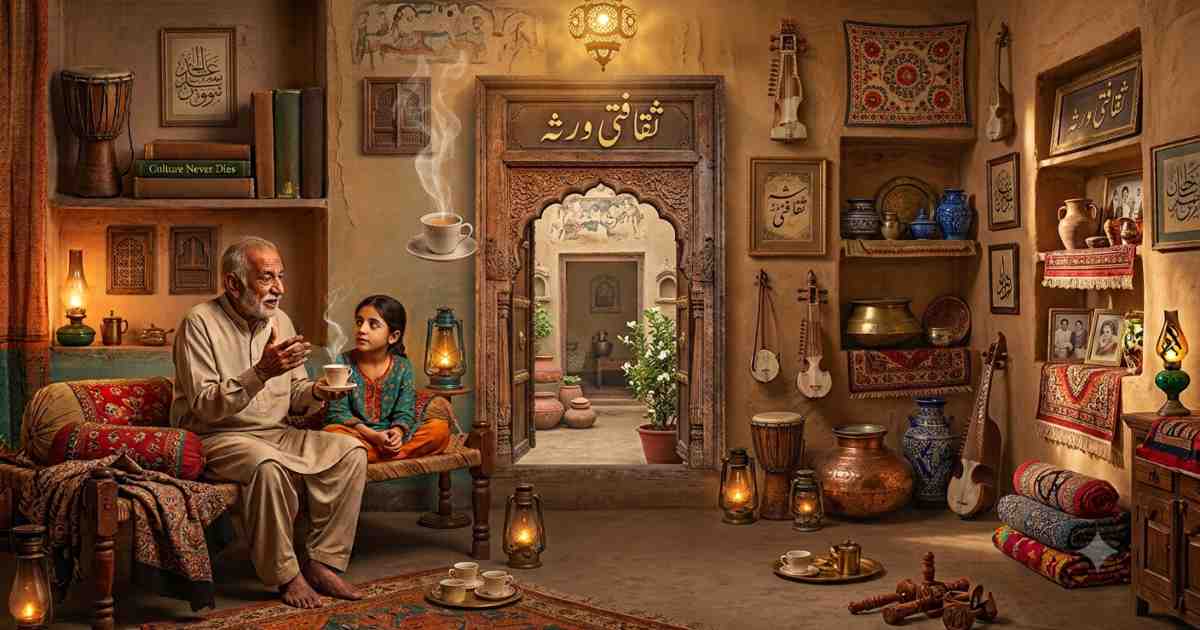
Pakistan remains one of the world’s strongest cultural storytelling environments. Narratives still
travel through families, not screens. In many households, grandparents remain the first “media
channels,” shaping how children understand belonging, morality, and the world. Their stories are
not performed; they are inhabited. They blur the line between narrative and lived experience.
And that is precisely why they endure.
This is the part modern marketing often misses. Stories survive when they are felt, not when they are produced. Pakistan’s advertising landscape offers a clear view of how narrative endurance works. Despite digital acceleration, brands still lean heavily on cultural familiarity — especially during Ramadan, the country’s most emotionally charged storytelling season. During this month, advertising shifts from persuasion to resonance.
Brands try to align themselves with generosity, family, and spirituality, not through product claims but through shared emotional codes. Campaigns like Surf Excel’s Daagh Tou Achay Hotay Hain, Coca-Cola’s Ramadan meal-sharing activations, Tapal’s family rituals, and Jazz’s connectivity narratives succeed not because they are novel, but because they tap into a pre-existing emotional system. They work because they feel culturally true. They behave like stories people already recognise. Yet this is also where many brands falter.
The issue is not creativity. It is continuity. Brands in Pakistan often operate in bursts: Ramadan, Eid, Independence Day: each campaign is emotionally strong in isolation but disconnected in sequence. This creates visibility without memory. I’ve seen beautifully crafted ads that move audiences in seconds, only to vanish from collective recall within days.
Not because they lacked craft, but because they lacked lineage. They were episodes, not narratives. Short-form content preference and shrinking attention spans are often blamed, but the truth is simpler: stories without continuity don’t survive. Culture repeats its stories. Brands often reinvent themselves every season.
Enduring brands, global or local, behave more like culture. They reinforce a single emotional
truth over time. Narrative is not a creative output; it is a discipline of memory construction. And
memory requires repetition. The most expensive real estate in marketing is the customer’s mind, and it empties quickly.
One of advertising’s most underestimated truths is that culture is the real author of meaning.
Brands do not create cultural relevance; they are granted it. In Pakistan, humour, family dynamics, social hierarchies, and even silence carry narrative weight. Successful campaigns don’t impose meaning onto these structures; they translate themselves into them. This is why family-centred storytelling dominates our advertising landscape. Tea brands anchor themselves in shared rituals.
Telecom brands frame connectivity as emotional closeness, not technology. FMCGs lean into the
symbolism of home, care, and community. The emotional grammar is cultural, not commercial.
Brands that ignore this grammar become forgettable, no matter how polished their execution.
At the heart of every enduring story is belonging.
Cultural stories survive because they locate individuals within something larger: family, community, identity, and memory. They offer emotional orientation. They make people feel seen. This is the real architecture of narrative endurance. Modern advertising often forgets this. It prioritises innovation over inheritance, novelty over nuance. But the strongest narratives are rarely new — they are recognised. They feel familiar, even when the execution is fresh.
The role of brands today is not to tell stories, but to steward them responsibly within cultural
ecosystems. This requires a shift in mindset: from campaigns to continuity, from messaging to
meaning, from visibility to memory, from creativity to cultural literacy. In markets like Pakistan,
where cultural storytelling is deeply embedded in daily life, this shift is not optional. Audiences
don’t remember what brands say. They remember what feels true.
Advertising may shape attention, but culture shapes memory. And memory — not exposure —
determines which narratives endure. The stories that last, whether folklore or brand communication, become part of how people understand themselves and their world. The real question for brands is not whether they can tell better stories. It is whether they can become part of the stories people already tell.