
On the streets of Karachi, the silent hum of an Audi e-tron is the sound of a very modern middle finger to the national energy crisis. While the rest of the country remains shackled to soaring petrol prices and a crumbling power grid, a new class of “energy-independent” drivers is emerging. This article explores why the EV revolution in Pakistan is not about saving the planet; it is about who has the capital to disappear from the bill.
Electric vehicles, in Karachi, have become unexpectedly popular. The BYD Atto 3s, the Audi e-trons, even the Tesla Model 3s. Cars that once felt like they belonged to another geography, another economy, another reality. And yet, here they are.
Particularly in a country grappling with economic constraints, public debt, and persistent shortages of electricity and water; this is slightly absurd, strangely impressive.
The people who have made the shift, whether intentional or not, they are doing something that matters. Electric vehicles cut tailpipe emissions, reduce dependence on petrol. And in Pakistan’s current economic and political climate, reducing petrol consumption is not just environmentally sound but a need.
But this story does not begin, or end, with cars; it begins on rooftops.
The rise of rooftop solar in Pakistan has significantly altered energy consumption patterns. Since 2023, a sharp increase in distributed solar adoption has reduced grid demand, easing pressure on liquefied natural gas (LNG) used for power generation and industry. While not a permanent surplus, analysts, including those cited by the IEA and Reuters, have noted periods of reduced LNG demand since 2024 as consumers increasingly opt out of the national grid.
For a country that rarely experiences energy stability, even temporary relief feels like a win.
More importantly, solar has done something radical: it has made electricity, despite all its outages and inconsistencies, more acquirable.
Because once electricity becomes accessible on your own terms, electric vehicles become viable. Not for everyone, but for some. And that “some” is enough to create a visible shift. Electric cars, scooters, bikes the entire ecosystem begins to emerge.
But the question still remains… are EVs actually a climate solution in Pakistan?
Realistically, no. Not in their current scale, or in this context.
A few thousand electric vehicles cannot offset the environmental damage caused by millions of motorcycles, rickshaws, buses, and older, poorly regulated engines. Pakistan’s air pollution crisis is complex: industrial emissions, construction dust, weak regulation and poor fuel standards. EVs address only one piece of a much larger problem.
They are not a fix, but because the market is evolving. There was a time when EVs were singular, rare, almost inaccessible. Now there are options. But do people in Pakistan buy EVs because they care about the environment?
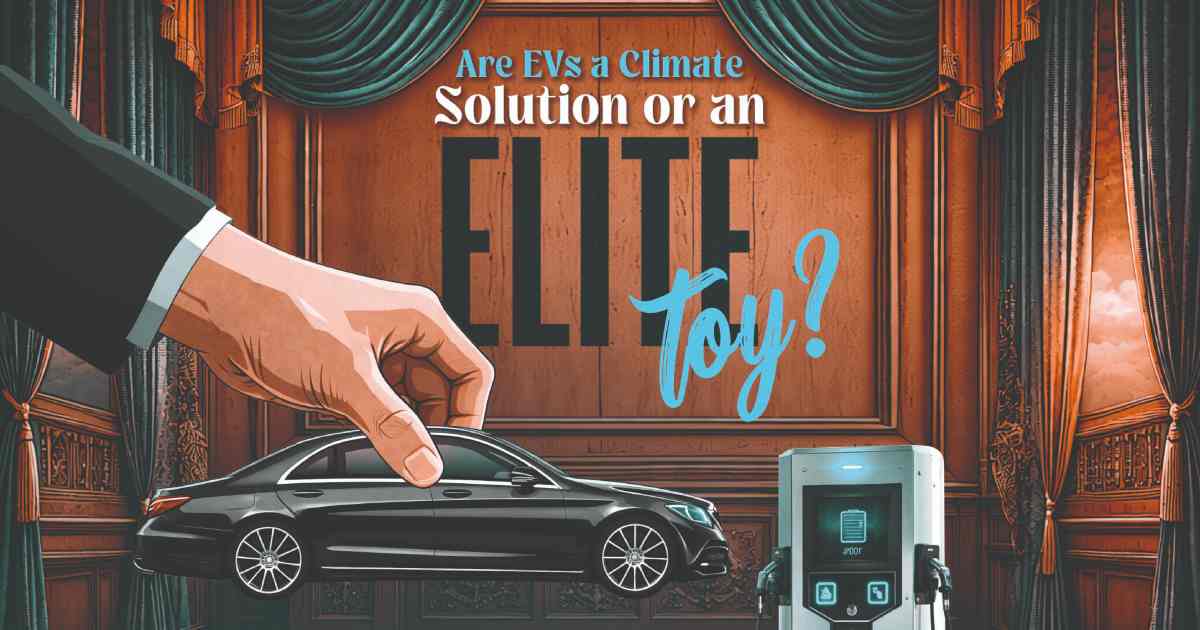
It may sound cynical, but no not really. EVs, in this context, function less as climate-conscious decisions and more as economic and social positioning. They are status symbols, and also financial tools. A mid-range EV like the BYD Atto 3 currently sits around Rs 11–12 million. Imported models like the Tesla Model 3 can range anywhere between Rs 15–25 million, while luxury variants such as the Audi e-tron exceed Rs 28 million, based on local dealer estimates and market tracking by platforms like PakWheels and industry pricing reports.
Petrol cars, in comparison, remain more accessible at the entry point. A Honda Civic ranges between Rs 8.7–9.5 million, while a Toyota Corolla Altis sits closer to Rs 7.5–8.2 million, according to manufacturer listings and local auto market data.
But the real change happens after the purchase. A standard petrol car in Pakistan consumes roughly 10–12 litres per 100 kilometres. With petrol prices hovering above Rs 300 per litre, that translates to approximately Rs 25–35 per kilometre in fuel costs. An EV, by contrast, consumes about 15–20 kWh per 100 kilometres. At a residential electricity rate of around Rs 50 per unit, that brings the cost down to roughly Rs 6–10 per kilometre.
Over a month, assuming average urban usage of 1,500 kilometres, that difference becomes stark. Petrol expenses can climb to Rs 40,000 or more, while EV charging may remain under Rs 12,000. Over several years, the savings compound significantly, with estimates suggesting potential fuel savings exceeding Rs 2 million across five years.
But! And this is critical, this advantage is conditional. It depends on stable electricity and home charging, rather than relying on public fast chargers, where tariffs can exceed Rs 60 per unit. Ideally, it also means having solar.
Because once solar enters the equation, the economics change entirely. Charging becomes, effectively, free at the margin. And this is where the voltage gap becomes visible.
Those who can afford solar panels can dramatically reduce their running costs. Those who cannot remain tied to petrol. The barrier is not just the car, it is the but infrastructure behind the car.
Which brings us back to a familiar conclusion; the rich get richer and poor stay poor. Because EV ownership in Pakistan is not just about environmental awareness. It is about access, to capital, infrastructure, and alternatives. It is about being able to exit a broken system and build a smaller, more efficient one for yourself.
For the middle class, that entry point remains unclear. The upfront costs are high, infrastructure is unreliable, and the risk is very real. Perhaps electric bikes offer a way in; smaller-scale adoption may bridge the gap. But for now, the divide holds.
Electric vehicles in Pakistan exist in a strange, in-between space. They are not insignificant, but they are not transformative either. They are a glimpse of what could be, if scale, policy, and access ever align. Until then, they remain exactly what they look like on Karachi’s roads: a contradiction.