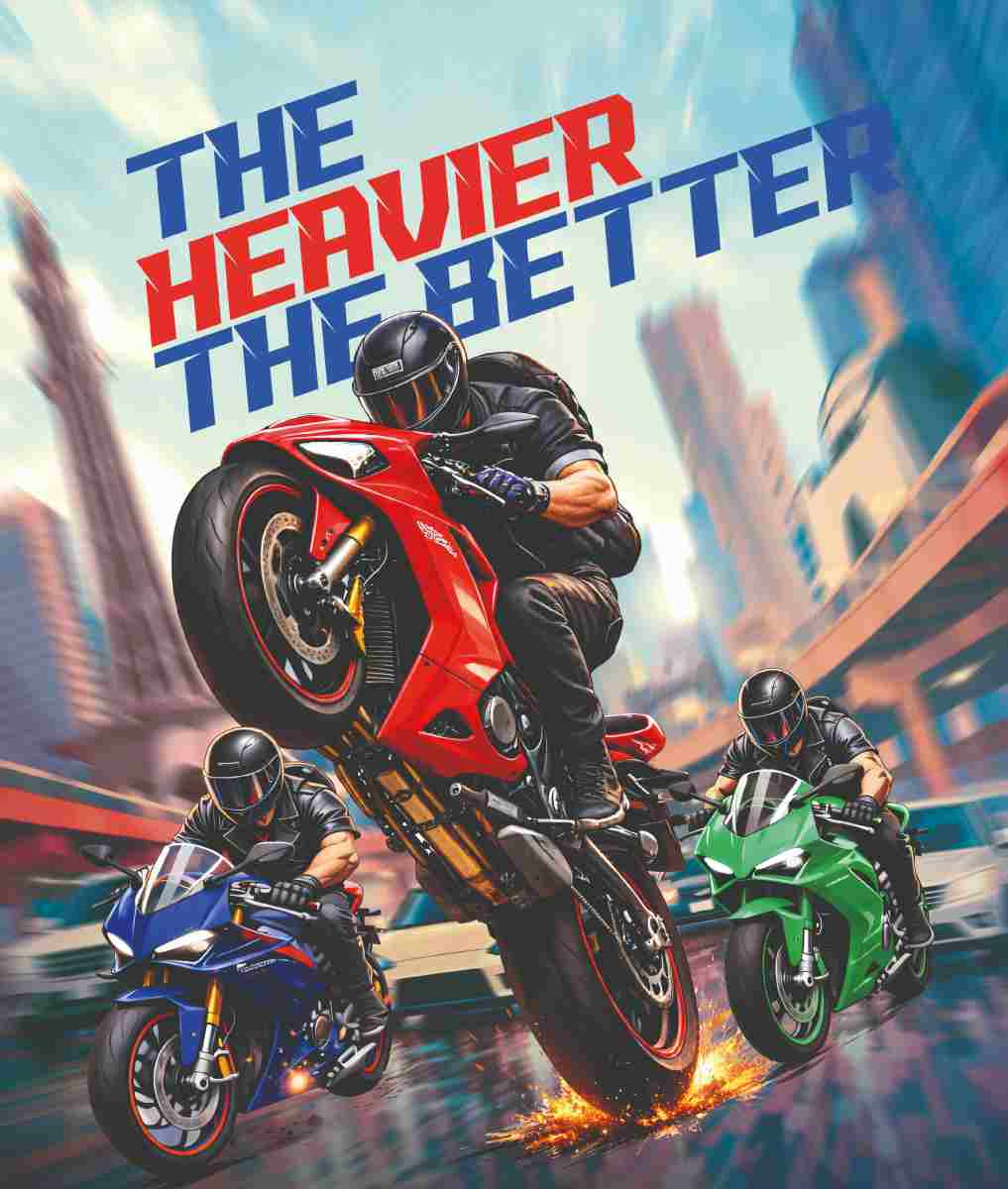
While the CD 70 remains the backbone of national transport, a premium segment is carving out its own lane. We look at the logistics, the branding, and the shifting demographics of heavy bike ownership.
As a kid, I developed a love for fast vehicles, including automobiles, of course, as well as motorcycles. Living in Bahrain, the country’s affluent status and the people’s wealth meant that you could often catch a glimpse of Ferraris and Lamborghinis. Even the taxis were predominantly Mercedes and BMWs. To the dismay of our young minds and hearts, heavy bikes like Harleys were a rare sight. They became a sort of urban legend for us, something you never witnessed but rather heard about in secondhand news. From friends who reported a sighting.
Coming back to Karachi, motorcycles were hardly seen on the roads, but were present in alarming numbers. For the lower SEC, the sturdy bike, the CD 70, was especially suitable for family transport. It’s not unusual to see a group of five or more – husband, wife, three children, or an elder riding precariously on one of these.
The high cost of public and private transport, coupled with the limited availability of public transport in our nation, makes motorcycles a necessity. In the Pakistani economy and the state of the country over various decades. It’s clear that for cost-conscious Pakistanis, the motorcycle has been and remains the best solution.
At the other end of the spectrum, returning to Karachi as a youngster, I learnt about the heavy bikes that raced at Do Darya, in what was once a wilderness. Even in my daily life, close encounters of the two-wheeled kind with heavy bikes were not uncommon. In fact, one friend of mine, who was a classmate, and another who taught at my school, both possessed heavy bikes. As years passed, the attraction of these bikes increased among the urban and affluent population.
This particular hobby is definitely expensive and time-consuming. If a motorcycle requires routine maintenance, these heavy and powerful bikes demand a lot more care. No doubt the appeal and, dare I say, allure of a heavy or superbike is a known factor. And that’s why various brands have used the attraction for speed and machismo represented by bikes in their ads both globally and locally.
Has the aspirational value of these vehicles changed them from an elite indulgence to a niche industry? With groups like the Distinguished Gentleman’s Ride in existence, the presence of heavy bikes has undoubtedly increased in Karachi and Lahore.
A Pakistani newspaper reported on this in 2018, citing around 500 heavy bikes being present in Karachi. And cities like Islamabad, Lahore, Faisalabad and Multan have thrice as many heavy bikers. As is obvious, Karachi lacks the long open stretches of road to enable a biker to gear up to close to the top speed possible on these vehicles.
However, these cities possess better roads and security. The young men interviewed for the article said that they ride bikes for the thrill of speed. Yes, but also for the joy of riding. Even those in Karachi organise weekend trips, with December to March being the peak riding season.
Back in 2021, when we were signing brands for Bogo, my boss suggested that we add The Harley Café, which, to my knowledge, was Pakistan’s first biker-focused café. Because the passion is niche, the café that sells Harley accessories also looked for the patronage of ordinary people and thrill seekers.
Read: Pakistan’s First Drifter
Heavy bikes have also recently helped challenge gender stereotypes. A Pepsi ad sparked considerable discussion by showing a girl sitting with her male friends. When a man approached and asked the men to move their bike. He was shocked when she stood up because the bike belonged to her. But this is closer to reel rather than real life.
Women riding motorcycles is still considered taboo for some reason in our society. So the prospect of them being part of the heavy bike-riding demographic is less likely. That is not to say that it is impossible. Foreigners like Rosie Gabrielle and locals such as Barira Khan and Zenith Irfan are doing it.
When I switched my job after almost 10 years. My first hands-on campaign in my new role at Raeem International was for Blaze, sold by PSO. Blaze motorcycle oil was being relaunched in new packaging. And the brand team wanted to zero in on the heavy-bike and superbike markets, where they have a decent share.
When creating the ad for the campaign, they took pains to pay attention to detail and use not actors but actual bike aficionados. To add credibility and stamp the communication with authority.
Even in the OOH execution, the brand team tasked us to place heavy bikes on a specially constructed platform at a major thoroughfare to attract eyeballs and generate hype. If owning a heavy bike is costly.
Renting one for such an activity is not only expensive but a semi-logistics nightmare. As the bikes need to be handled with extreme care and protected from the elements: Excessive heat (a constant problem in most of Pakistan), rain, dirt, pollution, as well as curious onlookers.
This experience cemented for me the difficulties in owning and maintaining a heavy/superbike, especially in a cosmopolitan city like Karachi. Can the number of owners increase rapidly over the years? Especially, owing to the penetration in the market of the Chinese heavy bikes?
When I asked this question to Ali Asad, Category Manager, Lubricants at PSO, he was not positive. According to him, the number of Chinese heavy bikes is still very low at present. Doing my own research on Pakwheels, there were 1077 heavy bikes for sale, mostly from outside Karachi and in Punjab. In contrast, on OLX, the number was 685.
Will the dynamics of the heavy bike market change drastically over the next year or so? Answering that is not easy. But it seems certain that as time passes and income increases, with the growth in the upper middle and upper classes. Hearing the roar of the heavy bike on the streets of our country will become more and more commonplace and not an occasion for surprise or wonder.